Understanding Varied Crop Responses to Glycine Betaine Application Timing
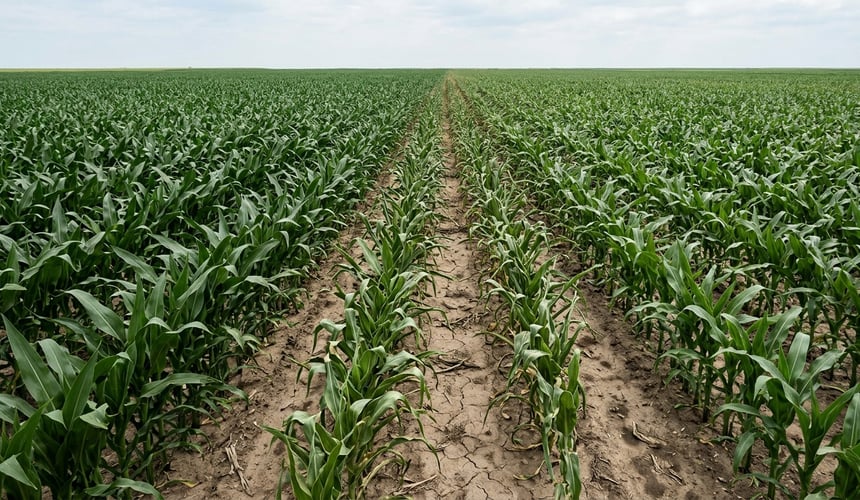
When using glycine betaine, why do different crops and application timings lead to varying effects? The impact of exogenous glycine betaine application timing on crop responses to environmental challenges is not uniform across all species or conditions. Its effectiveness is closely associated with the plant's natural physiological state, growth stage, and the specific timing of application relative to the onset or recovery from abiotic stressors [1].
Cropenta Insight
Understanding the nuanced impact of glycine betaine application timing is crucial for professionals formulating biostimulants. The physiological state of a crop, whether it is under initial stress or in a recovery phase, fundamentally alters how exogenous glycine betaine is absorbed and utilized. This distinction guides the development of targeted biostimulant solutions that acknowledge natural plant processes rather than applying universal approaches, thereby addressing specific agronomic needs.
Glycine Betaine: A Plant's Osmotic Regulator
Glycine betaine is a naturally occurring osmoprotective compound, often referred to as a compatible solute, that plays a role in plant cells' osmotic adjustment. Under various abiotic stress conditions, such as drought, salinity, or heat, plants may accumulate glycine betaine internally to help maintain cellular water balance and support metabolic activities [2, 3]. The application of exogenous glycine betaine aims to supplement these natural processes, potentially contributing to the plant's ability to cope with environmental pressures [1, 4].
How Application Timing Influences Crop Response
The timing of glycine betaine application timing is a key factor in determining its subsequent physiological effects in different crop species. Recent research highlights that application before the onset of stress, during the stress period, or during recovery can each elicit distinct responses . For instance, pre-stress applications may help prime a plant's physiological systems, while applications during stress may support ongoing osmotic adjustment [1]. Post-stress application can be relevant for recovery processes.
A study published in 2025 focused on deciphering the role of glycine betaine in enhancing plant resilience against environmental challenges .
Factors Affecting Glycine Betaine Efficacy
Several factors contribute to the varied crop responses observed with different glycine betaine application timing. These include the specific crop species, as their inherent capacity for natural glycine betaine synthesis and accumulation differs. The intensity and duration of the abiotic stress also play a part; a plant under severe, prolonged stress may respond differently than one experiencing mild, transient conditions [2, 3]. Furthermore, the plant's growth stage matters, with young seedlings possibly exhibiting different sensitivities and uptake efficiencies compared to mature plants. The formulation of the foliar betaine and its uptake efficiency can also be relevant [4].
Agronomic Considerations for Glycine Betaine Application Timing
For growers and agronomists, understanding these nuances is essential for developing effective strategies for glycine betaine application timing. A nuanced approach that considers the crop's specific needs, expected stress conditions, and growth stage may lead to more predictable outcomes. Generalized claims about protection against drought, heat, or salinity are often not supported by consistent evidence across all scenarios; effects commonly differ per crop, concentration, and application moment [1, 2]. Focusing on the plant's physiological requirements and its capacity to respond at a given time provides a more grounded understanding of when and why exogenous glycine betaine applications may be beneficial.
Technical Summary
The efficacy of exogenous glycine betaine for crops is highly dependent on application timing relative to abiotic stress and growth stage. Plants respond differently based on their physiological state, existing stress levels, and natural capacity for osmolyte accumulation. A targeted approach to glycine betaine application timing, aligning with specific crop needs and environmental conditions, can lead to more consistent physiological support rather than relying on universal claims.
Disclaimer
This article has been prepared with AI assistance using publicly available sources and is intended solely for general technical and educational purposes. It does not constitute professional advice or recommendations for specific applications. Cropenta makes no warranties regarding the accuracy, completeness or applicability of the information. No rights may be derived from its contents, and Cropenta accepts no liability for its use to the extent permitted by law.
Technical Questions
How does a plant's existing stress level influence the effectiveness of applied glycine betaine?
A plant's existing stress level significantly impacts how it utilizes applied glycine betaine. If the plant is already heavily stressed, its ability to absorb and translocate the compound may be compromised. Conversely, a plant under mild or developing stress might be more receptive to the osmotic adjustment support that exogenous glycine betaine can provide, leading to different physiological outcomes.
What role does the growth stage play in determining optimal glycine betaine application?
Growth stage is crucial because plant physiological demands and sensitivities vary throughout development. Young plants may have different uptake mechanisms or metabolic priorities compared to mature plants or those in reproductive stages. Optimizing glycine betaine application timing often involves considering the specific physiological needs and vulnerability to stress at each distinct growth phase to maximize potential benefits.
Are there specific environmental conditions where glycine betaine applications are more effective?
Glycine betaine applications are typically considered most relevant under conditions that induce osmotic stress, such as drought, high salinity, or heat. Its effectiveness is associated with supporting cellular water balance under these pressures. However, the precise degree of efficacy can vary based on the severity and duration of the environmental challenge, as well as the crop species' inherent stress response mechanisms.
Related articles
Related Products



Looking for something specific?
Our team is there to help you find the right raw materials and solutions for your formulations

