Beyond Rumen Protection: Why Intestinal Digestibility and Consistent Quality Matter
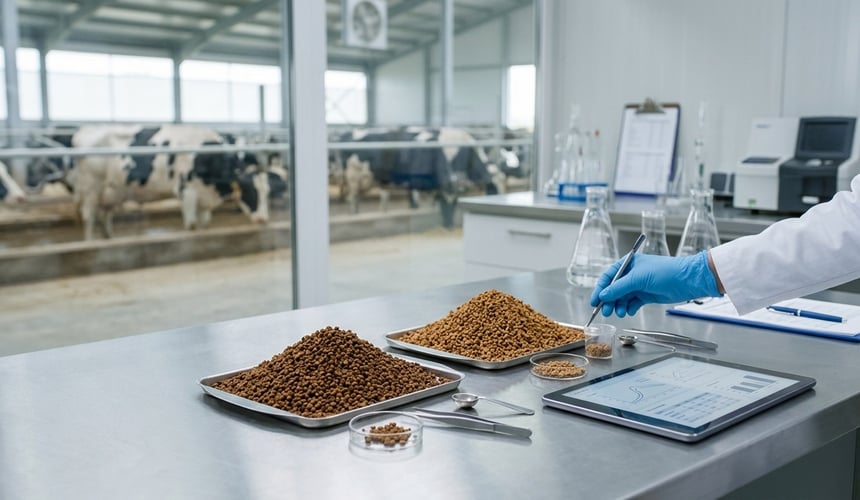
Optimizing protein nutrition in high-producing dairy cows requires more than selecting an ingredient with a high rumen-undegradable protein (RUP) percentage. Although bypass protein is intended to escape microbial degradation in the rumen, its nutritional contribution depends on how effectively it can subsequently be digested in the small intestine. A product may demonstrate substantial rumen protection while delivering considerably less usable protein than its specification suggests. For dairy nutritionists, the real objective is therefore to combine effective rumen protection with high intestinal digestibility and consistent nutritional quality across commercial production batches [1].
Cropenta Insight
A declared bypass percentage alone is insufficient to establish the true nutritional value of a protected protein ingredient. Commercial specifications may differ significantly from values obtained through direct measurements in live cows, particularly when different analytical methods or calculation assumptions are used. Equally important is whether the nutritional characteristics measured during product development remain consistent in regular commercial production.
Bypass Soy Protein MP and Bypass Rapeseed MP have been developed specifically to address these challenges. Their nutritional characteristics have been evaluated through independent research at ILVO in Belgium, followed by protein valuation by Schothorst Feed Research. Controlled batch production and continued quality monitoring are intended to maintain consistency between the evaluated ingredients and the products supplied to feed manufacturers.
The Dual Challenge of Protein Protection
The purpose of rumen-protected protein ingredients is to reduce excessive microbial degradation in the rumen, allowing a larger proportion of dietary protein to reach the abomasum and small intestine for enzymatic digestion and subsequent amino acid absorption [2].
However, increasing rumen protection does not automatically increase the amount of digestible protein available to the animal. Conventional thermal treatments and Maillard-based protection methods can create a trade-off between rumen stability and intestinal digestibility. When processing intensity is excessive, increased resistance to ruminal degradation frequently comes at the expense of intestinal protein digestibility and amino acid availability.
This challenge has become particularly relevant as the European feed industry has moved away from formaldehyde-based protein protection technologies. Alternative treatments are often designed primarily to increase RUP, but a higher bypass percentage does not demonstrate that the protein remains highly digestible after leaving the rumen.
Insufficient processing leaves excessive protein available for degradation by rumen microorganisms. Conversely, excessive processing can produce protein structures that resist degradation in both the rumen and the intestine. Advanced Maillard reactions may also reduce reactive lysine availability, compromising the nutritional value of the treated protein.
The essential challenge is therefore not to maximize rumen protection independently, but to achieve a controlled balance between rumen stability and intestinal digestibility.
Development of our Bypass products
Bypass Soy Protein MP and Bypass Rapeseed MP were developed through approximately five years of dedicated technological development and process refinement. The objective was to establish a protein-protection process capable of achieving substantial rumen resistance while preserving a high proportion of intestinally digestible protein.
Both ingredients are manufactured using a specifically developed, controlled Maillard process involving selected reducing sugars, without added formaldehyde. Critical processing parameters, including sugar distribution, temperature, moisture, treatment time and production homogeneity, are carefully controlled.
Unlike treatments that primarily target increased rumen protection, this technology was developed with both rumen stability and intestinal digestibility as essential nutritional objectives.
Importantly, the nutritional characteristics of these two products were not established solely through laboratory simulations or theoretical processing assumptions. They were investigated using live cows at ILVO, an independent research institute in Belgium, with subsequent nutritional evaluation by Schothorst Feed Research.
Experimental Methods for Nutritional Evaluation
Reliable evaluation of protected proteins requires a clear distinction between declared specifications, experimentally measured degradation characteristics and the resulting nutritional values used in feed formulation.
For Bypass Soy Protein MP and Bypass Rapeseed MP, independent research at ILVO included direct assessment of ruminal protein degradation and separate measurement of intestinal digestibility. These complementary approaches provided the experimental foundation for evaluating the combination of rumen protection and subsequent protein digestion.
Evaluating Rumen Degradation: The In-Situ Method
Rumen degradation was characterized at ILVO using the in-situ/in-sacco technique in rumen-fistulated cows. Feed samples were incubated in porous nylon bags within the rumen for different periods as part of a comprehensive 336-hour incubation protocol.
The disappearance of protein from the bags over time provided information about degradation fractions and degradation kinetics. These experimentally determined characteristics were subsequently used to calculate effective rumen-undegradable protein.
This distinction is fundamental. A declared RUP value is not necessarily a direct measurement of the proportion of protein escaping the rumen. Its reliability depends on the underlying degradation measurements, the calculation methodology and the assumptions used.
Studies involving commercially treated protein ingredients have demonstrated that declared bypass values can differ considerably from values derived from in-situ measurements in live animals. Consequently, specifications established through different methodologies should not automatically be treated as nutritionally equivalent.
Assessing Intestinal Digestibility: The Mobile Nylon Bag Technique
Measuring rumen degradation establishes only the first part of the nutritional evaluation. The protein fraction that escapes ruminal degradation must also be sufficiently digestible in the small intestine to contribute usable amino acids.
For Bypass Soy Protein MP and Bypass Rapeseed MP, intestinal digestibility was independently assessed at ILVO using the mobile nylon bag technique in cows fitted with duodenal cannulas.
This method evaluates the disappearance of protein from prepared nylon-bag samples introduced into the intestinal tract, providing an estimate of the intestinal digestibility of rumen-undegraded feed protein.
The experimental findings were subsequently evaluated by Schothorst Feed Research and translated into nutritional values relevant for practical ration formulation.
The resulting product-specific characteristics demonstrate the combination achieved by the developed protection process:
Bypass Soy Protein MP: approximately 83% calculated RUP and 99% measured intestinal digestibility of the rumen-undegraded protein.
Bypass Rapeseed MP: approximately 80% calculated RUP and 90% measured intestinal digestibility of the rumen-undegraded protein.
These intestinal digestibility figures refer specifically to the rumen-undegraded protein fraction, rather than the total crude protein content.
Maintaining Nutritional Consistency Through Controlled Production
Independent nutritional characterization is an essential starting point, but the reliability of a commercial feed ingredient also depends on whether the characteristics established during research are maintained in subsequent production.
This is especially important for rumen-protected proteins. Variations in processing temperature, moisture, treatment duration or product homogeneity can influence both rumen degradation characteristics and intestinal digestibility. Even when the declared crude protein content remains relatively constant, changes in processing conditions may affect the actual nutritional value.
Bypass Soy Protein MP and Bypass Rapeseed MP are manufactured through a controlled batch-production process designed to maintain consistent processing conditions and product characteristics.
Monthly production samples are subject to ongoing quality monitoring, providing an additional means of identifying variation and supporting consistency between production batches. This monitoring complements the independent research performed at ILVO and the nutritional evaluation undertaken by Schothorst Feed Research.
The technical programme also includes continued in-situ research and periodic independent evaluation of commercial market samples. Together, these measures provide a framework for monitoring whether commercially supplied material remains aligned with the nutritional characteristics established during product evaluation.
For feed manufacturers, such consistency is essential. A formulation matrix assumes that an ingredient supplies predictable nutritional values. If protein degradation characteristics or intestinal digestibility fluctuate between deliveries, the actual metabolizable protein contribution may differ from the values used in ration calculations.
Consistent processing, regular quality monitoring and independent nutritional verification therefore contribute directly to the reliability of commercial feed formulation.
Translating Measurements to Practical Nutritional Value
The combination of measured rumen degradation characteristics and intestinal digestibility provides a more reliable basis for nutritional valuation than a declared bypass percentage alone.
Two protected protein ingredients may carry the same RUP specification while supplying significantly different quantities of digestible protein. If one ingredient has substantially lower intestinal digestibility, its actual contribution to metabolizable protein supply may be considerably smaller, despite an identical declared bypass percentage.
Furthermore, commercial specification sheets do not always reflect results obtained under comparable experimental conditions. Differences between laboratory methods, calculation assumptions and actual in-situ measurements can result in substantial discrepancies between declared and experimentally characterized protein values.
For nutritionists and feed formulators, this makes it important to examine the scientific basis behind the specifications. Relevant questions include how rumen degradation was characterized, whether intestinal digestibility was measured independently, and whether the nutritional values have been translated into a recognized formulation system.
However, reliable initial measurements are only part of the equation. The tested material must also be representative of the ingredient consistently delivered to customers.
This is where controlled batch production and continued quality verification become particularly relevant for Bypass Soy Protein MP and Bypass Rapeseed MP. Their development combines independently established nutritional characteristics with a production and monitoring approach intended to maintain those characteristics across commercial batches.
For high-producing dairy cows, effective ration formulation must also maintain sufficient rumen-degradable protein for microbial protein synthesis, alongside an appropriate supply of intestinally digestible bypass protein.
The objective is not the highest possible RUP percentage, but a predictable supply of metabolizable protein and absorbable amino acids that meets the animal's nutritional requirements.
For commercial feed manufacturers, predictable ingredient characteristics help reduce uncertainty in formulation and support more consistent nutritional performance across successive deliveries.
Technical Summary
Effective evaluation of rumen-protected protein requires more than a high declared bypass percentage. Rumen degradation characteristics and intestinal digestibility must be considered together, particularly for ingredients subjected to thermal or Maillard-based protection processes, where excessive treatment can compromise amino acid availability.
Bypass Soy Protein MP and Bypass Rapeseed MP were developed through a dedicated, controlled Maillard process without added formaldehyde. Their rumen degradation characteristics and intestinal digestibility were evaluated independently at ILVO using live cows, with the experimental results translated into nutritional values by Schothorst Feed Research.
The products combine approximately 83% and 80% calculated RUP with approximately 99% and 90% measured intestinal digestibility, respectively. These characteristics are supported by controlled batch manufacturing, ongoing monthly quality monitoring and periodic independent evaluation intended to maintain consistent nutritional quality.
For dairy nutritionists and feed manufacturers, the central consideration is therefore not only whether a protected protein demonstrates high RUP, but whether its digestibility has been measured and its nutritional characteristics can be consistently reproduced in commercial production. A specification is only as valuable as the evidence supporting it and the consistency of the ingredient delivered.
Disclaimer
This article has been prepared with AI assistance using publicly available sources and is intended solely for general technical and educational purposes. It does not constitute professional advice or recommendations for specific applications. Cropenta makes no warranties regarding the accuracy, completeness or applicability of the information. No rights may be derived from its contents, and Cropenta accepts no liability for its use to the extent permitted by law.
Technical Questions
Why is high RUP alone insufficient to determine the nutritional value of protected proteins?
A high rumen-undegradable protein (RUP) percentage indicates that a substantial proportion of protein escapes ruminal degradation, but does not establish how much can subsequently be digested in the small intestine. If intestinal digestibility is low, the contribution to metabolizable protein supply may be limited. Both parameters must therefore be evaluated together.
How can Maillard processing affect rumen protection and intestinal digestibility?
Controlled Maillard processing can increase resistance to microbial degradation in the rumen. However, excessive treatment can reduce intestinal digestibility and damage reactive lysine, limiting amino acid availability. The objective is to achieve effective rumen protection while preserving intestinal digestibility, rather than maximizing RUP alone.
Why can declared bypass protein values differ from measurements in live cows?
Declared RUP values may be based on different analytical methods, degradation models and assumed passage rates. Laboratory estimates do not always correspond with in-situ measurements in live cows, particularly for processed proteins. Reliable comparisons require transparent testing methods, measured degradation characteristics and consistent calculation assumptions.
How are Bypass Soy Protein MP and Bypass Rapeseed MP independently evaluated?
Both ingredients were evaluated at ILVO in Belgium using rumen-fistulated cows and a 336-hour in-situ incubation protocol. Intestinal digestibility was measured separately using the mobile nylon bag technique. Schothorst Feed Research translated the findings into formulation-relevant nutritional values. The results show approximately 83% RUP and 99% intestinal digestibility for Bypass Soy Protein MP, and 80% RUP and 90% intestinal digestibility for Bypass Rapeseed MP.
How is consistent nutritional quality maintained between production batches?
Consistent protein quality requires controlled processing conditions and regular verification. Bypass Soy Protein MP and Bypass Rapeseed MP are manufactured through controlled batch production, with ongoing quality monitoring and periodic independent nutritional evaluation. These measures are designed to minimize variation and help maintain alignment between commercial production and the experimentally established nutritional characteristics.
Related articles

Related Products
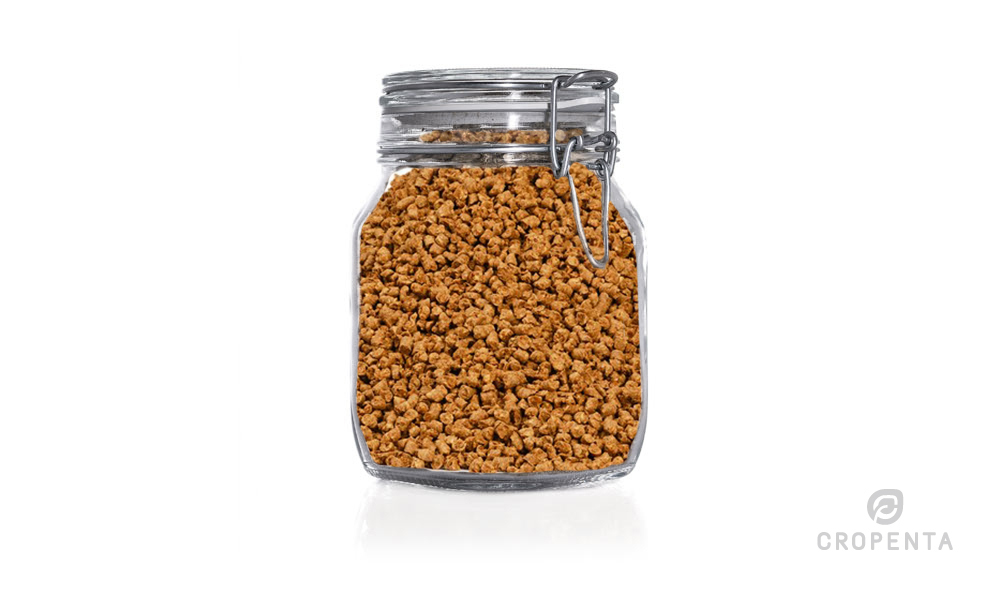
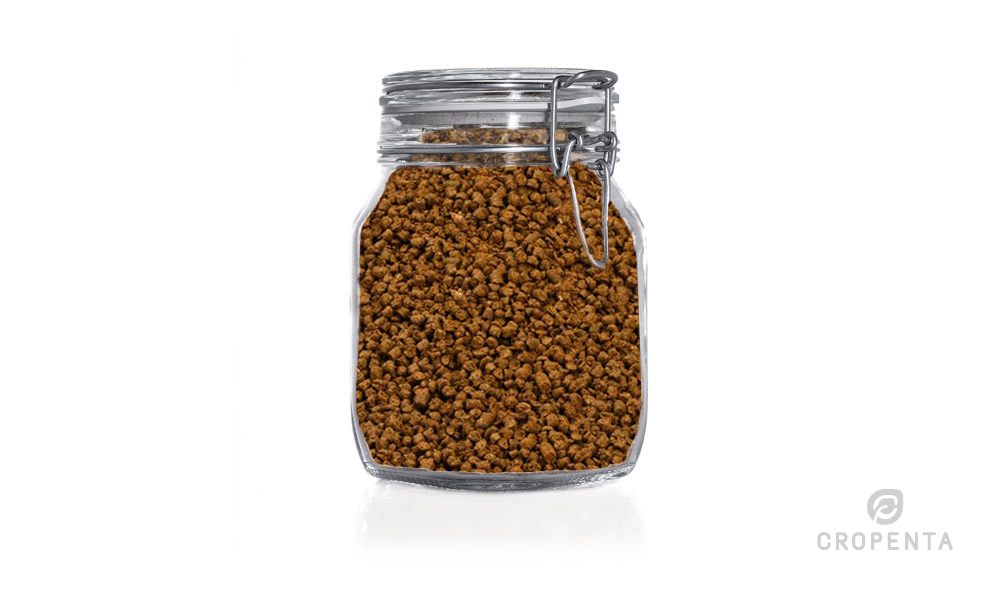
Looking for something specific?
Our team is there to help you find the right raw materials and solutions for your formulations

