How Lecithin-Oil Blends Influence Feed Intake and Growth in Broiler Chickens
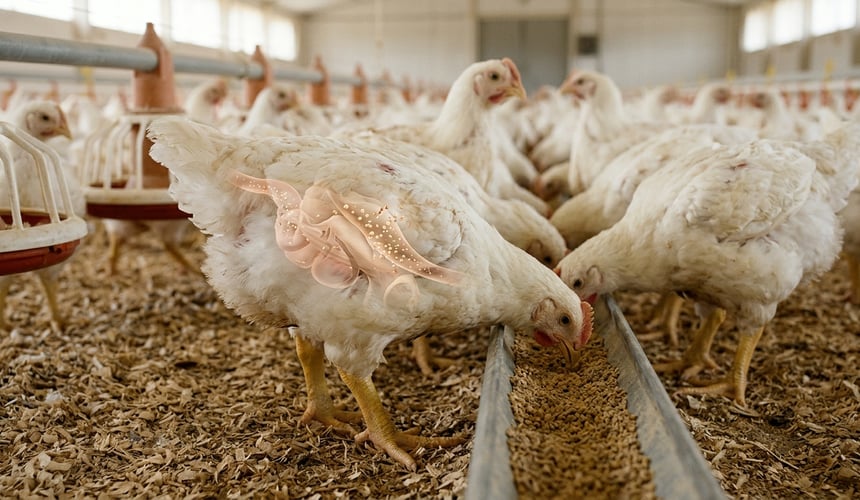
Feed formulators continually seek to optimize nutrient delivery and performance in broiler chicken diets. While fats are primarily energy sources, the inclusion of lecithin in oil blends introduces additional nutritional and functional considerations. This discussion explores the current evidence regarding how lecithin-containing lipid sources may influence feed intake and growth performance in broiler chickens, focusing on the underlying nutritional mechanisms.
Cropenta Insight
For feed formulators, evaluating lecithin-oil blends means looking past general fat content to focus on the specific phospholipid composition and fatty acid profiles. These components play a nuanced role in fat digestion and nutrient absorption, particularly in younger broiler chickens. Understanding their interaction with the birds' age-dependent digestive capabilities is crucial for precisely tailoring energy and nutrient delivery, with the potential to influence growth performance and feed efficiency.
Understanding Lecithin-Oil Blends in Broiler Nutrition
Lecithin is not a pure substance; it comprises a mixture of phospholipids, glycolipids, triglycerides, and other components, with its exact composition depending on the raw material source, such as soy, rapeseed, or sunflower, and processing methods like degumming or fractionation. Key phospholipids include phosphatidylcholine, phosphatidylethanolamine, and phosphatidylinositol. These components contribute fatty acids and act as emulsifiers.
Fats in broiler diets are primarily triglycerides, which consist of three fatty acids esterified to a glycerol backbone. Free fatty acids are released fatty acids, more common in acid oils and certain by-products. Phospholipids, distinct from triglycerides, carry a phosphate group and exhibit amphiphilic properties, meaning they have both hydrophobic and hydrophilic regions. Their digestion and absorption pathways differ, influencing their overall energy value for the animal.
The digestion of dietary fat involves emulsification by bile salts and phospholipids, which forms small droplets that facilitate hydrolysis by pancreatic lipase. The products then form micelles, which transport fatty acids to the intestinal wall for absorption. While an emulsifying property may improve conditions for fat digestion, it does not automatically prove a higher fat digestibility in a given diet. The fatty acid composition and saturation of an oil blend also play a role, as unsaturated fatty acids are generally digested more effectively than saturated ones, particularly in younger birds.
Evidence on Feed Intake and Growth Performance in Broilers
Research into the effects of soybean lecithin (SBL) on broiler performance has yielded varied results concerning feed intake. Some investigations into dietary SBL supplementation in broilers have noted no significant influence on feed intake . However, these studies also indicate that SBL supplementation might positively influence overall growth performance and nutrient digestibility [1, 2].
The impact on feed intake itself is a complex area. While some studies suggest no direct effect, the overall digestibility of fats, particularly in young chicks who have limited bile salt and lipase production, may be influenced by phospholipids. Greater fat digestibility is generally associated with increased availability of metabolizable energy, which in turn may contribute to supporting growth rates even if feed intake remains stable. Energy systems, such as digestible energy and metabolizable energy, are crucial for evaluating the nutritional contribution of these lipid sources, with values differing between species and calculation systems.
Practical Implications for Feed Formulators
For feed formulators, incorporating lecithin-oil blends involves considering the precise composition of the blend. The ratio of phospholipids, triglycerides, and free fatty acids, along with the overall fatty acid profile, can influence not only fat digestibility but also the handling and oxidative stability of the finished feed. Highly unsaturated fats are more prone to oxidation, which can affect palatability and nutrient quality if not managed with antioxidants and proper storage practices.
The age-dependent nature of fat digestion in broiler chickens means that young chicks, whose digestive systems are still developing, may potentially derive greater advantage from the emulsifying and nutrient-delivery properties of lecithin-oil blends. As birds mature, their endogenous bile salt and lipase production increase, potentially reducing the relative impact of supplementary emulsifiers on fat digestion. Therefore, the strategic use of lecithin-containing blends might be particularly suitable for consideration in starter diets.
When evaluating lipid sources, formulators must consider the balance between nutritional efficacy and economic viability. While lecithin-oil blends may offer nutritional advantages, their inclusion should be weighed against the cost and availability of alternative fat sources. The objective remains to achieve target growth and feed conversion rates through precise nutritional support, leveraging ingredients that offer a consistent and high-quality energy supply.
Technical Summary
Lecithin-oil blends, characterized by their phospholipid content and fatty acid profile, may influence broiler chicken growth performance, even if direct feed intake effects are not consistently observed. Studies indicate these blends can influence fat digestibility, especially in young broilers with developing digestive systems. This observed nutrient absorption contributes to greater metabolizable energy availability, which may in turn support growth. Formulators consider these blends for their nutritional mechanisms beyond simple energy, particularly for their potential role in influencing fat utilization.
Disclaimer
This article has been prepared with AI assistance using publicly available sources and is intended solely for general technical and educational purposes. It does not constitute professional advice or recommendations for specific applications. Cropenta makes no warranties regarding the accuracy, completeness or applicability of the information. No rights may be derived from its contents, and Cropenta accepts no liability for its use to the extent permitted by law.
Technical Questions
What distinguishes phospholipids from triglycerides in energy value for broilers?
Phospholipids carry a phosphate group and are amphiphilic, contributing fatty acids and emulsifying properties. Triglycerides are three fatty acids on glycerol, primarily energy storage. Their digestion and absorption pathways differ, meaning their precise metabolizable energy contribution can vary, depending on the specific fatty acid profiles and the bird's digestive capacity.
How does fat source saturation impact digestibility in young broilers?
Young broilers have limited production of bile salts and pancreatic lipase. Saturated fats are typically digested less efficiently than unsaturated oils in these younger birds due to their higher melting points and reduced micelle formation. As broilers mature, their digestive enzyme production increases, improving their capacity to digest a wider range of fat sources.
What factors beyond emulsification influence the effectiveness of lecithin-oil blends?
Beyond their emulsifying properties, the specific fatty acid composition, concentration of various phospholipids, and the overall quality of the oil blend are crucial. These factors influence not only digestibility but also palatability, oxidative stability, and the supply of specific fatty acids that may have roles in metabolism or immune function. Consistent ingredient quality is vital.
Related articles


Related Products


Looking for something specific?
Our team is there to help you find the right raw materials and solutions for your formulations

