Not All Lecithin Affects Feed Intake and Growth the Same Way
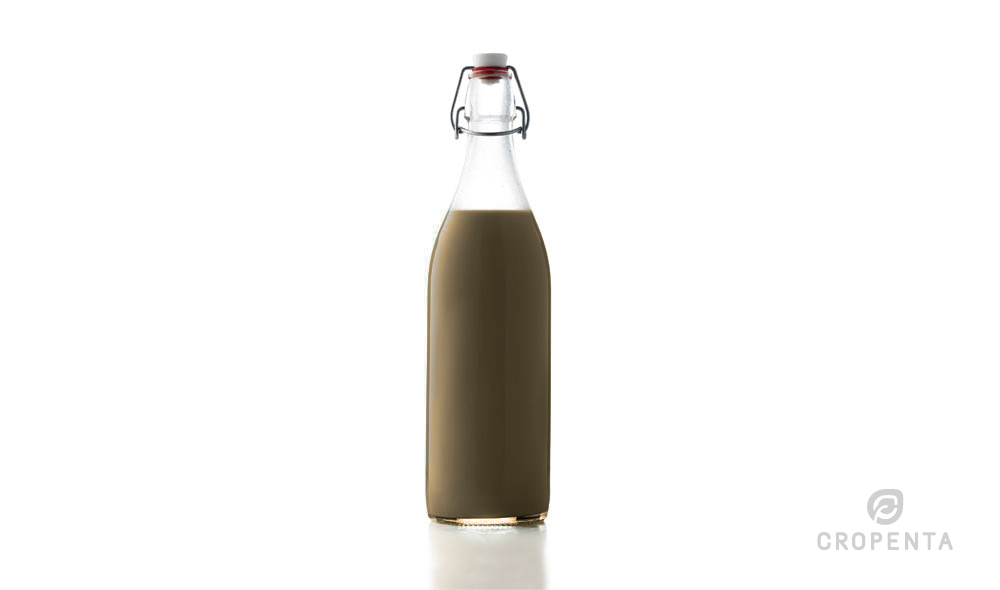
Lecithin is often specified as an emulsifier, yet two products sold under the same name can differ considerably in what they contain. The reader question is whether all lecithin types affect feed intake and growth in the same way, or whether their composition leads to different results. The short answer from the current evidence is that the results differ by species and study, and the available data do not yet allow a clean ranking of lecithin types by their phospholipid ratios.
Lecithin is not a pure substance. It is a mixture of phospholipids, such as phosphatidylcholine, phosphatidylethanolamine and phosphatidylinositol, together with glycolipids, triglycerides and other components. The exact mix depends on the source, whether soy, rapeseed or sunflower, and on processing steps such as degumming and fractionation. Phospholipids carry a phosphate group and are amphiphilic, meaning one part of the molecule attracts water and another attracts fat. Triglycerides, free fatty acids and phospholipids are different fractions, and their digestion and energy value for the animal are not the same.
Cropenta Insight
For nutritionists and buyers, the key point is that lecithin composition is not fully described by its name or by a general emulsifying function. Emulsification may improve the conditions for fat digestion, but an emulsifying property alone does not show higher fat digestibility, and higher digestibility does not by itself show better growth or feed conversion. Within the lecithin-containing fat and oil category, ask suppliers for the fraction composition and the species and age in which the product was tested.
Why emulsifying does not settle the question
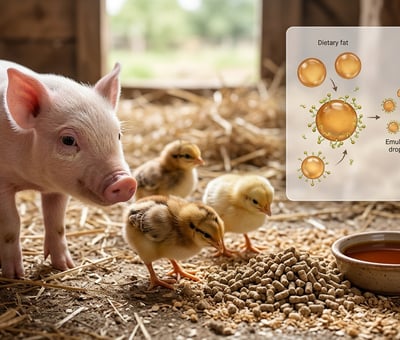
Bile salts and phospholipids break fat into small droplets, so that pancreatic lipase can split triglycerides into fatty acids and monoglycerides. These products form micelles that carry them to the intestinal wall. This is a sound explanation of how emulsifiers can support fat digestion, but it describes a physical and enzymatic condition, not a measured outcome in a given diet.
Young animals add a complication. Piglets and chicks produce limited bile salts and lipase, so fat digestibility generally rises with age, and saturated fats are digested less well than unsaturated oils in young animals. A lecithin that helps in an older bird may therefore behave differently in a starter diet. Lecithin also contributes fatty acids and energy, so any response depends on the fatty acid profile of the whole product, not only on its emulsifying capacity.
What the pig study measured
The most direct evidence in this comparison comes from a pig study reported as dietary lecithin improving feed efficiency without impacting meat quality. The study reported that lecithin improved feed efficiency in all pigs, while it had no effect on feed intake or average daily gain.[1] That result is important for interpretation. The benefit was seen in how efficiently feed was converted into body weight, not in the amount of feed eaten. A better feed efficiency value does not show which phospholipid fraction was responsible, and the study result cannot be extended to other lecithin types or to other pig ages without further data.
Poultry results are not consistent
In broilers, the picture is less uniform. A study on fried soybean diets reported that soybean lecithin had no influence on feed intake, which the authors described as consistent with earlier work in which lecithin also did not change intake.[2] This is a negative result for feed intake, and it shows that lecithin inclusion does not reliably change how much broilers eat. Growth and nutrient digestibility were also part of that study, but the summary available here does not allow a firm conclusion on them, so they should be checked in the full paper before use in a decision.
Aquaculture data do not transfer directly
Soybean lecithin has also been studied in finfish. A 2023 study reports that dietary soybean lecithin was linked to better productivity and well-being in finfish, and it refers to earlier work on digestion capacity.[3] Fish digestive physiology, feeding behaviour and water-based production differ from poultry and pigs. Results from finfish cannot be transferred to these species without additional evidence in the target animal.
Phospholipid ratios: where the evidence stops
The question of whether specific phospholipid ratios or raw material origins produce different responses is not answered by the sources reviewed here. The studies compare lecithin with a control or report on lecithin as one product, but they do not separate the effects of phosphatidylcholine from those of other phospholipids, nor do they compare soy and rapeseed lecithin head to head in the same design. This is a gap in the evidence, not a finding that composition is irrelevant.
In practice, lecithin usually arrives as a viscous liquid or is blended into a fat or oil carrier. Its distribution in the mash or pellet depends on how well it is mixed and how the blend is dosed. Uneven mixing can make feed intake and feed efficiency results harder to interpret on farm, so the trial conditions and the handling of the product matter as much as its label.
What this means for formulation decisions
When comparing lecithin products, the most useful starting point is the species and age in which the product was tested, the control diet, and whether the outcome was intake, digestibility or growth. A lecithin that showed better feed efficiency in pigs has not been shown to do the same in broilers or fish. Where the phospholipid balance and raw material origin are known, they should be documented alongside the trial data, so that the product can be compared with others on the same terms.
Technical Summary
Lecithin is a variable mixture of phospholipids, glycolipids and triglycerides, and its response depends on species, age and study design. In one pig study, lecithin was associated with better feed efficiency without a change in feed intake or daily gain. A broiler study found no effect on feed intake, and finfish data cannot be transferred to land animals. Evidence on specific phospholipid ratios and raw material origins is still missing.
This article was created with the help of AI and reviewed by the Cropenta editorial team. It is general information, not professional advice.
Technical Questions
Why does a lecithin label not predict its feed response on its own?
Lecithin contains phospholipids, glycolipids and triglycerides in proportions that vary with the oilseed source and degumming or fractionation. The phospholipid share is not standardised across suppliers, so the same name can describe materials with different fatty acid and phospholipid profiles. Trial data should be linked to a documented composition, not only to the product name.
Should lecithin results from fish be used to judge lecithin in pig or poultry diets?
Not without additional evidence. Finfish digestive physiology, feeding behaviour and production systems differ from those of pigs and poultry. Fish results may indicate a research direction, but feed intake and growth in pigs or broilers need to be measured in those species and at the relevant age.
Looking for something specific?
Our team is there to help you find the right raw materials and solutions for your formulations