Why Crop Genotypes Respond Differently to Amino Acid Uptake
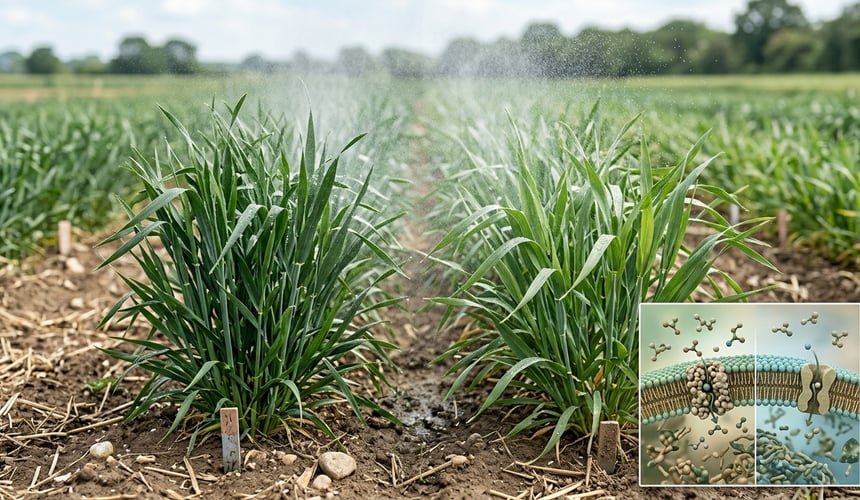
Two barley varieties receive the same amino acid biostimulant at the same rate. One shows a clear metabolic response; the other appears largely unaffected. The difference is not in the product but in the plant's genetic capacity to take up, transport and metabolize the applied amino acids. Understanding this genotype effect is essential for interpreting trial results and for matching products to specific crop varieties.
Cropenta Insight
Genotypic differences in amino acid uptake and metabolism mean that a single biostimulant formulation may perform differently across varieties of the same crop. For distributors and manufacturers, this reinforces the value of characterizing the amino acid profile and free amino acid content of raw materials, and of testing formulations across representative genotypes rather than relying on a single variety.
What Determines Amino Acid Uptake at the Root and Leaf Level
Amino acid uptake is not a passive process. Plants absorb amino acids through specific transporter proteins in root and leaf membranes, and the expression of these transporters varies between genotypes. Some varieties have a higher density of active transporters or a stronger affinity for certain amino acid classes. In a study on a North African barley collection grown under limiting nitrogen, genotypes differed significantly in nitrogen use efficiency and amino acid accumulation, showing that genetic background influences how nitrogen and amino acids are acquired and distributed [1]. This variation exists before any biostimulant is applied; it is part of the plant's inherent nutrient acquisition strategy.
The form of amino acid also matters. Free amino acids and small peptides are taken up more readily than larger protein fractions, but the plant's ability to absorb them depends on transporter specificity. A genotype with low expression of a particular transporter may absorb a broad-spectrum amino acid blend less efficiently than a genotype with high expression, even when both receive the same application.
Metabolic Fate and Physiological Response
Once inside the plant, amino acids are not simply stored. They enter metabolic pathways: transamination, decarboxylation, incorporation into proteins or conversion to other metabolites. The activity of these pathways is genetically controlled. A genotype with high activity of amino acid metabolism enzymes may rapidly convert applied amino acids into growth-related compounds, while a genotype with lower activity may accumulate them or excrete them. This metabolic fate determines whether the application leads to a measurable physiological response.
Foliar application adds another layer. The leaf surface is a barrier, and cuticle thickness, stomatal density and leaf age vary between genotypes. These anatomical traits affect how much of the applied solution is absorbed and how quickly it reaches metabolically active cells. A variety with a thicker cuticle or fewer stomata may show a slower or smaller response to the same foliar amino acid application.
Implications for Biostimulant Efficacy and Trial Design
The practical consequence is that biostimulant efficacy is a genotype-by-product interaction. A formulation that performs well on one variety may show weaker results on another because the second variety lacks the transporter capacity or metabolic machinery to use the applied amino acids effectively. This does not mean the product is ineffective; it means the response is genotype-dependent.
For agronomists and advisers, this argues for testing amino acid biostimulants on the specific varieties grown in a region rather than relying on generic recommendations. For manufacturers and formulators, it highlights the importance of knowing the amino acid profile of raw materials and how different profiles interact with crop physiology. A broad-spectrum blend may suit genotypes with diverse transporter capabilities, while a more targeted formulation may be more relevant for specific crop types.
Research on amino acids in plant growth and stress responses confirms that amino acids can influence nutrient uptake and plant development, but the effects vary with the amino acid, the crop and the application method [2]. The genotype adds another variable to this already complex picture.
What the Reader Can Conclude
Genotypic variation in amino acid uptake and metabolism is a real and measurable factor in biostimulant efficacy. The same product can produce different responses across varieties because of differences in transporter expression, metabolic enzyme activity and leaf anatomy. The reader should treat amino acid biostimulant efficacy as variety-specific and should interpret trial results with the genotype in mind. The next step is to demand more genotype-resolved data from suppliers and to design on-farm evaluations that account for the varieties actually grown.
Technical Summary
Crop genotypes differ in amino acid transporter expression, metabolic enzyme activity and leaf anatomy. These differences affect how much applied amino acid is absorbed and how it is metabolized. The result is a genotype-by-product interaction that makes biostimulant efficacy variety-specific. Trial design and product selection should account for this variability.
This article was created with the help of AI and reviewed by the Cropenta editorial team. It is general information, not professional advice.
Technical Questions
Why do two varieties of the same crop respond differently to the same amino acid biostimulant?
Genotypic differences in transporter expression, metabolic enzyme activity and leaf anatomy affect how much amino acid is absorbed and how it is used. A variety with higher transporter density or more active metabolism may show a stronger response, while another variety may absorb less or metabolize the amino acids differently.
Should amino acid biostimulant trials be conducted on multiple varieties?
Yes. Because efficacy is genotype-dependent, testing on a single variety may not represent how the product performs across a region. Including several representative varieties in a trial provides a more realistic picture of expected responses and helps avoid overgeneralizing results.
What is the difference between amino acid uptake and amino acid metabolism in this context?
Uptake refers to the absorption of amino acids across root or leaf membranes, governed by transporter proteins. Metabolism refers to the biochemical conversion of those amino acids inside the plant. A genotype can be efficient at uptake but slow at metabolism, or vice versa, and both steps influence the final physiological response.
Looking for something specific?
Our team is there to help you find the right raw materials and solutions for your formulations