Bypass Amino Acids Cannot Fix an Inadequate Protein Supply in Dairy Cows
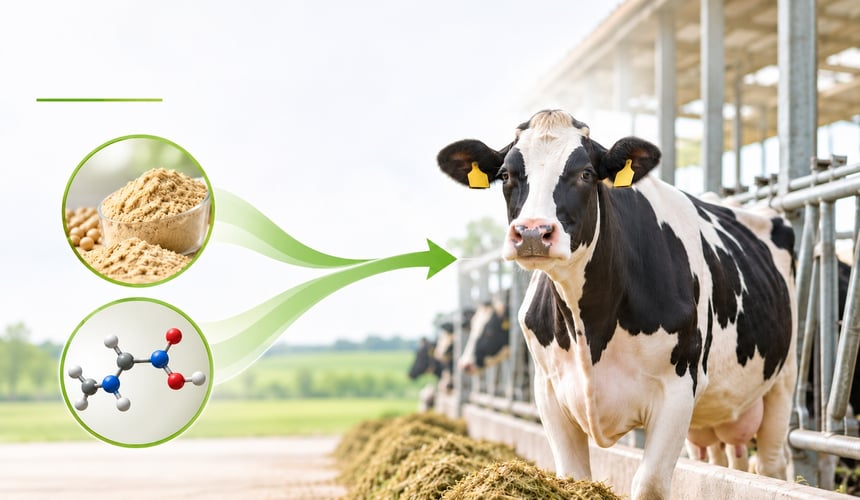
Why high-producing dairy cows need both adequate metabolizable protein and the right essential amino acid balance.
“We already use soybean meal and rumen-protected amino acids. Why would we need bypass protein?” It is a reasonable question, but it overlooks an important distinction in dairy nutrition. Correcting the supply of a few essential amino acids is not the same as ensuring that the cow receives sufficient metabolizable protein (MP). A ration can be formulated with conventional soybean meal and protected lysine or methionine, yet still provide an inadequate overall supply of absorbable amino acids.
For high-producing dairy cows, the supply of amino acids to the small intestine comes primarily from digestible microbial protein produced in the rumen and digestible rumen-undegraded feed protein (RUP). Rumen-protected amino acids contribute specific amino acids to this supply. They can improve its balance, but they cannot replace an insufficient supply of all the other amino acids required for maintenance and milk protein synthesis.
Cropenta Insight
The key distinction is between the total supply of metabolizable protein and the balance of individual essential amino acids. When total MP is adequate but lysine or methionine is limiting, targeted rumen-protected amino acid supplementation may be the most efficient correction. When MP supply is inadequate and several essential amino acids are undersupplied, adding a few protected amino acids cannot resolve the entire deficiency.
This is where highly digestible bypass soybean and rapeseed proteins can play a complementary role. They contribute a broader spectrum of amino acids through digestible feed protein, while protected amino acids can correct specific remaining limitations. The objective is not to choose one technology over the other, but to determine what the complete ration actually requires.
Where the Cow's Absorbable Amino Acids Come From
Metabolizable protein represents the protein supply available for absorption in the small intestine, principally from digestible microbial protein and digestible rumen-undegraded dietary protein. Its contribution to production depends not only on the quantity supplied, but also on the amino acid composition and the animal's requirements.
In the rumen, microorganisms use nitrogen from degradable feed protein and other available nitrogen sources, together with fermentable energy, to synthesise microbial protein. Once this microbial protein reaches the small intestine and is digested, it provides a substantial contribution to the cow's essential amino acid supply.
However, microbial protein synthesis is constrained by the availability and synchronisation of rumen-degradable nitrogen, fermentable energy and other factors affecting microbial growth. When rumen-degradable protein is supplied in excess of microbial requirements, additional nitrogen may be absorbed as ammonia, converted to urea and ultimately excreted rather than contributing to productive protein supply.
Increasing conventional soybean meal inclusion in a ration already supplying excess rumen-degradable nitrogen may therefore increase nitrogen losses without proportionally increasing absorbable amino acid supply. Under those conditions, a more digestible bypass protein source may be a useful formulation option, provided that rumen microbial requirements remain satisfied.
Why a High RUP Percentage Is Not Enough
Rumen-undegraded protein describes the fraction of dietary protein that escapes degradation in the rumen. However, rumen escape does not establish how much protein will subsequently become available to the animal.
RUP is commonly estimated from ruminal degradation characteristics and an assumed rate of passage. This makes the passage-rate assumption important when comparing ingredients. Two declared RUP values are not directly comparable unless the underlying methodology and assumptions are understood.
More importantly, protein that escapes the rumen must still be digested in the small intestine. An ingredient with high ruminal protection but poor intestinal digestibility may deliver less usable protein than expected from its RUP percentage alone.
This is particularly relevant for heat-treated and Maillard-protected proteins. Appropriate processing can reduce ruminal protein degradation, but excessive treatment may also reduce intestinal digestibility and the availability of reactive lysine. The technical challenge is therefore to achieve meaningful ruminal protection while preserving the post-ruminal nutritional value of the protein.
For ration formulation, the relevant evaluation combines ruminal degradation, intestinal digestibility, amino acid availability and the resulting usable protein value. A high bypass percentage alone is not evidence of superior nutritional performance.
What Rumen-Protected Amino Acids Can and Cannot Do
Rumen-protected amino acids are important precision-nutrition tools. When total metabolizable protein supply is adequate but an individual essential amino acid limits milk protein synthesis, supplementing that amino acid can improve the balance of the absorbed amino acid supply without requiring a general increase in dietary crude protein.
Methionine and lysine are particularly relevant in many dairy feeding systems, although the limiting amino acid profile varies with the basal diet, production level and protein sources. Histidine and other essential amino acids may also become limiting under particular nutritional conditions.
However, a different situation arises when the ration supplies insufficient total MP and several essential amino acids are undersupplied simultaneously. Adding protected lysine and methionine may improve the supply of those two amino acids, but it does not automatically correct deficiencies in the remaining amino acid spectrum.
Likewise, protected amino acid supplementation cannot compensate for inadequate microbial protein synthesis caused by insufficient rumen-degradable nitrogen or fermentable energy.
The practical implication is straightforward: a corrected lysine-to-methionine balance does not, by itself, demonstrate that the cow's total protein requirements have been met.
When Digestible Bypass Protein Becomes Relevant
High-producing dairy cows can have substantial requirements for metabolizable protein and essential amino acids, especially during periods when milk output is high relative to dry matter intake. Under these conditions, the existing supply from microbial protein and digestible dietary RUP must be evaluated carefully.
Where total MP supply is insufficient, adding a suitable source of highly digestible bypass protein may increase the contribution of dietary amino acids reaching the small intestine. Protected soybean and rapeseed proteins can be relevant because they contribute a broader amino acid spectrum rather than supplying only one or two individual amino acids.
This does not mean that bypass protein should automatically be added to every high-producing dairy ration. If MP supply is already sufficient and only methionine or lysine is limiting, targeted protected amino acid supplementation may be more precise and economically attractive.
Conversely, if the ration has both an insufficient MP supply and a limiting amino acid profile, digestible bypass protein and protected amino acids may be complementary. One addresses the broader protein supply, while the other can refine the balance of specific essential amino acids.
Why Ingredient Characterisation Matters
Before selecting a protected protein source, nutritionists need reliable information about both ruminal degradation and post-ruminal digestibility. Supplier declarations based solely on a bypass percentage provide an incomplete basis for formulation decisions.
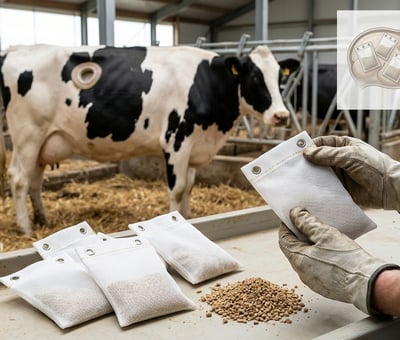
Cropenta's new-generation Bypass CovaminoSoy 2.0 and CovaminoRap 2.0 illustrate this approach. Their ruminal degradation characteristics were evaluated at ILVO in Belgium using in-situ/in-sacco methodology with rumen-fistulated cows, including an extended incubation protocol of up to 336 hours. The intestinal digestibility of the rumen-undegraded protein was assessed separately using the mobile nylon bag technique.
Schothorst Feed Research subsequently translated the experimental measurements into nutritional values suitable for feed evaluation and ration formulation. These assessments provide more detailed ingredient characterisation than a declared RUP percentage alone.
Such measurements help nutritionists estimate the nutritional contribution of protected protein ingredients within a ration. They should not, however, be confused with feeding trials demonstrating an improvement in milk yield or milk protein production. Actual animal responses depend on the complete diet, nutrient adequacy, physiological conditions and other potential limitations.
Three Different Ration Situations Require Different Solutions
1. Adequate MP supply, but a limiting essential amino acid. When total metabolizable protein is sufficient but lysine, methionine or another essential amino acid is limiting, targeted protected amino acid supplementation may be the most appropriate correction. Adding more complete protein is not necessarily justified.
2. Inadequate MP supply and several essential amino acids undersupplied. When the shortage extends beyond individual amino acids, increasing the supply of digestible protein may be necessary. A suitable bypass protein source can contribute a broader range of absorbable amino acids, provided that its post-ruminal digestibility is adequate.
3. Inadequate MP supply combined with a specific amino acid imbalance. In this situation, a combination of digestible bypass protein and rumen-protected amino acids may offer the most appropriate nutritional solution. The bypass protein contributes to overall MP supply, while targeted amino acid supplementation addresses remaining specific limitations.
In all three situations, adequate rumen-degradable nitrogen, fermentable energy, dry matter intake and overall energy availability remain essential. The appropriate intervention must be determined from the complete ration rather than from an isolated nutrient value.
Putting Protein Supply and Amino Acid Balance Into Practice
The formulation process should begin with an assessment of metabolizable protein supply relative to requirements, including the contribution of microbial protein and digestible dietary RUP. The predicted absorbed essential amino acid profile should then be evaluated alongside the total MP supply, energy availability and expected production response.
If microbial protein synthesis is constrained, the first priority may be improving rumen nutrient supply. If MP is insufficient despite adequate rumen function, a digestible bypass protein ingredient may be appropriate. If total MP is adequate but an individual amino acid is limiting, protected amino acid supplementation may be the more targeted solution.
When both the overall MP supply and amino acid balance require correction, the two approaches can be evaluated together. Their economic value should be assessed against the existing ingredient matrix, the cost per unit of usable nutrient and the expected response within the complete ration.
The important question for dairy nutritionists is therefore not simply whether the ration contains soybean meal and protected amino acids. It is whether the combination of microbial protein, digestible dietary protein and supplemental amino acids meets the actual nutritional requirements of the cow.
Technical Summary
Rumen-protected amino acids and highly digestible bypass proteins are not interchangeable nutritional solutions. Protected amino acids can address specific essential amino acid limitations, while digestible bypass proteins can contribute to a broader supply of metabolizable protein and amino acids.
A high RUP percentage alone does not establish the nutritional value of a protected protein. Ruminal degradation characteristics, assumed passage rate, intestinal digestibility and the resulting usable protein supply must be considered together.
For high-producing dairy cows, the objective is to provide sufficient metabolizable protein with an appropriate essential amino acid balance, while maintaining efficient rumen fermentation and economically justified nutrient supply.
The question every nutritionist should be asking is not simply whether lysine and methionine are balanced, but whether the complete ration delivers enough absorbable protein and the right amino acids to support the cow's requirements.
Technical Questions
Can rumen-protected amino acids replace bypass protein?
They can correct specific amino acid limitations, but they cannot automatically compensate for an inadequate supply of total metabolizable protein or deficiencies affecting several essential amino acids. The appropriate solution depends on the complete ration.
When is bypass protein more appropriate than protected amino acids?
Digestible bypass protein may be appropriate when the ration supplies insufficient MP or requires a broader contribution of absorbable amino acids. Protected amino acids may be more precise when total MP is sufficient but individual amino acids remain limiting.
Can bypass protein and rumen-protected amino acids be used together?
Yes. They can be complementary when both overall MP supply and specific essential amino acid balance require correction. Their combined use should be justified through ration evaluation rather than assumed necessary.
Does a higher RUP value mean better protein nutrition?
Not necessarily. RUP describes ruminal escape under defined assumptions, but the escaped protein must also be intestinally digestible. A higher RUP percentage without adequate post-ruminal digestibility does not guarantee more usable protein.
Do ILVO in-situ measurements demonstrate higher milk production?
No. In-situ rumen degradation studies and mobile nylon bag assessments characterise ingredient properties. They provide information for nutritional evaluation and ration formulation, but do not independently establish improvements in milk production or other animal performance outcomes.
This article was created with the help of AI and reviewed by the Cropenta editorial team. It is general information, not professional advice.
Technical Questions
Can rumen-protected amino acids replace bypass protein in dairy cow diets?
No, not when total metabolizable protein (MP) supply is inadequate and several essential amino acids are undersupplied. Rumen-protected lysine and methionine can correct specific amino acid limitations, but they cannot automatically compensate for a broader shortage of absorbable protein. Digestible bypass proteins may provide a more complete amino acid contribution when additional MP is required.
When should dairy nutritionists use bypass protein instead of protected amino acids?
Bypass protein may be more appropriate when a ration supplies insufficient metabolizable protein or when several essential amino acids need additional supply. If total MP is adequate but lysine or methionine is limiting, targeted rumen-protected amino acids may be more efficient. The decision should follow ration evaluation rather than relying on crude protein or RUP percentages alone.
Does a higher RUP or UDP percentage mean a better bypass protein?
Not necessarily. RUP or UDP indicates how much protein escapes ruminal degradation under defined evaluation assumptions, but it does not establish how much is subsequently digested. Intestinal digestibility, amino acid availability and the assumed ruminal passage rate must also be considered. High rumen protection with poor post-ruminal digestibility can result in limited nutritional value.
Can bypass soybean or rapeseed proteins be combined with rumen-protected lysine and methionine?
Yes. Highly digestible bypass soybean and rapeseed proteins can contribute a broader range of absorbable amino acids, while protected lysine or methionine can address remaining specific limitations. Combining them can be appropriate when both total MP supply and amino acid balance require correction. However, the combination is not automatically necessary in every dairy ration.
How can dairy nutritionists determine whether a bypass protein will actually improve a ration?
Start by evaluating dry matter intake, fermentable energy, rumen-degradable protein, microbial protein synthesis, total MP supply and the predicted essential amino acid profile. Then assess the bypass ingredient's measured ruminal degradation, intestinal digestibility and calculated usable protein values. Research-based ingredient characterisation, such as ILVO measurements evaluated by Schothorst Feed Research, supports more reliable formulation decisions, but does not independently guarantee higher milk yield.
- 1.Effect of metabolizable protein intake on growth performance, carcass characteristics, and feeding behavior of finishing steers (Sitorski et al., 2019)
- 2.Pre- and postpartum metabolizable protein supply: I. Effects on feed intake and metabolism (Westhoff et al., 2024)
- 3.A 100-Year Review: Protein and amino acid nutrition in dairy cows (Schwab and Broderick, 2017)
- 4.Metabolizable Protein: 2. Requirements for Maintenance in Cattle (Souza et al., 2021)
Looking for something specific?
Our team is there to help you find the right raw materials and solutions for your formulations