What current studies measure on rapeseed protein extraction routes
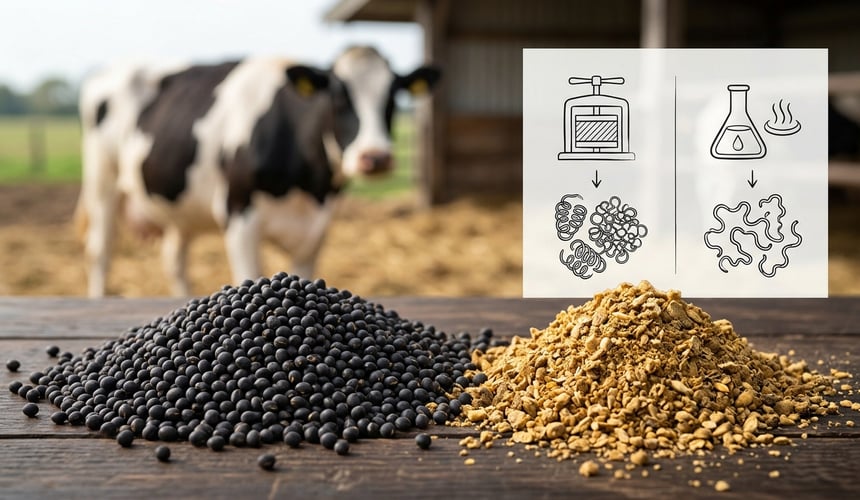
Crude protein content is a common starting point when comparing rapeseed protein products, yet two rapeseed protein products with similar analyses can behave differently once they reach the rumen. The reason often lies upstream, in how the protein was separated from the seed. The extraction route sets the starting condition for everything that follows, including any rumen protection treatment applied later.
Cropenta Insight
For a buyer comparing rapeseed-based protein sources, the processing history can be as informative as the crude protein figure. Heat, pressure and solvent exposure are process conditions that may alter how protein behaves in the rumen and how much of it is later digested in the intestine. Established knowledge covers the general principles, but the extraction-specific data in this area are still limited, so product documentation should state the process route and be read alongside intestinal digestibility values.
Why the protein fraction behaves as it does
Rapeseed contains oil and a protein fraction that is partly bound to fibre and other seed components. Industrial processing removes the oil by pressing, by solvent extraction or by a combination of both, and the chosen route changes the heat load and mechanical stress on the protein. For ruminant rations, protein is judged on its rumen-undegradable protein (RUP), the share that escapes microbial breakdown in the rumen and is digested in the small intestine.
What the isolate study compares
A recent peer-reviewed study compared rapeseed protein isolates prepared from rapeseed meal by salt extraction and by alkaline extraction, using both dehulled and non-dehulled meal, and examined their digestibility.[1] An isolate is a further purified protein fraction, not the meal used in ruminant rations. Its digestibility results therefore describe a processed fraction under the study conditions, and they cannot be transferred directly to rapeseed meal or to a rumen-protected meal product. The study's full numerical results are reported in the original publication, and this article does not reproduce them.
Where the extraction route starts
Recovery of protein also depends on the route. In an oil extraction comparison, hot-pressed rapeseed meal showed a significantly higher protein recovery yield than solvent-extracted meal.[2] That finding concerns how much protein is recovered and how the protein behaves in extraction and emulsifying tests. It does not show how much of the protein escapes rumen degradation or how well it is digested in the intestine, so it cannot be read as a ruminant nutrition result.
Heat history and the Maillard question
Solvent extraction is typically followed by a desolventising and toasting step, where heat and moisture are applied to remove solvent residues. In general protein chemistry, excessive heat in the presence of reducing sugars can lead to Maillard reactions, which bind lysine and reduce its availability. Whether a given extraction and desolventising regime causes this in rapeseed protein, and to what extent, depends on the specific process conditions and needs to be verified by measurement.
Heat history is usually described by the desolventising and toasting conditions, such as temperature, time and moisture. These are process parameters, and their effect on rapeseed protein has to be measured for each process rather than inferred from another process.
Rumen degradation and intestinal digestibility are separate questions
RUP is calculated from measured degradation characteristics at an assumed passage rate, the Kp. RUP values are therefore only comparable when they are calculated at the same Kp. A high RUP does not by itself show good intestinal value: the share of rumen-undegraded protein that is digested in the small intestine must be known as well. In-vitro degradation tests are quicker and more standardised, but they cannot replicate every rumen condition, and they may overstate rumen protection for heat- and Maillard-treated proteins. In-situ values from cows, which use the animal's own rumen environment, are generally the more reliable basis for comparison, and the test system should be stated with any value.
Operational implications
In feed mill practice, the processing history of rapeseed protein is often less visible than its analysis. When comparing values, it helps to note the extraction route, the heat history, the Kp used in any RUP figure and the measurement method. Where that information is missing, the available analysis should be read with the gap noted, and no conclusion about the processing route should be drawn from it.
Sampling and reporting considerations
Samples used for analysis should represent the batch being purchased. Variation in seed origin, pressing conditions or solvent exposure between batches may change analytical results, so a single certificate describes only the sample tested. Where a nutritionist needs RUP or intestinal values for a ration, the source of each value should be clear: a measured value from a named study, a published table value, or a calculated estimate.
Technical Summary
The extraction route determines the starting protein quality of rapeseed protein before any rumen protection step. Recovery and heat history can differ between pressing, solvent extraction and isolate production, but published evidence on their effect on rumen degradation and intestinal digestibility in ruminants is limited. RUP values must be compared at the same passage rate and read together with intestinal digestibility.
This article was created with the help of AI and reviewed by the Cropenta editorial team. It is general information, not professional advice.
Technical Questions
Why does the assumed passage rate matter when comparing RUP values of rapeseed protein?
RUP is calculated from degradation parameters and an assumed fractional passage rate, Kp, which is estimated from intake and production rather than measured in the nylon bag. Two RUP values calculated at different Kp cannot be compared directly, even when the degradation data are identical. The Kp used in a calculation is therefore needed to read the value in context.
Can a total lysine analysis show whether rapeseed protein was over-processed?
Total lysine can remain unchanged while reactive lysine, the lysine with a free epsilon-amino group, falls after Maillard reactions with reducing sugars. A total amino acid analysis therefore does not show the availability of lysine. Intestinal digestibility measurements for ruminant protein sources give a more direct indication of what the animal can use.
Looking for something specific?
Our team is there to help you find the right raw materials and solutions for your formulations