Do Plants Respond Differently to Free Amino Acids Than to Peptides?
A grower who compares two foliar products, one listing mostly free amino acids and the other mostly peptides, may reasonably ask whether the plant reacts differently to each. The question is fair, but the answer is less clear than product sheets sometimes suggest.
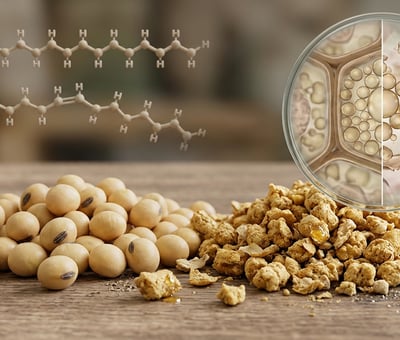
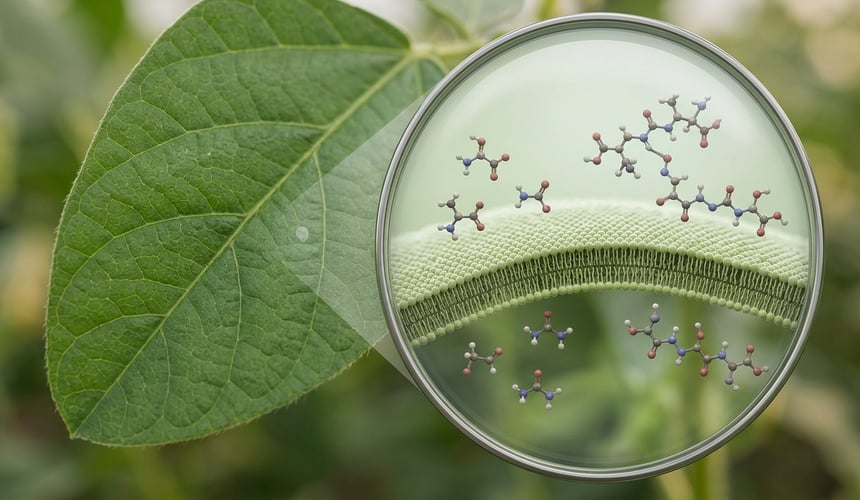
Amino acid products are mixtures. Free amino acids are the smallest building blocks, peptides are short chains of linked amino acids, and whole proteins are larger still. Most products sit somewhere along this scale, and the balance depends on the raw material and the production method. A recent review of plant proteins, peptides and amino acids in food describes these fractions, although its focus is dietary nutrition rather than sprayed crops.[1]
Cropenta Insight
For a grower or adviser, the practical point is that a ratio figure on a label says little about how a plant responds. The sources support one clear statement: amino acids have established internal roles in the plant. The effect of the balance between free amino acids and peptides in an externally applied formulation has not been shown in the material reviewed. Read ratio statements as a description of composition, not as evidence of crop performance.
What amino acids do inside the plant
Before asking what an applied product does, it helps to know what amino acids already do within the plant. They are building blocks for proteins, but they also act as signals. A 2025 review describes how amino acids can influence gene expression linked to various metabolic pathways.[2] This describes amino acids made or moved inside the plant. It does not show that sprayed amino acids follow the same route or produce the same signal, and it says nothing about the balance between free amino acids and peptides.
Where the biostimulant evidence stops
Reviews of amino acid biostimulants and protein hydrolysates in agriculture cover several product types and the effects reported for different crops.[3] The range of products, crops and conditions in those reviews is wide. For the specific question of ratio, the reviewed material contains no side-by-side trials in which only the free amino acid fraction and only the peptide fraction were varied while other factors were held constant. The reviewed material therefore does not allow conclusions about how the two fractions compare in plant response.
Transport and defence roles in the plant
Another review describes amino acids as active players in nitrogen transport and in defence responses within plants.[4] These roles describe the plant's own metabolism. Whether a particular external ratio of amino acids to peptides changes those processes in a treated crop has not been shown in the sources reviewed. Any possible relevance in the field is a hypothesis that needs controlled comparisons across species, conditions and application methods, since results from a laboratory or greenhouse do not transfer directly to a field crop.
Reading ratios on a product sheet
A ratio is often stated as a share of total amino acids or of nitrogen, which does not show how large the molecules are. The hydrolysis method and the raw material determine the spread of molecule sizes, so two products with similar total amino acid content can differ in their free amino acid and peptide fractions. That difference in composition is a fact about the product. Whether it leads to a different plant response is a separate question that the reviewed sources do not answer.
Technical Summary
Free amino acids and peptides differ in molecular size, and that difference may matter for how a product is taken up and handled in the plant. Amino acids have established internal roles in signaling, nitrogen transport and defence. However, the reviewed sources contain no controlled comparison of amino acid to peptide ratios in external applications, so any difference in plant response between these formulations remains unconfirmed.
This article was created with the help of AI and reviewed by the Cropenta editorial team. It is general information, not professional advice.
Looking for something specific?
Our team is there to help you find the right raw materials and solutions for your formulations