When Should Dairy Farmers Invest in Rumen-Protected Feed Ingredients?
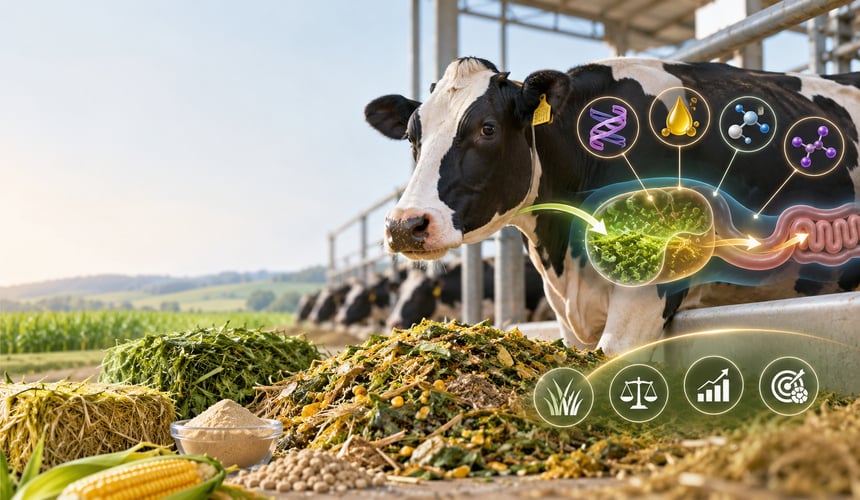
Why the right nutritional investment starts with identifying the limiting factor in the dairy ration.
Rumen-protected proteins, fats, amino acids and choline are designed to improve the delivery of specific nutrients to dairy cows. Yet their nutritional functions differ considerably, and their inclusion does not automatically improve milk production, feed efficiency or metabolic health.
The central question is not whether an ingredient is rumen-protected, but whether the existing ration contains a nutritional limitation that the ingredient can address.
A cow with insufficient energy intake will not necessarily benefit from additional bypass protein. A ration already supplying sufficient metabolizable protein may respond more effectively to a targeted amino acid adjustment. During the transition period, metabolic requirements may justify interventions that have little relevance during other stages of lactation.
Understanding these distinctions is essential for making technically justified and economically meaningful supplementation decisions.
Cropenta Insight
The value of a rumen-protected ingredient depends on three separate factors: the nutritional limitation in the existing ration, the quantity of biologically usable nutrients delivered by the ingredient and the cow's capacity to utilise those additional nutrients.
Rumen protection addresses nutrient delivery. It does not establish whether the supplied nutrient is limiting, whether it remains digestible after leaving the rumen or whether supplementation will generate a measurable production response.
The correct investment decision therefore begins with identifying the limiting nutrient, not selecting a protected product.
The first question: what actually limits performance?
Dairy cow performance depends on the combined supply of fermentable energy, rumen-degradable nitrogen, metabolizable protein, essential amino acids, fatty acids, minerals and other nutrients.
These nutrients interact. Increasing the supply of one nutrient does not necessarily improve performance if another requirement remains inadequately met.
For example, additional rumen-undegradable protein may increase the supply of dietary protein reaching the small intestine. However, if energy availability is restricting milk synthesis, the additional absorbed amino acids may not produce the expected increase in milk protein output.
Similarly, excessive replacement of rumen-degradable protein with protected protein may reduce the nitrogen available for microbial protein synthesis. This can be counterproductive when rumen microorganisms already face a shortage of degradable nitrogen.
The principles established in the National Academies' Nutrient Requirements of Dairy Cattle emphasise the importance of evaluating rumen-degradable protein, digestible rumen-undegradable protein, microbial protein synthesis and metabolizable amino acid supply within the complete feeding system [2].
Three questions should therefore guide the initial assessment:
- Is the cow receiving sufficient energy and nutrients from the existing ration?
- Which nutrient or physiological requirement is currently limiting performance?
- Would a protected ingredient correct that limitation more effectively than adjusting existing feed ingredients?
Without this assessment, supplementation risks increasing feed costs without generating a corresponding nutritional benefit.
Why forage quality and rumen function come before supplementation
Forage quality is fundamental because it influences dry matter intake, energy availability, fibre digestion and the conditions required for efficient rumen fermentation.
Highly digestible forage can support greater feed intake and a more favourable nutrient supply. Poorly digestible forage may restrict intake and consequently limit the amount of energy and protein available for production.
Rumen microorganisms also require an appropriate balance between fermentable energy and degradable nitrogen to synthesise microbial protein, an important source of essential amino acids for dairy cows.
This creates two different nutritional situations.
When rumen-degradable protein is excessive: the ration may supply more degradable nitrogen than rumen microorganisms can efficiently utilise. Depending on the overall nutrient balance, replacing part of the degradable protein supply with a suitable protected protein source may help redistribute protein availability between the rumen and small intestine.
When rumen-degradable protein is insufficient: increasing the proportion of protected protein does not resolve the shortage of nitrogen available for microbial protein synthesis. The rumen protein balance must first be addressed.
These situations cannot be reliably distinguished from crude protein concentration alone. Forage analysis, dry matter intake, fermentable energy supply and the predicted rumen protein balance must be considered together.
Milk urea measurements can provide supporting information about nitrogen utilisation, but should not be interpreted independently of ration composition, milk production and other contributing factors.
The first priority is therefore to establish an efficient basal ration before deciding whether additional nutrient protection is justified.
What practical feeding research teaches us about protected ingredients
An interesting illustration comes from research discussed by Dr Ryszard Kujawiak in the Polish agricultural journal Elita in October 2021 [1].
The article examined several categories of protected feed ingredients and reported both positive and disappointing results from laboratory analyses and practical feeding evaluations.
In one comparison conducted at LKS Lichtenwalde, four commercially produced protected rapeseed meals showed rumen-undegraded protein (UDP) values ranging from 41% to 61%.
Their calculated utilisable protein values (nXP) ranged from 23.8% to 29.1%.
Interestingly, two products had identical reported UDP values of 61%, yet their nXP values differed at 29.1% and 27.6%.
The untreated rapeseed meal included in the comparison had a reported UDP value of 36% and an nXP value of 23.3%.
These observations demonstrate that products classified under the same general description can differ substantially in their evaluated nutritional characteristics.
However, the reported UDP values are not sufficient to establish differences in intestinal digestibility. Likewise, nXP is a calculated protein evaluation parameter rather than a direct measurement of intestinal protein digestion.
The distinction matters when assessing the actual nutritional contribution of protected protein sources.
The same article described feeding evaluations involving protected methionine, lysine and choline.
In two German comparisons involving protected methionine, daily milk yield was reported to increase by 0.9 and 1.35 kg per cow, respectively, alongside reductions in dietary crude protein concentration.
By contrast, a protected lysine evaluation conducted at Sano Agrar Institut reported a 0.5 kg/day reduction in milk yield, despite a small increase in milk protein concentration.
A further herd-level comparison involving protected choline did not demonstrate convincing improvements in the evaluated health and reproductive indicators.
These results should not be interpreted as a direct comparison of the effectiveness of different nutrient categories. The interventions addressed different nutritional functions and were evaluated under different conditions.
Nor do the available descriptions establish that all observed differences were caused by the supplements alone.
The broader lesson is that protection technology does not determine the feeding response independently of the animal's requirements and the basal ration.
Protected protein: when the ration needs more metabolizable protein
Rumen-protected protein becomes particularly relevant when the existing ration cannot provide an adequate supply of metabolizable protein or digestible essential amino acids while maintaining an appropriate rumen protein balance.
Its purpose is to increase the contribution of dietary protein escaping rumen degradation and subsequently becoming available for intestinal digestion.
However, rumen escape and intestinal digestion are two different properties.
A high rumen-undegradable protein percentage does not establish how much of that protein is digestible in the intestine. The protein must remain accessible to digestive enzymes after leaving the rumen.
This is especially important for processed protein ingredients, where excessive treatment may increase resistance to rumen degradation while reducing subsequent digestibility.
Nutritionists should therefore assess measured degradation characteristics, the passage rate assumed in RUP calculations, intestinal digestibility and the resulting metabolizable protein contribution.
For protected soybean and rapeseed proteins, this information helps determine whether the ingredient provides a meaningful nutritional improvement over the protein source it replaces.
The relevant economic measure is not simply the cost per tonne of protected protein, but the cost of delivering additional usable protein or digestible amino acids within the formulated ration.
Protected fats: when energy density becomes the priority
Early lactation creates a particular nutritional challenge because energy requirements can increase faster than voluntary dry matter intake.
When energy availability limits performance, increasing the inclusion of protected protein may not be the most appropriate first intervention.
Dietary fats can provide a concentrated source of energy without requiring a comparable increase in rapidly fermentable starch.
However, not all fat supplements interact with the rumen in the same way.
Fatty acid composition, physical form, ruminal availability and inclusion rate influence the response. Certain unsaturated fatty acids can interfere with rumen fermentation or contribute to changes in milk fat synthesis, depending on dietary conditions.
Fat sources designed to reduce ruminal interactions may be useful when additional energy density is required, but their suitability must still be assessed within the complete ration.
A 2024 meta-analysis of fat supplementation during early lactation examined production and metabolic outcomes, highlighting the need to evaluate these responses together rather than assuming that supplemental fat uniformly improves energy balance [3].
Increasing dietary energy density is therefore a potential strategy, not a guarantee of better energy status. Changes in dry matter intake, milk energy output and body reserve mobilisation must also be considered.
Protected amino acids: when total protein is not the main limitation
A ration may provide an adequate quantity of metabolizable protein while still supplying an amino acid profile that does not fully match the cow's requirements.
In this situation, adding more complete protein is not necessarily the most efficient nutritional correction.
Rumen-protected methionine or lysine can provide a more targeted means of adjusting the intestinal supply of individual essential amino acids.
The choice depends on the amino acids already supplied by microbial protein and digestible dietary protein.
Methionine and lysine are frequently important in dairy ration formulation, but their limiting status cannot be assumed solely from the type of forage or concentrate included in the diet.
A 2024 systematic review and meta-analysis covering 21 publications and 40 treatment comparisons evaluated responses to rumen-protected methionine supplementation beginning before calving and continuing into early lactation [4].
The research provides broader evidence of potential production benefits, while also illustrating why treatment response must be interpreted in relation to the diets and physiological stages studied.
The practical distinction is important:
When total metabolizable protein is insufficient, an ingredient supplying additional digestible protein may be appropriate.
When metabolizable protein is adequate but a specific amino acid is limiting, targeted supplementation may offer a more precise nutritional adjustment.
Protected protein and protected amino acids are therefore not automatically competing solutions. Their nutritional roles can be complementary, depending on the ration.
Protected choline: a different decision during the transition period
Rumen-protected choline addresses a different nutritional function from protected protein or protected amino acids.
Choline contributes to phospholipid synthesis and lipid transport, making it particularly relevant during the transition period when substantial metabolic adaptations occur around calving.
The Polish article reported no convincing improvement in several health and reproductive indicators during one protected choline feeding evaluation [1].
However, that result needs to be interpreted alongside broader scientific evidence.
A meta-analysis published online in 2019, involving 21 experiments and 1,313 multiparous dairy cows, reported improvements in dry matter intake and yields of milk, energy-corrected milk, milk fat and milk protein following transition-period supplementation with rumen-protected choline [5].
A further systematic review and dose-response meta-analysis published in 2025 investigated the effects of rumen-protected choline on dairy cow lactation performance [6].
The contrast between an individual field evaluation and pooled research findings illustrates why conclusions should consider study design, supplementation period, dosage, physiological conditions and the totality of available evidence.
Protected choline should therefore be evaluated as a targeted nutritional intervention for specific physiological circumstances, rather than as a general-purpose production supplement.
A practical decision framework for dairy nutritionists
The economic justification for protected feed ingredients becomes clearer when supplementation decisions follow a consistent nutritional sequence.
- Establish the basal ration: Verify forage quality, dry matter intake, physically effective fibre, energy supply and feeding consistency.
- Assess rumen function: Determine whether fermentable energy and rumen-degradable nitrogen adequately support microbial protein synthesis.
- Identify the limiting nutrient: Evaluate metabolizable protein supply, essential amino acid balance, dietary energy and relevant physiological requirements.
- Select the appropriate nutritional intervention: Consider protected protein for an identified need for additional digestible dietary protein, protected amino acids for specific amino acid limitations, suitable fat sources for energy-density adjustments and protected choline where transition-period requirements justify its use.
- Verify the ingredient's nutritional characteristics: Examine relevant analytical evidence, including rumen degradation, intestinal digestibility, fatty acid composition, amino acid availability or active nutrient delivery, depending on the ingredient.
- Evaluate the economic response: Compare the incremental feed cost with the expected nutritional contribution and realistic production or metabolic benefits.
This sequence avoids treating protected ingredients as interchangeable solutions.
It also distinguishes three questions that are sometimes confused: whether an ingredient is technically effective at delivering a nutrient, whether the animal needs that additional nutrient and whether its inclusion produces an economically valuable response.
From ingredient price to nutritional return
Feed ingredient prices are commonly compared per tonne, but purchase price alone is an incomplete basis for evaluating nutritional value.
Two protected protein sources with similar crude protein concentrations can differ in rumen degradation, intestinal digestibility and usable amino acid supply.
Likewise, two fat supplements may deliver different nutritional contributions because of differences in fatty acid composition, digestibility and their effects on the ration.
An appropriate economic comparison should therefore account for the ingredient's actual contribution to the formulated diet and the feed materials it replaces.
Where possible, the incremental cost should be related to the additional usable nutrient supplied, rather than the total quantity of ingredient purchased.
Potential milk production responses, milk component changes, nitrogen utilisation or metabolic benefits can then be evaluated against the expected costs.
However, predicted improvements in nutritional supply should not be treated as proven animal performance responses. Feeding trials and production records remain important for evaluating whether the expected benefits occur under practical conditions.
The most economical protected ingredient is therefore not necessarily the cheapest or the most highly protected. It is the ingredient that addresses a verified nutritional need at a justifiable total ration cost.
Technical Summary
Rumen-protected feed ingredients should be selected according to the nutritional limitation they are intended to address.
Protected proteins may increase the supply of intestinally digestible dietary protein. Protected fats may help adjust energy density. Protected amino acids provide targeted adjustments to essential amino acid supply, while protected choline can support specific metabolic functions during the transition period.
Their usefulness depends on forage quality, dry matter intake, rumen microbial activity, the existing supply of metabolizable protein and amino acids, and the physiological requirements of the cow.
Laboratory characterisation establishes the nutritional properties of an ingredient. Ration formulation determines whether those properties address a specific requirement. Animal performance measurements are needed to establish whether the expected response occurs in practice.
The objective is not to maximise rumen protection or supplementation, but to deliver the right nutrients, in the right quantities, within a balanced and economically efficient dairy ration.
Technical Questions
Why can a rumen-protected ingredient fail to improve milk production?
A protected ingredient may not improve milk production if the nutrient it supplies is not limiting. Insufficient dietary energy, inadequate rumen-degradable protein or an imbalance in other essential nutrients can restrict the response. Technical nutrient delivery does not guarantee additional milk production.
When is protected protein preferable to protected amino acids?
Protected protein may be more appropriate when the ration requires a broader increase in metabolizable protein or digestible amino acid supply. Protected amino acids can provide a more targeted adjustment when total metabolizable protein is adequate but an individual essential amino acid remains limiting.
How does forage quality influence the value of protected protein?
Forage quality affects feed intake, fermentable energy availability and rumen protein balance. These factors influence microbial protein synthesis and determine whether additional rumen-undegradable dietary protein is likely to improve the overall amino acid supply.
Should rumen-protected protein be evaluated by RUP percentage alone?
No. RUP values depend on protein degradation characteristics and the passage rate assumed in their calculation. Intestinal digestibility and amino acid availability must also be considered to assess the nutritional contribution of the protein escaping rumen degradation.
How can dairy nutritionists evaluate the economic value of protected ingredients?
The evaluation should compare the additional ration cost with the usable nutrient supply and the expected response to correcting a verified nutritional limitation. Ingredient characterisation supports formulation, while animal performance evidence helps establish whether predicted benefits translate into practical economic returns.
This article was created with the help of AI and reviewed by the Cropenta editorial team. It is general information, not professional advice.
Technical Questions
When should dairy cows receive rumen-protected protein?
Rumen-protected protein may be beneficial when a dairy ration provides sufficient energy and rumen-degradable protein but does not fully meet the cow's metabolizable protein or essential amino acid requirements. This is particularly relevant in high-producing dairy herds. The decision should be based on forage analysis, dry matter intake and complete ration evaluation rather than milk yield alone.
What is the difference between rumen-protected protein and rumen-protected amino acids?
Rumen-protected protein supplies a broader range of amino acids through dietary protein that escapes extensive ruminal degradation. Rumen-protected amino acids, such as methionine and lysine, target specific amino acid limitations. Protected protein may be appropriate when overall metabolizable protein supply is insufficient, while individual amino acid supplementation can be more precise when one essential amino acid is limiting.
Can rumen-protected feed ingredients improve milk production?
Rumen-protected proteins, fats and amino acids can support milk production when they address a genuine nutritional limitation. However, higher milk yield is not guaranteed. Feeding trials show that responses depend on basal ration composition, energy availability, lactation stage and the nutrients already supplied. Supplementation is most effective when it corrects an identified deficiency within a balanced ration.
Are rumen-protected fats beneficial for dairy cows in early lactation?
Rumen-protected fats can help increase dietary energy density during early lactation, when energy requirements often exceed what cows can obtain from voluntary feed intake. Their effectiveness depends on fatty acid composition, inclusion rate and the complete ration. Appropriate fat supplementation may help manage energy supply, but it cannot replace adequate forage quality or correct an existing protein deficiency.
How can dairy nutritionists determine whether a rumen-protected supplement is cost-effective?
Cost-effectiveness depends on the nutritional limitation being addressed, the amount of digestible nutrients supplied and the expected animal response. Nutritionists should evaluate forage quality, ration balance, ingredient digestibility, supplementation costs and potential changes in milk yield or milk composition. Comparing products solely by price per tonne or declared nutrient concentration may overlook important differences in nutritional value.
Looking for something specific?
Our team is there to help you find the right raw materials and solutions for your formulations