How Sugar, Heat and Lignosulfonate Treatments Change the Rumen Degradation of Protein
Rumen micro-organisms break down a large part of the crude protein in a dairy ration before it reaches the small intestine. For high-yielding cows, the protein that escapes this breakdown and is digested further down the tract is the part that adds amino acids beyond what the rumen microbes supply. A 2025 study by Cavallini and colleagues looks at how rumen-protected amino acids and fibrous by-products can be combined in rations to adjust nitrogen intake; it does not test heat, sugar or lignosulfonate protein treatments.[1] This article looks at how those three treatment routes alter the protein itself and what that means for the protein reaching the small intestine.
Cropenta Insight
For a sound comparison, read a rumen protection value together with intestinal digestibility and the assumed passage rate. A high RUP figure calculated at one Kp cannot be set against a value calculated at another rate, and a protein that resists rumen breakdown but is poorly digested in the small intestine delivers little usable amino acid. In-vitro degradation tests can also overstate the protection of Maillard-treated proteins, so in-situ data from cows are the more relevant reference point.
Why the rumen breaks down protein first
Rumen micro-organisms split proteins into peptides and amino acids and use the nitrogen to build their own protein, with ammonia and fermentable energy as inputs. Rumen-degradable protein (RDP) feeds this microbial synthesis. Rumen-undegradable protein (RUP, also called UDP or bypass protein) escapes this breakdown and is digested in the abomasum and small intestine. RUP is calculated from in-situ nylon-bag degradation measurements combined with an assumed passage rate (Kp), so RUP values are only comparable when they are calculated at the same Kp.
Heat: changing the protein structure
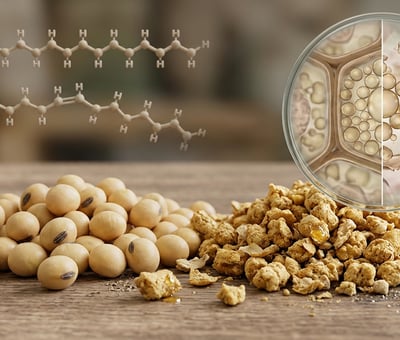
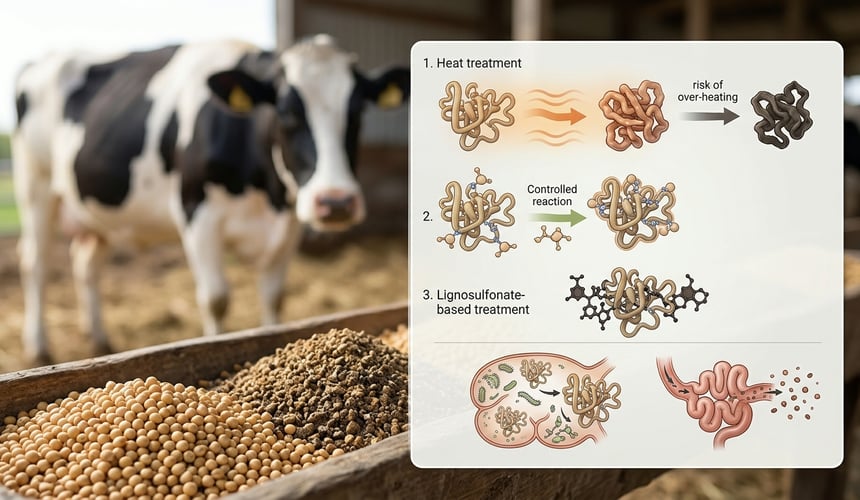
Heat denatures proteins, unfolding their three-dimensional structure and making them less accessible to enzymes. Mild heat can reduce rumen degradation, but the same treatment can also lower digestibility further down the tract. A 2022 comparison of high-pressure processing and heat treatment in pea protein concentrate measured protein and starch digestibility in vitro, not in ruminants.[2] A 2024 in-vitro study found that mild heating and extrusion raised the digestibility of sunflower protein by 13 to 19 percent, while pea protein digestibility was not significantly affected.[3] The response therefore depends on the protein source and on the intensity of the treatment. These results do not show what happens to the same protein in the rumen of a cow.
Sugars: the Maillard reaction
Reducing sugars such as glucose, fructose and xylose carry a free aldehyde or ketone group that can react with free amino groups in the protein, notably the epsilon-amino group of lysine. The first products are Schiff bases and then Amadori products, which go on to form brown, high-molecular-weight melanoidins. When the reaction is controlled, the modified protein resists breakdown by rumen micro-organisms, while acid and enzymes in the abomasum and small intestine can still release amino acids. Over-processing binds too much lysine, and the lysine that is lost is no longer available for digestion. Total lysine can stay the same while reactive lysine falls, so a crude protein or total amino acid figure alone does not reveal the damage.
Lignosulfonates: a route with less documented evidence
Lignosulfonates are sulfonated derivatives of lignin, a by-product of sulfite pulping. They are used as a formaldehyde-free option for protein treatment, but none of the sources reviewed for this article documents how they bind to or modify protein, or how they affect intestinal digestibility. It cannot be stated from this evidence whether lignosulfonate treatment works through the same chemistry as the Maillard route. It should be treated as an open question rather than assumed to behave like sugar treatment.
What the evidence does and does not show
The 2025 study addresses fibrous by-products and rumen-protected amino acids, not heat, sugar or lignosulfonate protein treatments. The in-vitro studies on pea and sunflower proteins do not measure rumen degradation. The mechanisms described above are established chemical and processing principles, but no source in this set compares the three routes head to head in ruminants. In-vitro protein tests correlate poorly with in-situ measurements for heat- and Maillard-protected proteins and tend to overstate rumen protection, so their values are not comparable with in-situ values. Results from one protein product cannot be transferred to other proteins or other treatments.
Operational points for feed buyers and formulators
When comparing treated protein ingredients, check the RUP value together with its passage rate, the intestinal digestibility of the undegraded fraction and the valuation system used, such as Dutch DVE/OEB, German nXP, INRA PDI or CNCPS. A high RUP paired with weak intestinal digestibility delivers less usable protein than the RUP figure suggests. Heat applied too strongly, for too long or at high moisture can overprocess a meal and lower reactive lysine. Colour changes give only a rough visual indication of heat load and do not replace analytical data.
Technical Summary
Protection methods change a protein so that rumen micro-organisms degrade less of it, while acid and enzymes after the rumen can still release amino acids. Heat denatures protein, and its effect depends on intensity and protein source. Maillard reactions with reducing sugars bind amino groups, including lysine, and become harmful when over-processed. Lignosulfonate mechanisms are not documented in the sources reviewed here. Compare RUP only at the same passage rate and always alongside intestinal digestibility.
This article was created with the help of AI and reviewed by the Cropenta editorial team. It is general information, not professional advice.
Technical Questions
Why should a high RUP value be read together with the passage rate and intestinal digestibility?
RUP is calculated from degradation measurements combined with an assumed passage rate (Kp), so a value at one Kp is not comparable with a value at another. The undegraded protein also has to be digested in the small intestine to supply amino acids. A high RUP with low intestinal digestibility can deliver less usable protein than the RUP figure suggests, so both values are needed for a fair comparison.
Why can in-vitro tests give a misleading picture of heat- or Maillard-treated proteins?
In-vitro degradation tests do not reproduce the rumen environment, and for heat- and Maillard-protected proteins they tend to correlate poorly with in-situ measurements in cows. They can overstate rumen protection. Values from in-vitro methods are therefore not comparable with in-situ values, and in-situ data from fitted cows are the more reliable basis for comparing protected proteins.
Looking for something specific?
Our team is there to help you find the right raw materials and solutions for your formulations