What the current evidence says about lecithin phospholipids and fat digestion
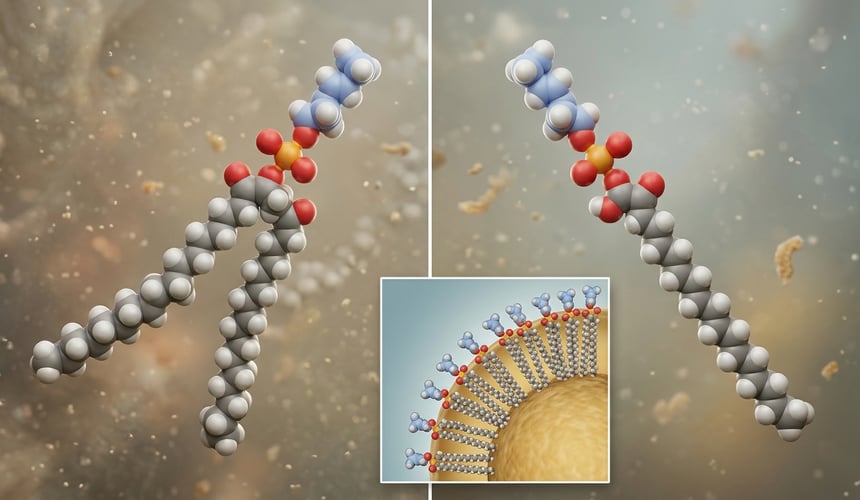
Ask a feed formulator what lecithin is and the answer is usually 'an emulsifier'. That description is incomplete. Lecithin is a mixture of phospholipids, glycolipids, triglycerides and other components, and its makeup depends on the oilseed and on how the crude oil was degummed or fractionated. Two products sold as lecithin can therefore differ considerably in how much phosphatidylcholine (PC) and lysophosphatidylcholine (LPC) they deliver.[1]
The question here is whether those ratios matter for fat digestibility, and in which animals. The short answer is that the mechanism is plausible, but the sources reviewed do not show a direct link between defined PC to LPC ratios and fat digestibility in any species.
Cropenta Insight
For buyers and nutritionists, the useful distinction is between a declared lecithin grade and its measured phospholipid profile. The primary overview reports phospholipid purity of 97.6% for refined soybean lecithin and 60% for crude soybean lecithin, so one ingredient category can vary widely in composition. Emulsifying behaviour alone does not show higher fat digestibility, so composition data should be checked against the species and age of the animals being fed.
Phosphatidylcholine and lysophosphatidylcholine do different jobs
Phosphatidylcholine carries two fatty acid chains on a glycerol backbone, with a phosphocholine head group. Lysophosphatidylcholine has only one fatty acid chain. That makes it more water-soluble and generally described as the more surface-active of the two. This is a physicochemical description, not a measured digestion outcome. In the intestine, phospholipids work at the oil-water interface alongside bile salts, but whether a given PC to LPC ratio changes droplet size or lipase access in a particular diet has not been established in the sources reviewed here.
Keep three fractions apart. Triglycerides supply most of the fatty acids in a fat. Free fatty acids are released fatty acids, more common in acid oils and by-products. Phospholipids are the amphiphilic fraction that carries the emulsifying role. Each is digested and absorbed differently and contributes a different energy value.
What the primary overview reports on lecithin composition
The primary study is a literature overview on soybean lecithin in aquafeed, published in 2023 by W. Wee. Its most useful figure for this topic is compositional: refined soybean lecithin had a phospholipid purity of 97.6%, compared with 60% for crude soybean lecithin.[1] These numbers describe the ingredient, not its digestion. The overview is aquaculture-focused, and fish research does not transfer to poultry, pigs or ruminants without additional evidence. It does not provide a feeding trial that varied PC to LPC ratios, so it cannot tell a formulator which ratio to target.
Monogastrics: young birds and limited bile salts
In young monogastric animals, bile salt and lipase output is limited, so fat digestion generally improves with age. Fat digestibility in young animals can differ with the fatty acid profile of the fat, and the comparison between unsaturated and saturated fats should be checked in species-specific data. A broiler study in the supporting set reports that lecithin and lysolecithin decreased feed conversion ratio regardless of sex or growth period.[2] Feed conversion reflects intake, growth and the response to the whole diet. It is not a measure of fat digestibility, so the result does not show that fat digestibility rose or that a particular PC to LPC balance was responsible.
Regulatory context is not efficacy evidence
The EFSA assessment of lecithins for all animal species concludes that lecithins are safe for all target species and that setting a maximum content is not considered necessary.[3] That is a safety conclusion. It does not rank phospholipid profiles or show how much fat a lecithin helps digest.
Free fatty acids are a separate variable
Lecithin is not only a phospholipid source. A broiler study on soybean lecithin high in free fatty acids assessed effects on performance, feed energy content and fatty acid digestibility.[4] Because free fatty acids are a separate fraction with their own digestion and energy value, results obtained with a high free fatty acid lecithin cannot be read as a statement about PC and LPC ratios. The specific values should be checked in the original paper before use.
Ruminants start from a different point
Dietary fat in ruminants is partly modified by rumen microbes before it reaches the small intestine, and the phospholipid fraction may be altered in that process. Monogastric findings therefore cannot be carried over to dairy or beef rations. The sources reviewed contain no ruminant study comparing PC and LPC ratios.
Operational points for formulators
A single 'lecithin' specification is rarely enough for a feed mill. Request the phospholipid content, the PC and LPC split where analysed, the free fatty acid content and the oxidative stability values. Liquid lecithin-containing fats are often added at the mixer or sprayed onto pellets, and at low inclusion levels the distribution of the product in the batch matters. A lecithin with good emulsifying characteristics still needs a trial in the target species before any change in fat digestibility or growth can be attributed to it.
Technical Summary
Lecithin is a mixture whose phospholipid fraction, including PC and LPC, can differ widely between sources and processing. Emulsification is a plausible role for these phospholipids, but the reviewed evidence does not establish which PC to LPC ratio changes fat digestibility in any species. Broiler data on lecithin and lysolecithin concern feed conversion, not digestibility. Ruminant data are lacking, and controlled trials varying the ratio are needed.
This article was created with the help of AI and reviewed by the Cropenta editorial team. It is general information, not professional advice.
Technical Questions
Why should a buyer request PC and LPC values instead of only a lecithin grade name?
A grade name such as refined or crude describes processing, not a fixed phospholipid profile. The primary overview reports phospholipid purity of 97.6% for refined and 60% for crude soybean lecithin, a gap large enough to change how much product is needed to supply a given phospholipid amount. Requesting phospholipid content, the PC and LPC split where analysed, and free fatty acid content gives a comparable basis between suppliers and batches.
Does a higher fat digestibility value confirm better growth on a lecithin-containing diet?
No. Fat digestibility measures how much fat disappears between the feed and the faeces or ileum, depending on the method used. Growth and feed conversion depend on feed intake, energy supply and the animal's response to the whole diet. The broiler feed conversion data are a separate outcome from digestibility, so each should be reported and interpreted on its own.
Related articles
Related Products


Looking for something specific?
Our team is there to help you find the right raw materials and solutions for your formulations

