How Seaweed Extract Shapes Root Hairs and Nutrient Uptake
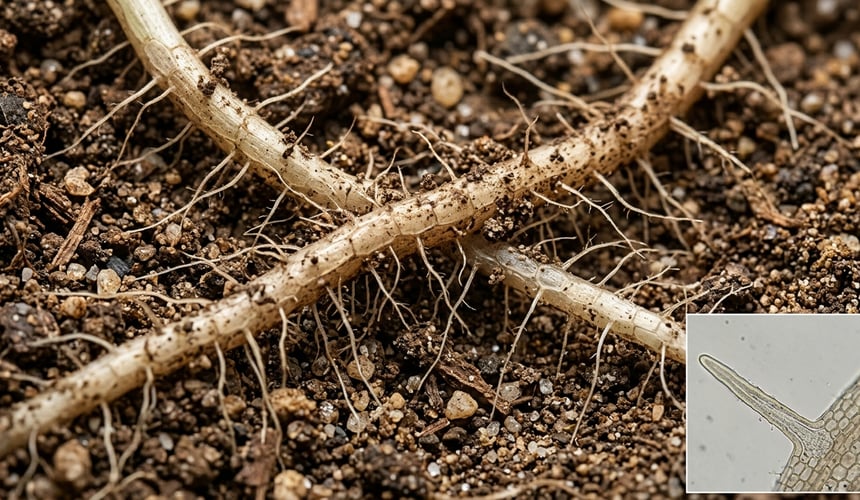
Two plants can sit in the same soil, receive the same fertilizer and still differ sharply in how much of that fertilizer they take up. The difference often sits in the fine root hairs, the short-lived extensions of root epidermal cells that enlarge the absorbing surface and influence how quickly phosphate, potassium, calcium and trace elements reach the plant's conducting tissue. When growers ask whether a seaweed biostimulant does more than coincide with a visible growth response, root hair behaviour is where the answer usually lies.
Cropenta Insight
Root hairs are the point where seaweed extract chemistry becomes agronomically relevant. Reviews of the biostimulant literature describe auxin-like activity and associated changes in root architecture in plant studies, with root hair formation discussed as part of that response. The practical reading for nutritionists is that any outcome depends on formulation, crop and timing, so the mechanism is a reason to evaluate products more precisely, not a guarantee of any result.
What root hairs actually do
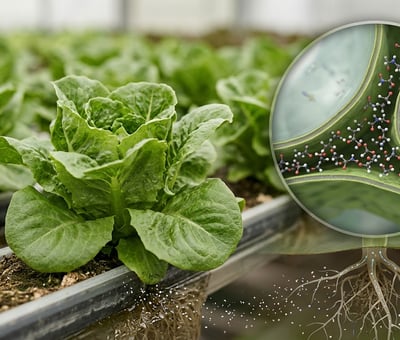
A root hair is a single elongated cell, not a separate organ. Each one extends a little way into the soil, and because it is thin-walled and unsuberised it exchanges ions with the soil solution. A plant with dense, long-lived root hairs explores a greater volume of soil per unit of root mass than a plant with sparse ones. That matters most for nutrients that move mainly by diffusion, particularly phosphate, which is quickly immobilised by soil minerals and rarely travels far from its release point. Potassium, calcium and some micronutrients behave similarly under certain soil conditions.
What seaweed extract brings to that surface
Seaweed extracts are mixtures, not single compounds. Brown algae such as Ascophyllum nodosum supply alginic acid, laminarin, fucoidans, mannitol and polyphenolic fractions, and they carry natural growth regulators in the auxin, cytokinin and gibberellin groups. Reviews of the biostimulant literature describe these fractions as the basis of auxin-like activity, which is the type of signal involved in root initiation and the formation of lateral roots and root hairs.[1, 2]
Root architecture and root hair formation are the morphological variables discussed in this literature, while nutrient interception is the functional consequence often proposed alongside them. Extension guidance also notes that seaweed extracts contain plant growth regulators that behave much like traditional rooting products in transplant and cutting treatments.[3]
What the evidence does and does not settle
Two caveats matter when reading this literature. First, a large part of the evidence base comes from reviews and controlled-environment studies rather than multi-year field trials, and the magnitude of the effect depends on the extract's species, processing and concentration. A result obtained with one commercial product cannot be transferred to every product sold under the seaweed label.
Second, morphology and field performance are not the same variable. Root hair density is measurable under controlled conditions; whether that translates into more fertiliser captured, less input required, or a different crop response at farm level is a separate question that depends on soil type, existing nutrient supply, crop species and application method. Reviews of seaweed biostimulants report nutrient uptake and growth responses alongside root effects, but the weight of evidence for each outcome differs, and effects are more consistent for some crops and application routes than others.[1, 4]
Where this leaves a nutrition program
For a professional audience the defensible reading is narrow but useful. Seaweed extracts contain compounds with documented rooting activity, and seaweed extract root development responses most plausibly act through altered root architecture and hair formation. Whether a given product shifts nutrient uptake efficiency in a specific field depends on how it is applied, at what stage, and against which nutrient. Claims should stay at the level of the mechanism and the observed response until replicated field data are available for the crop and soil at hand.
Technical Summary
Seaweed extracts contain auxin-like compounds, alginic acid, laminarin and fucoidans with documented rooting activity. Reviews link these to changes in root architecture and root hair formation, the surface that governs access to diffusion-limited nutrients such as phosphate. Evidence is largely from reviews and controlled studies, product-specific, and does not by itself demonstrate field-scale nutrient capture or fertiliser savings.
This article was created with the help of AI and reviewed by the Cropenta editorial team. It is general information, not professional advice.
Technical Questions
Which seaweed compounds are most often linked to rooting activity?
Reviews point to natural growth regulators in the auxin, cytokinin and gibberellin groups as the basis of auxin-like activity, alongside marine polysaccharides such as alginic acid, laminarin and fucoidans. The hormonal fractions are usually described as associated with rooting responses, while polysaccharides are linked to soil and root surface interactions. Attribution between fractions remains difficult because extracts are not standardised across products.
Is root hair density a reliable indicator of nutrient uptake in the field?
Root hair density is a controlled-environment measurement and a plausible proxy for the absorbing surface available to diffusion-limited nutrients. It is not itself a field outcome. Whether that extra surface translates into more fertiliser captured depends on soil type, existing nutrient supply, crop and placement, so field verification is needed for each context.
Do seaweed extract results transfer between products?
Not automatically. Species, harvest location, extraction method and concentration all change the composition of the final extract, and most published results relate to one product or one algae species. A result reported for an Ascophyllum nodosum extract in one crop under controlled conditions is a hypothesis to test, not a validated expectation for a different seaweed product.
How should seaweed extract be positioned in a crop nutrition program?
Position it as a root architecture consideration within a nutrition plan rather than as a fertiliser substitute. Root and root hair responses are most consistently reported early in crop establishment, indicating the physiological relevance of applications around transplanting or early vegetative stages. Nutrient supply still comes from the base program, and any read-across to input reduction should be validated locally before being built into recommendations.
Related articles
Related Products



Looking for something specific?
Our team is there to help you find the right raw materials and solutions for your formulations

