Why Compare Fat Sources by Digestibility and Energy for Animal Feed?
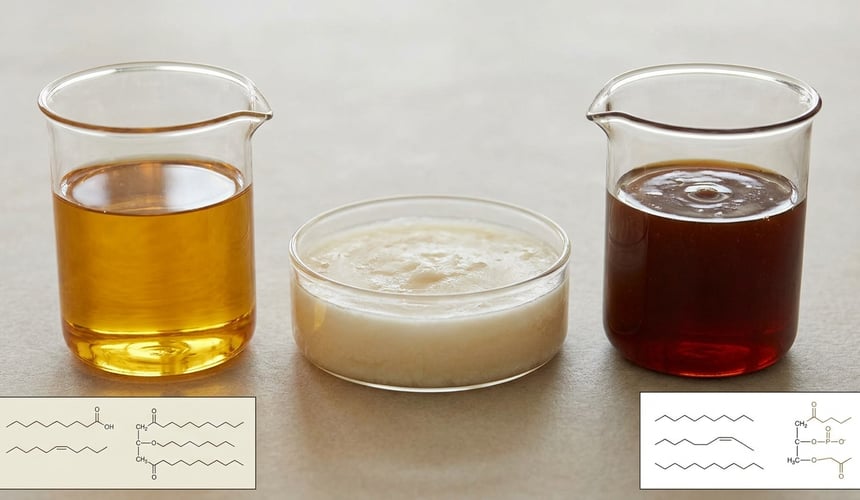
Two fat deliveries can arrive at the same price per tonne and still behave very differently in a diet. One may be largely saturated; another may carry free fatty acids and oxidation products that shorten storage life or depress palatability. The bulk price says nothing about how much of that fat the animal can actually use. For feed manufacturers, the more useful comparison is cost per unit of usable energy, set against the species, age group and production stage the diet is designed for.
Cropenta Insight
Fat comparison only becomes meaningful when price is paired with digestible energy measured in one consistent system. A cheap fat with low digestibility can cost more per megajoule delivered than a pricier, more available source. Fatty acid profile, free fatty acid content and oxidative status decide how much of that energy the animal can capture, and how reliably the ingredient performs in storage and in the mixer.
Price per tonne is a poor proxy for nutritional value
Feed fats and oils supply a significant share of energy in swine and poultry diets, but their composition, quality, feeding value and price vary widely between batches and sources [1]. That variation is the core problem. A buyer comparing two quotes on price alone is comparing two numbers that describe different products.
What actually drives the nutritional contribution is the fatty acid profile. Chain length and the number of double bonds determine melting point, digestibility and oxidative stability. Unsaturated fatty acids are generally more prone to oxidation than saturated ones, while saturated fats have higher melting points and are more stable in storage. Research in a mouse model fed olive oil or different animal fats has described how dietary fat source shifts tissue lipid profiles, which illustrates how differently lipid sources can behave in the body [2].
This is where the price tag misleads. A highly saturated fat may be cheaper per tonne, yet deliver less digestible energy per kilogram than a more unsaturated oil. The only way to see that is to compare the fats within a defined energy system and a defined animal context.
Energy systems must match before fats can be compared
Gross energy, digestible energy, metabolisable energy and net energy are not interchangeable. Gross energy is what combustion releases; digestible energy subtracts faecal losses; metabolisable energy also subtracts urinary and gas losses; net energy further subtracts the heat increment. Each step removes more of the gross value, and the size of each step depends on the fat and the animal.
Species and country tables use different systems. A metabolisable energy value for poultry cannot be dropped into a pig formulation, and a net energy figure for ruminants does not transfer to a monogastric diet. When comparing fat sources, the first practical rule is to keep everything inside one system and one species. Mixing systems produces numbers that look comparable but are not.
For young piglets and chicks, the digestive machinery is still developing. Bile salt and lipase production are limited at that stage, so fat digestibility changes with age, and the digestibility of saturated fats in particular is lower in young animals. A fat that performs acceptably in a grower diet may underdeliver in a starter diet, so age group belongs in the comparison, not in a footnote.
Fatty acid composition and ingredient form
Not all fat in a raw material is bound the same way. Triglycerides carry three fatty acids on a glycerol backbone; free fatty acids are already released and are more common in acid oils and by-products; phospholipids carry a phosphate group and are amphiphilic. Their digestion and absorption differ, and so does their energy value for the animal.
This matters when comparing vegetable oils, animal fats and liquid fat blends. A vegetable oil is typically rich in triglycerides and unsaturated fatty acids. An animal fat may be more saturated and more variable in quality. A lecithin-containing oil blend brings phospholipids alongside triglycerides and free fatty acids, and lecithin itself is not a pure substance: it is a mixture of phospholipids, glycolipids, triglycerides and other components that depends on raw material and processing.
Lecithin's emulsifying property improves the conditions for digestion by helping bile salts and phospholipids break fat into small droplets for pancreatic lipase. But an emulsifying property proves no higher fat digestibility in a given diet. Higher fat digestibility, in turn, proves no better growth or feed conversion. Each link in that chain needs its own evidence, and the ingredient form should be judged on measured digestibility, not on the emulsifier label alone.
Oxidative stability and the real cost of a cheap fat
Unsaturation, free fatty acids, metals and storage conditions all reduce oxidative stability. A fat that oxidises in the silo or the mixer loses nutritional value and can affect palatability before it ever reaches the animal. Antioxidants and good storage practice help preserve it, but they add cost and cannot rescue a poor-quality delivery.
Peroxide value, anisidine value and induction time are the practical measures of this risk. Two fats with the same digestible energy in a fresh sample may diverge sharply after weeks of storage. The cheaper fat can end up costing more once storage losses and reformulation adjustments are counted.
Operationally, fat quality also affects the line. High free fatty acid content changes handling and mixing behaviour, and unstable fats can create variability in liquid application and pellet quality. These are manufacturing realities that a price-per-tonne comparison never captures.
Calculating cost per unit of usable energy
The practical comparison is straightforward once the inputs are right. For each candidate fat, establish its digestible or metabolisable energy in the correct system for the target species and age group, then divide the delivered cost by that usable energy. The result is cost per megajoule or per megacalorie of energy the animal can actually use.
This single calculation reframes the buying decision. A more expensive fat with high digestibility may win on cost per unit of usable energy. A cheaper fat with low digestibility may lose, and it may also drag in extra formulation work to compensate for the energy gap. Species and stage shape which profile fits: a young monogastric and a mature ruminant operate under different digestive conditions, so the same fat can behave differently in each diet.
Blends deserve the same treatment. A blend can be economically interesting against soybean oil, but it is never automatically cheaper without current data, and a lower price is not higher nutritional value. Each blend should be judged on its own composition, its measured digestibility and its behaviour in storage and processing.
What the evidence supports is a disciplined comparison: one energy system, one species and age context, fatty acid profile and ingredient form, oxidative status, and cost per unit of usable energy. Price per tonne is only the starting number. The useful number is what the animal can digest.
Technical Summary
Comparing fat sources requires more than bulk price. Establish digestible or metabolisable energy within one species-specific system, account for fatty acid saturation, free fatty acid and phospholipid content, and check oxidative stability. Dividing delivered cost by usable energy gives cost per unit of usable energy, a more honest basis for choosing among vegetable oils, animal fats and liquid blends.
This article was created with the help of AI and reviewed by the Cropenta editorial team. It is general information, not professional advice.
Technical Questions
Why can two fats with the same price per tonne differ in value?
Price per tonne ignores how much of the fat the animal can digest. Fatty acid saturation, free fatty acid content, phospholipid levels and oxidative status all shift the usable energy. A cheaper, more saturated fat may deliver fewer megajoules than a pricier, more unsaturated source in the same diet.
How should a formulator handle energy values from different tables?
Keep the comparison inside one system and one species. Metabolisable energy for poultry does not transfer to pigs, and net energy for ruminants does not fit monogastric diets. Mixing systems produces figures that look comparable but describe different things, so the table and species must match before any cost calculation.
Does an emulsifying lecithin blend guarantee better fat digestibility?
No. Lecithin's emulsifying property improves the conditions for digestion, but it does not prove higher fat digestibility in a specific diet. Digestibility has to be measured for the actual blend and animal context. Even higher digestibility does not by itself prove better growth or feed conversion.
What quality measures belong in a fat comparison?
Peroxide value, anisidine value and induction time indicate oxidative stability, while free fatty acid content and fatty acid profile describe composition. These measures help predict storage losses and processing behaviour. A fat that oxidises before feeding loses value that a fresh-sample energy figure does not capture.
Looking for something specific?
Our team is there to help you find the right raw materials and solutions for your formulations