Beyond Rumen Protection: Science Behind Bypass Proteins
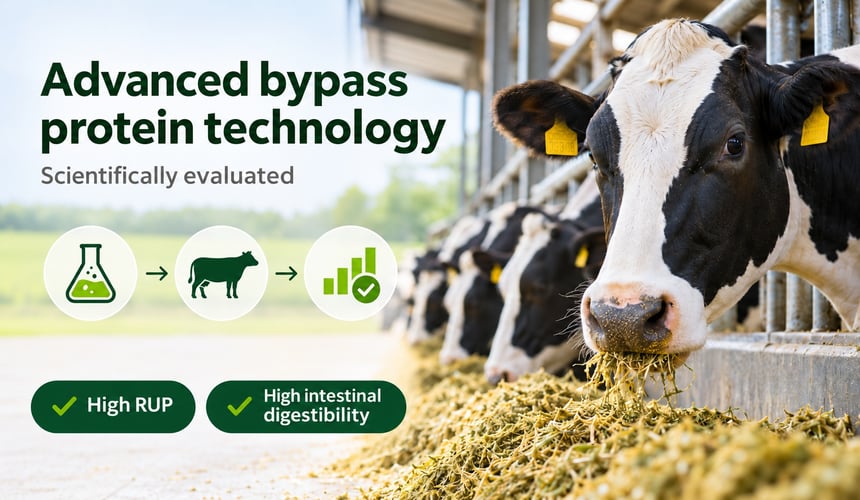
In modern dairy nutrition, the value of a protein ingredient is not determined by its crude protein content or rumen protection alone. What ultimately matters is how much protein escapes degradation in the rumen and how effectively that protected protein can be digested in the small intestine. Achieving both requires more than conventional heat treatment. It requires carefully controlled processing, reliable nutritional measurements and attention to product quality.
Bypass CovaminoSoy 2.0 and CovaminoRap 2.0 are produced using an advanced protein protection technology developed by the Dutch manufacturer and supplied internationally by Cropenta. The technology is designed to combine high rumen undegradable protein (RUP) values with high intestinal digestibility. The nutritional characteristics of these ingredients have been investigated through research conducted at ILVO in Belgium, followed by nutritional evaluation by Schothorst Feed Research in the Netherlands. These findings provide a scientific basis for understanding the nutritional potential of both ingredients.
Cropenta Insight
A high bypass protein percentage does not automatically mean that an ingredient delivers more usable protein to the animal. Protein that escapes the rumen must also remain digestible in the small intestine. Excessive treatment may increase rumen resistance while reducing the availability of amino acids further along the digestive tract. The nutritional objective is therefore not maximum protection, but an effective balance between rumen undegradability and intestinal digestibility.
This distinction is central to evaluating advanced bypass protein technology. Reliable assessment requires experimentally determined degradation characteristics, measured intestinal digestibility and a nutritional evaluation that translates those findings into meaningful formulation values.
Controlled Maillard Technology: Protecting Protein Without Excessive Processing
The Dutch manufacturer has developed a dedicated protein protection process based on a controlled Maillard reaction involving selected C5 and C6 reducing sugars. During processing, these sugars react with amino groups in the protein structure, modifying its susceptibility to microbial degradation in the rumen. The treatment is designed to protect dietary protein while retaining high intestinal digestibility.
Several production parameters are important to this process, including sugar distribution, temperature, moisture, treatment duration and product homogeneity. The manufacturer controls these variables to achieve an appropriate degree of protein protection without excessive processing. The technology has been developed specifically for protected protein production rather than relying exclusively on conventional extrusion or expansion. No formaldehyde is added during the treatment.
The balance between protection and digestibility is especially important. Excessive Maillard reactions can reduce the nutritional availability of amino acids, particularly reactive lysine. Effective processing must therefore be evaluated through both ruminal degradation and intestinal digestibility measurements rather than through heat-treatment conditions alone.
Scientific Research at ILVO: Measuring Protein Degradation in Living Cattle
In 2025, research conducted at ILVO, the Belgian research institute, investigated the ruminal degradation characteristics of the protected soybean and rapeseed ingredients manufactured using this technology. The research used the in-situ/in-sacco method, involving nylon bags incubated in the rumen of cows fitted with rumen fistulas.
The experimental protocol included multiple incubation intervals extending to 336 hours. This extended incubation series enabled the researchers to characterise protein degradation over time and determine degradation parameters, including the fractional degradation rate. An official CVB reference sample was also included in the investigation.
The 336-hour protocol is important because it provides a more complete characterisation of degradation behaviour. It should not be interpreted as a claim that the protein remains protected for 336 hours inside the animal. The experimental results describe degradation characteristics used in subsequent nutritional calculations.
Measuring What Happens After the Rumen
Rumen degradation measurements represent only the first stage of bypass protein evaluation. The protein that escapes ruminal breakdown must subsequently be digested in the small intestine to contribute to the animal's amino acid supply.
At ILVO, intestinal digestibility was investigated separately using the mobile nylon bag technique in cows fitted with duodenal cannulas. This method evaluates the digestibility of the protein fraction that remains after ruminal degradation. It therefore addresses a fundamentally different question from the rumen incubation measurements.
Combining these experimental approaches makes it possible to evaluate both the extent of rumen protection and the digestibility of the protected fraction. This distinction is particularly relevant for processed protein ingredients, where increased rumen resistance does not necessarily correspond to increased intestinal availability.
Research Results: High RUP Combined With High Intestinal Digestibility
The nutritional evaluation indicates that Bypass CovaminoSoy 2.0, supplied by Cropenta, achieves approximately 83% rumen undegradable protein (RUP), combined with approximately 99% measured intestinal digestibility of the rumen-undegraded protein fraction.
For CovaminoRap 2.0, also supplied by Cropenta, the corresponding values are approximately 80% RUP and 90% measured intestinal digestibility of the protected protein fraction.
These values represent two distinct nutritional characteristics. RUP is calculated from experimentally determined ruminal degradation parameters, using an assumed passage rate of 6% per hour, while intestinal digestibility is measured separately. The digestibility percentages refer specifically to the protein fraction that escapes ruminal degradation, not to the total crude protein initially consumed.
The results demonstrate that both tested ingredients combine substantial rumen protection with high intestinal digestibility. This combination is particularly relevant when evaluating the potential contribution of dietary bypass protein to the intestinal supply of digestible amino acids.
From Experimental Research to Practical Feed Formulation
Experimental measurements provide the foundation for nutritional characterisation, but feed formulators also require values that can be incorporated into ration evaluation systems. Following the ILVO investigations, the research data were evaluated by Schothorst Feed Research to support the determination of nutritional protein values.
For dairy nutritionists, the practical relevance extends beyond the RUP percentage. An effective ration must balance rumen degradable protein, fermentable energy, microbial protein synthesis, digestible bypass protein and the supply of essential amino acids.
Protected protein ingredients can be relevant when the ration requires additional digestible dietary protein reaching the small intestine. However, increasing bypass protein inclusion does not automatically improve milk production or milk protein yield. The response depends on the complete ration, the existing metabolizable protein supply and the amino acid balance.
The ILVO research described here characterises the nutritional properties of the tested ingredients. It should not be confused with a dairy cow feeding trial demonstrating a specific increase in milk production. Its principal contribution is the experimental foundation for more informed ingredient evaluation and feed formulation.
Consistent Quality Begins With Controlled Production
For industrial feed manufacturers, nutritional value is only one part of ingredient evaluation. Product consistency is equally important. A protein ingredient used in commercial formulations must be manufactured under controlled conditions so that its characteristics can be maintained as reliably as possible between production runs.
The Dutch manufacturer's controlled Maillard process addresses this requirement through defined processing parameters, including the distribution of reducing sugars, heat penetration, moisture, treatment time and homogeneity. Controlling these factors is important because uneven treatment may lead to differences in the degree of protein protection and intestinal digestibility.
According to the manufacturer's technical documentation, Schothorst Feed Research evaluates a market sample annually, while further in-situ research activities at ILVO also contribute to ongoing product evaluation. These activities provide additional opportunities to assess the nutritional characteristics of commercially produced material.
However, process control and periodic evaluation should be distinguished from statistically demonstrated batch-to-batch consistency. The available research brief does not include a complete series of production-batch results. Quantifying variability across commercial batches would require repeated analytical measurements, defined specification tolerances and supporting production quality data.
For professional feed manufacturers, this distinction matters. A scientifically evaluated product, supported by controlled manufacturing and ongoing quality monitoring, provides a stronger technical foundation than a nutritional declaration alone. Continued verification remains essential for maintaining confidence in commercial product specifications.
Why Scientific Evaluation Matters for Advanced Bypass Proteins
Modern ruminant nutrition increasingly requires a more detailed understanding of protein quality. Crude protein content alone cannot describe the contribution of an ingredient to metabolizable protein supply. Similarly, a declared bypass percentage cannot establish intestinal amino acid availability without supporting digestibility information.
The research supporting Bypass CovaminoSoy 2.0 and CovaminoRap 2.0 provides a documented evaluation pathway, from the manufacturer's controlled protein processing through experimental rumen incubation and intestinal digestibility measurements to nutritional assessment by Schothorst Feed Research.
As an international supplier and representative of specialised feed ingredients, Cropenta makes these advanced bypass protein products available to professional feed manufacturers and the animal nutrition industry. The combination of manufacturer-developed processing technology and independent nutritional research provides a valuable technical foundation for evaluating these ingredients.
This approach enables nutritionists and technical purchasing specialists to examine the underlying evidence rather than relying exclusively on individual headline values. It also highlights the importance of maintaining a clear relationship between the material investigated during research and the product supplied commercially.
Technical Summary
Advanced bypass protein technology must achieve more than resistance to ruminal degradation. The nutritional objective is to protect dietary protein while preserving its availability for digestion and amino acid absorption in the small intestine.
Bypass CovaminoSoy 2.0 and CovaminoRap 2.0, manufactured using technology developed by the Dutch producer and supplied by Cropenta, combine controlled Maillard processing with experimentally evaluated protein degradation and intestinal digestibility. Research conducted at ILVO supports calculated RUP values of approximately 83% and 80%, respectively, alongside measured intestinal digestibility values of approximately 99% and 90% for the protected protein fractions.
Schothorst Feed Research provides the subsequent nutritional evaluation, while the manufacturer's controlled production process and continued quality assessment form important parts of the approach to commercial product reliability.
The central conclusion is that meaningful bypass protein quality depends on three connected elements: effective rumen protection, high intestinal digestibility and reliable control of production quality. Together, these form the technical foundation for evaluating advanced protected protein ingredients in modern dairy nutrition.
This article was created with the help of AI and reviewed by the Cropenta editorial team. It is general information, not professional advice.
Technical Questions
What is bypass protein, and why is intestinal digestibility important?
Bypass protein, also known as rumen undegradable protein (RUP), is dietary protein that escapes microbial degradation in the rumen. Its nutritional value depends not only on rumen protection but also on how efficiently the remaining protein is digested in the small intestine. High RUP combined with high intestinal digestibility can contribute to the supply of digestible amino acids for dairy cows.
How have the bypass protein products supplied by Cropenta been scientifically evaluated?
The protein ingredients as Bypass CovaminoSoy 2.0 and CovaminoRap 2.0 are supported by research conducted at ILVO in Belgium. In 2025, researchers used in-situ/in-sacco rumen incubation in cattle, with an experimental protocol extending to 336 hours. Intestinal digestibility was measured separately using the mobile nylon bag technique. The experimental data were subsequently evaluated by Schothorst Feed Research for nutritional formulation purposes.
What are the rumen protection and intestinal digestibility values of CovaminoSoy 2.0 and CovaminoRap 2.0?
Bypass CovaminoSoy 2.0 has a calculated rumen undegradable protein (RUP) value of approximately 83% and a measured intestinal digestibility of approximately 99% for the rumen-undegraded protein fraction. CovaminoRap 2.0 achieves approximately 80% RUP and 90% intestinal digestibility. The RUP values are calculated using experimentally determined degradation characteristics and an assumed rumen passage rate of 6% per hour. These figures describe nutritional characteristics, not measured improvements in milk production.
How does controlled Maillard technology protect protein without added formaldehyde?
Controlled Maillard technology uses selected C5 and C6 reducing sugars to modify proteins and reduce their susceptibility to microbial degradation in the rumen. Carefully managed temperature, moisture, treatment time and homogeneity help balance rumen protection with intestinal digestibility. The Covamino protein protection process uses no added formaldehyde. Avoiding excessive processing is essential because advanced Maillard reactions can reduce amino acid availability, particularly reactive lysine.
How is consistent nutritional quality maintained in advanced bypass protein production?
Consistent bypass protein quality depends on controlled raw materials, sugar distribution, temperature, moisture, processing time and product homogeneity. According to the producer's technical documentation, Schothorst Feed Research conducts annual market-sample evaluations, while additional in-situ research at ILVO supports ongoing assessment. These activities contribute to quality monitoring, although statistically demonstrated batch-to-batch consistency requires repeated production-batch analyses and verified specification limits.
Looking for something specific?
Our team is there to help you find the right raw materials and solutions for your formulations