Why Do Silicon Applications Produce Different Results Across Crops?
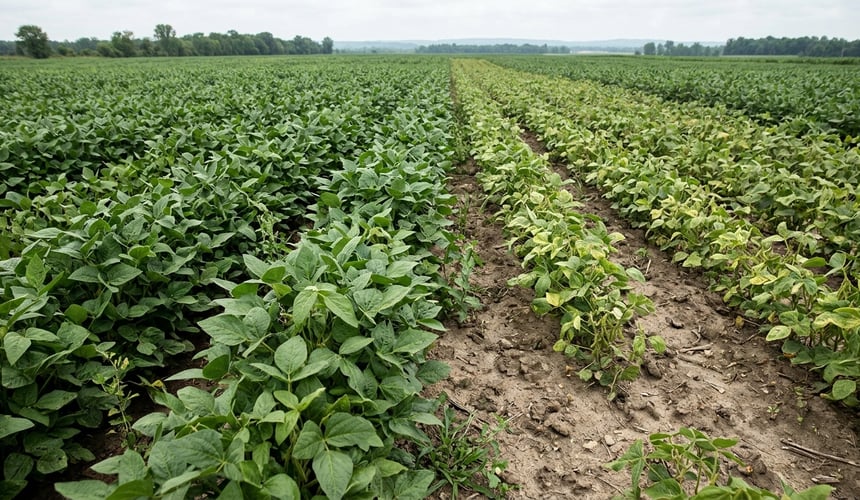
Research and field observations indicate varying responses to silicon applications across different crops and growing conditions. While silicon is recognized for its potential physiological advantages, the extent of its efficacy can vary. This variability raises questions about the underlying biological and environmental factors that govern how different plant species process silicon and respond to its application, and how these factors influence the observable outcomes in the field.
Cropenta Insight
Understanding the distinction between silicon-accumulating and non-accumulating crops is essential for interpreting silicon application results. Silicon's capacity to support plants under abiotic pressure, such as drought or salinity, often manifests more significantly when those stressors are present. Consideration of specific crop physiologies and environmental contexts is relevant for applying silicon to support crop resilience.
Explaining Varied Crop Responses to Silicon Application
The observed differences in how crops respond to silicon applications are largely attributed to two main factors: the inherent physiological characteristics of the crop species and the prevailing environmental conditions. Silicon’s role in mitigating environmental pressures has been demonstrated, particularly in plant species known to accumulate silicon[1].
Physiological Differences in Silicon Uptake
Crops vary significantly in their ability to take up and accumulate silicon. Other crops, often referred to as "non-accumulators," possess less efficient uptake mechanisms, resulting in lower silicon concentrations within their tissues[1]. This physiological difference means that even when sufficient silicon is available in the soil, the internal concentration in a non-accumulator may not reach levels that elicit a strong physiological response. Consequently, the observed effects in these crops may be less pronounced compared to strong accumulators.
Environmental Conditions and Silicon Efficacy
The extent to which silicon applications influence crop performance can also be heavily dependent on environmental factors. Silicon is associated with ameliorating various abiotic stresses, including drought, high temperature, and saline conditions[2, 3]. For instance, silicon-based applications in drought and saline conditions have been observed to contribute to increased productivity in a significant percentage of cases[3]. However, if crops are growing under optimal conditions with minimal environmental stressors, the additional effects from silicon application may be less apparent or not expressed at all. The presence and severity of these abiotic pressures appear to be critical in triggering the physiological responses associated with silicon uptake, such as improvements in root architecture, including rhizosheath formation, root hair length, and density[4].
Silicon Sources and Their Practical Implications
According to Cropenta product documentation, the chemical form and stability of silicon applied to crops are recognized factors influencing its availability to plants[5].
Technical Summary
The efficacy of silicon applications in agriculture is highly variable, influenced significantly by crop-specific physiological differences in silicon uptake and the prevailing environmental conditions. Strong silicon accumulators often show more pronounced responses, particularly under abiotic stressors like drought or salinity.
Disclaimer
This article has been prepared with AI assistance using publicly available sources and is intended solely for general technical and educational purposes. It does not constitute professional advice or recommendations for specific applications. Cropenta makes no warranties regarding the accuracy, completeness or applicability of the information. No rights may be derived from its contents, and Cropenta accepts no liability for its use to the extent permitted by law.
Technical Questions
Why do some crops accumulate more silicon than others?
Crop species differ in their inherent ability to absorb silicon from the soil. Non-accumulators generally exhibit less efficient uptake mechanisms, which can lead to lower internal silicon concentrations and potentially varying physiological responses to its application.
Does silicon provide the same effects in all growing conditions?
No, the effectiveness of silicon often depends on the presence and severity of environmental stressors such as drought, high temperature, or salinity. Silicon's physiological advantages, like supporting plant water relations or root development, may be more evident when crops are under stress. Under optimal growing conditions, the additional effects might be less pronounced.
- 1.The Multiple Role of Silicon Nutrition in Alleviating ... - PMC
- 2.Silicon and plant nutrition—dynamics, mechanisms of ...
- 3.The Use of Si-Based Fertilization to Improve Agricultural ...
- 4.The transformation of agriculture towards a silicon ...
- 5.Cropenta product documentation: Silicon Liquid LA15 and Silicon Liquid LA45
Related articles
Related Products


Looking for something specific?
Our team is there to help you find the right raw materials and solutions for your formulations

