Why Feed Trials Are Key to Validating Rumen-Protected Rapeseed Protein
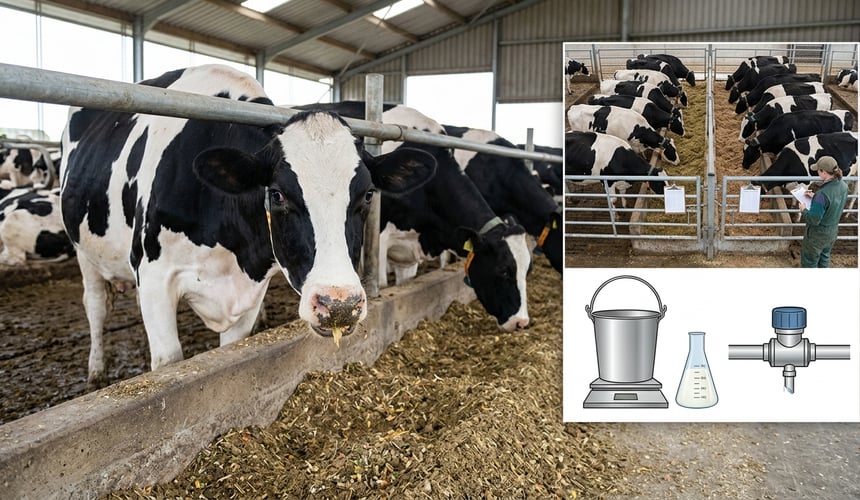
A nylon bag incubation can tell you how much rapeseed protein escapes the rumen at an assumed passage rate. A mobile bag test can tell you how much of that fraction is digested in the small intestine. Neither tells you what the cow does with the resulting amino acids when the ration is mixed, fed twice a day and fermented in a working rumen. That gap is where rumen-protected rapeseed protein feeding trials become decisive, and it is why a formulation value calculated from degradation characteristics should never be read as an animal result.
Cropenta Insight
Feed trials matter because protected rapeseed protein only pays off through amino acids the cow can use. A high RUP figure with modest intestinal digestibility delivers little, and the assumed passage rate changes the calculation. Rapeseed meal also brings a fibre fraction that behaves differently in the rumen than soybean meal does, so nitrogen use and dry matter intake belong in the same evaluation as the protection figure. Composition alone is not evidence of performance.
What Laboratory Methods Establish, and Where They Stop
In-situ incubation in rumen-fistulated cows gives the parameters that protein evaluation systems run on: the soluble fraction, the washable but insoluble fraction, the potentially degradable fraction, the undegradable fraction and the fractional degradation rate. Combined with an assumed fractional passage rate (Kp), these produce effective degradation and rumen-undegradable protein (RUP). Because Kp is estimated from intake and production rather than measured in the bag, RUP values are only comparable at the same Kp. A reported 80% RUP at 6%/h and a reported 80% RUP at 8%/h describe different things.
Intestinal digestibility is the second half of the picture. Using the mobile nylon bag technique in cows fitted with duodenal cannulas, the share of rumen-undegraded protein digested in the small intestine can be measured directly. A protein can be strongly protected and still poorly digested if heat treatment has gone too far; over-processing lowers degradation and digestibility together. For Maillard-protected proteins, in-vitro degradation tests correlate poorly with in-situ measurement and tend to overstate protection, so declared values from enzymatic or fractionation methods are not interchangeable with in-situ values.
None of these measurements, however careful, is a feeding trial. In-situ work characterises the ingredient; it does not measure milk production, nitrogen excretion or how the animal partitions amino acids between milk, muscle and maintenance.
Why Amino Acid Flow at the Duodenum Is Not the End of the Story
Microbial protein synthesis sets a ceiling on how much extra bypass protein actually adds value. Rumen micro-organisms build protein from degradable protein, ammonia and fermentable energy, and that microbial fraction remains a major amino acid source for the cow. When a ration already supplies ample rumen-degradable protein, the extra ammonia is absorbed, converted to urea and excreted. A recent meta-analysis of rumen-protected amino acids and fibrous by-product-based diets reported lower ruminal ammonia (about −1.61 mg/dL), higher nitrogen utilisation efficiency (+5.61%) and unchanged or comparable production when cows were fed lower-protein diets supplemented with amino acids [1]. Those outcomes depend on the rumen nitrogen balance and the fermentable energy available, which is exactly the interaction a laboratory degradation curve cannot capture.
Lysine is the practical bottleneck for rapeseed protein. Maillard reactions between reducing sugars and the epsilon-amino group of lysine bind that residue, so total lysine may look unchanged while reactive lysine falls. The amino acid profile and heat indicators do not replace a measured digestibility or utilisation value; they only flag where to look. A protected rapeseed protein can be well protected, well digested, and still under-deliver if lysine availability has been compromised during processing.
What Feeding Trials Measure That Bags Cannot
Feeding trials close the loop between experimental characterisation and nutritional valuation. In a comparative study of rumen-protected rapeseed expeller and other protected rapeseed proteins fed to dairy cows, milk production was maintained or comparable to controls, supporting the hypothesis that protected rapeseed proteins perform similarly in practical dairy rations [2]. That type of result is not a protection claim; it is an animal-level outcome measured under real feeding conditions, with a control group and a defined dietary context.
Well-designed trials typically address several questions at once:
- Is dry matter intake maintained when a protected protein replaces another protein source?
- Does milk protein yield respond, or does the response plateau because amino acid supply was already adequate?
- What happens to nitrogen in urine and faeces when rumen-degradable protein is reduced?
- Do blood plasma amino acid profiles indicate that the supplied amino acids are absorbed and available?
- Do results hold across lactation stages, breeds and production levels?
Growth and carcass work in other species also shows how protected amino acid supply interacts with performance outcomes. In growing lambs, supplementary rumen-protected amino acids were associated with improved growth performance and meat quality characteristics [3]. That is a different species and a different production system; it supports the general principle that supply must be validated in the animal, not that any specific result transfers to dairy cows.
Rapeseed protein isolates illustrate a further limitation. Digestibility of rapeseed protein isolate prepared by ethanol washing combined with pH-shift treatments has been assessed in laboratory work, with protein content above 90% after dialysis [4]. Food-grade isolate digestibility data speak to protein quality in principle, but they do not establish what a rumen-protected rapeseed meal does in a lactating cow. Keep those evidence streams apart.
The Value of Trials With Negative and Non-Significant Outcomes
Trials that show no response are as informative as trials that do. When a protected protein replaces another protein but milk protein yield is unchanged, it usually means microbial protein plus the remaining bypass amino acids already met the requirement, or that the limiting amino acid was not the one supplied. Publishing and reading those outcomes prevents the industry from attributing a benefit to protection that came from something else in the ration.
Payment and inclusion decisions should therefore rest on more than a single number. Relevant reading of a supplier's data set includes the assumed passage rate, the intestinal digestibility value, the rumen nitrogen balance implied by the respective protein valuation system, and the species and production level used. Dutch DVE/OEB, German nXP/RNB, INRA PDI and CNCPS metabolisable protein each translate the same measurements differently, and each is a calculation rather than an animal result. Funding and conflict of interest matter too: a trial funded by the ingredient supplier can still be well designed, but the conflict should be named rather than hidden.
Practical Screening Before You Run a Trial
For compound feed manufacturers and nutritionists, the decision sequence is straightforward. First, confirm how the product was characterised: in-situ with a rumen-fistulated reference sample, or in-vitro only. Second, check that RUP is stated together with the passage rate and with intestinal digestibility. Third, ask whether the batch-to-batch variation is monitored. Only then does it make sense to plan an on-farm comparison, with a control ration, enough animals to detect a realistic effect, and a measurement period long enough to move past adaptation.
That last point is often where internal trials fail. Group sizes are small, the observation window is short, and feed intake is not weighed, so a real effect cannot be separated from normal variation. A well-designed small trial with repeated measurements on the same animals can answer more than a larger but uncontrolled farm comparison.
The conclusion is not that laboratory methods are unnecessary. Degradation kinetics and intestinal digestibility are the only defensible starting point for a protein valuation, and without the assumed passage rate the RUP figure is meaningless. But efficacy, in the sense of amino acids actually used by the animal, is confirmed only in live animals under practical feeding conditions.
Technical Summary
In-situ degradation and mobile nylon bag digestibility characterise a rumen-protected rapeseed protein, but they are not animal outcomes. Feeding trials in dairy cows and other ruminants establish whether the protected amino acids are absorbed and used: they measure intake, nitrogen balance, plasma amino acid profiles and milk or growth response under practical rations. Read RUP only with its assumed passage rate and intestinal digestibility, and treat trial results from other species or products as context, not as proof of efficacy.
This article was created with the help of AI and reviewed by the Cropenta editorial team. It is general information, not professional advice.
Technical Questions
Why do two protected rapeseed products with the same RUP percentage not perform the same in a ration?
RUP is calculated at an assumed passage rate, so a value is only comparable at the same Kp. The intestinal digestibility of the rumen-undegraded fraction can also differ between products, and reactive lysine may have been bound during processing. Two products can therefore supply different amounts of usable amino acids despite similar protection figures.
What should a nutritionist check first when comparing trial results for a protected rapeseed protein?
Check the characterisation method: in-situ work in rumen-fistulated cows with a reference sample, or in-vitro only. In-vitro methods tend to overstate protection for heat- and Maillard-treated proteins. Then check whether RUP is reported with the passage rate and intestinal digestibility, and whether the trial had a control group and adequate animal numbers.
Can a trial showing no milk protein response still be useful for formulating ruminant rations?
Yes. A non-significant result often indicates that microbial protein plus the bypass fraction already met the amino acid requirement, or that the limiting amino acid was not the one supplied. Such outcomes help nutritionists avoid over-supplying bypass protein and the associated nitrogen excretion, and they clarify where the true limiting nutrient lies.
How does the fibre fraction of rapeseed meal affect the interpretation of protection data?
Rapeseed meal brings a fibre fraction that ferments in the rumen and interacts with intake and rumen nitrogen balance differently than soybean meal does. Protection figures describe protein behaviour alone; they do not capture how that fibre fraction influences dry matter intake, fermentation or the microbial protein supply that ultimately determines the value of extra bypass protein.
- 1.The use of rumen-protected amino acids and fibrous by-products in dairy cow diets - PMC
- 2.Evaluation of rumen protected rapeseed expeller (NovaPro) as an alternative to soybean meal in dairy cow diets - Garnsworthy et al., 2021
- 3.Effect of Supplementary Levels of Rumen-Protected Lysine and Methionine on Growth Performance and Meat Quality of Lambs - Ma et al., 2021
- 4.The digestibility of rapeseed protein isolate prepared by ethanol washing and pH-shift treatments - Li et al., 2025
Looking for something specific?
Our team is there to help you find the right raw materials and solutions for your formulations