Glycine Betaine and Oxidative Stress in Passion Fruit Under Salinity
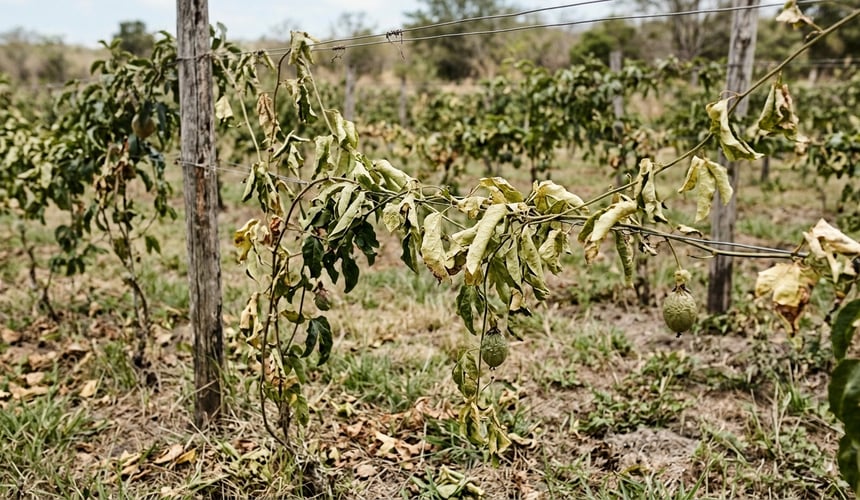
When plants experience high salinity, they face not only osmotic challenges but also a significant increase in internal oxidative stress. This stress results from an imbalance between the production of reactive oxygen species (ROS) and the plant's ability to detoxify them, leading to cellular damage. While glycine betaine is widely recognized as an osmoprotectant that helps maintain cellular water balance, its influence extends to bolstering the plant's antioxidant defenses.
Cropenta Insight
Understanding how glycine betaine specifically influences plant antioxidant systems under salinity stress offers valuable insights for agronomists. Its role beyond osmotic adjustment highlights potential for more targeted stress mitigation strategies, suggesting that crops may maintain cellular integrity and function even in challenging saline environments.
Glycine Betaine's Influence on Antioxidant Systems
Exogenous application of glycine betaine may reduce oxidative stress by enhancing the activity of key antioxidant enzymes and modulating the levels of reactive oxygen species (ROS).
SOD plays a role in dismutating superoxide radicals into hydrogen peroxide, which is then detoxified by CAT and APX. The increased activity of these enzymes suggests a more efficient detoxification pathway for ROS, thereby limiting their accumulation and subsequent damage to cellular components [1]. Another study highlighted that glycine betaine application can influence the regulation of stress hormones and other detoxifying molecules, further contributing to the plant's capacity to cope with abiotic stress [2].
Modulating Reactive Oxygen Species Accumulation
Beyond enzymatic activity, glycine betaine also contributes to the regulation of non-enzymatic antioxidants and direct ROS scavenging. While not the primary focus of the passion fruit study, other research indicates that glycine betaine can help cells adapt to salt stress by influencing various protective mechanisms [3]. This includes its capacity to regulate plant growth hormones and detoxifying molecules, which collectively help manage the damaging effects of ROS such as hydroxyl radicals, superoxide radicals, and hydrogen peroxide [2].
This decrease in hydrogen peroxide, coupled with enhanced antioxidant enzyme activity, points to a more robust defense against oxidative damage. The findings suggest that glycine betaine may directly or indirectly stabilize cellular membranes and proteins, which are often targets of ROS under stress conditions, thus maintaining cellular function [1, 4].
Agronomic Relevance of Glycine Betaine Application
Understanding these specific mechanisms provides a clearer picture of how glycine betaine may support crop resilience in saline environments. Its ability to bolster antioxidant defense systems, distinct from its osmoprotective role, suggests a multifaceted approach to mitigating salt-induced damage. While the passion fruit study indicates potential, further investigations into glycine betaine as a tool for improving plant responses to salinity are supported [1]. The effects can vary depending on crop species, concentration, and application timing.
Technical Summary
Exogenous glycine betaine application can be considered in relation to plants' mitigation of oxidative stress under salinity by enhancing their antioxidant defense systems. This may be associated with reduced lipid peroxidation and lower reactive oxygen species accumulation, partly through increased activity of enzymes like superoxide dismutase, catalase, and ascorbate peroxidase. This mechanism, distinct from its osmotic role, contributes to cellular protection against salt-induced damage, as observed in studies on passion fruit.
Disclaimer
This article has been prepared with AI assistance using publicly available sources and is intended solely for general technical and educational purposes. It does not constitute professional advice or recommendations for specific applications. Cropenta makes no warranties regarding the accuracy, completeness or applicability of the information. No rights may be derived from its contents, and Cropenta accepts no liability for its use to the extent permitted by law.
Technical Questions
Does glycine betaine directly scavenge reactive oxygen species?
While glycine betaine itself is a compatible solute, its primary role in reducing oxidative stress is often through indirect mechanisms. It helps by enhancing the plant's own enzymatic and non-enzymatic antioxidant systems, rather than directly acting as a potent scavenger of all reactive oxygen species. This boost in endogenous defense mechanisms is key to its protective effects under salt stress.
How does reduced malondialdehyde content indicate less oxidative stress?
Malondialdehyde (MDA) is a product of lipid peroxidation, which is a key process of oxidative damage to cell membranes. Therefore, a reduction in MDA content in plant tissues under stress conditions suggests that lipid peroxidation has decreased. This indicates that the plant's cells are experiencing less oxidative damage, signifying improved cellular health and integrity due to the applied treatment.
Are the effects of exogenous glycine betaine consistent across all crop species?
The effects of exogenous glycine betaine can vary significantly among different crop species. Factors such as the plant's inherent physiological characteristics, its capacity for endogenous glycine betaine synthesis, the specific type and intensity of stress, and the application method and concentration can all influence the outcome. Research findings are often species-specific, and broad generalizations should be made with caution.
Related articles
Related Products


Looking for something specific?
Our team is there to help you find the right raw materials and solutions for your formulations

