How Heat Treatment Parameters Influence Rapeseed Bypass Protein Quality
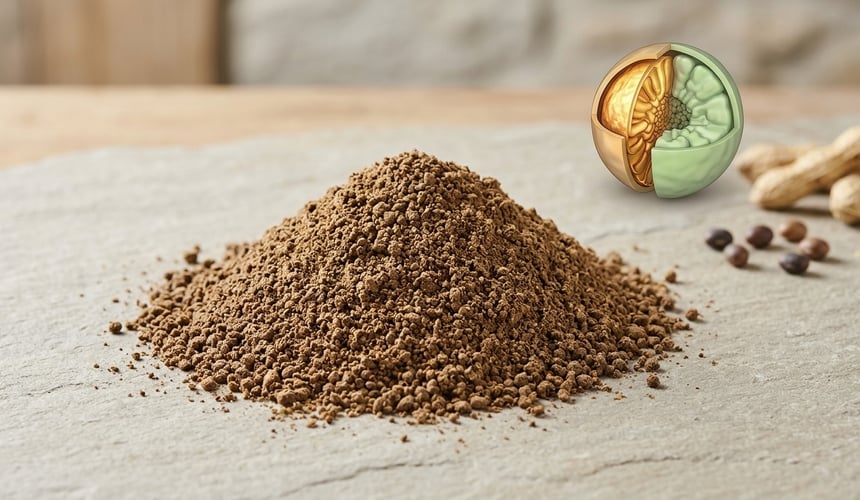
Heat is one of the few ways to make rapeseed protein resist breakdown by rumen micro-organisms, yet the same heat can bind amino acids the cow needs later. Protein that passes the rumen intact is only useful if the small intestine can digest it, so the real question is which combination of temperature, time and moisture leaves protein both protected and digestible.
Cropenta Insight
For nutritionists, the rumen-undegradable protein (RUP) figure alone tells only part of the story. RUP calculated for a rapeseed product is comparable only at the same assumed passage rate, and it should be read together with the intestinal digestibility of the undegraded protein, since a high RUP does not by itself indicate usable amino acid supply.
What heat does to rapeseed protein
Heating changes protein in two linked ways. Heat alters the three-dimensional structure of protein molecules, and in the presence of reducing sugars it drives Maillard reactions, in which sugar groups bind to free amino groups, notably the epsilon-amino group of lysine. Controlled, this binding makes protein harder for rumen micro-organisms to break down, while acid and enzymes further along the digestive tract can still release amino acids. Excessive, it destroys lysine and lowers digestibility. Work on several heat-treated protein feeds reported that heating decreased soluble crude protein and increased the neutral detergent insoluble crude protein fraction [1]. Such changes in molecular structure and nutritional characteristics have been described for heat processing more broadly [2].
What the primary study measured, and what it did not
The most directly relevant recent study tested whether heating a rapeseed protein isolate raises its protein quality, assessed with the DIAAS method. The authors reported DIAAS values above those of pea and rice protein concentrates [3]. This is a useful signal for the heat-treatment question, but the evidence has clear limits. The study worked with a protein isolate, not with a rapeseed meal used as a rumen-protected feed, and the DIAAS framework evaluates amino acid digestion, not rumen escape. It does not provide RUP values or rumen degradation data, so it cannot show how much bypass protein a given heat regime produces in a cow.
Which parameters decide the outcome
Temperature, duration and moisture all act on the same reaction, and they interact. A higher temperature or longer exposure accelerates the reaction, but the window between under-treated meal, which is still rapidly degraded in the rumen, and over-treated meal, which loses digestible lysine, can be narrow. Moisture affects how readily sugars and amino groups meet during heating. The sources reviewed here do not give parameter ranges for rapeseed that can be transferred directly to a production line, so process settings should be read as the variables that need documentation, not as values that have been validated for rapeseed in general.
In mill practice, batch-to-batch variation in steam and conditioning can make a nominally identical process produce meal of different character. That is why a process description on paper says less than the measured degradation and digestibility of the finished product.
Rumen degradation, RUP and intestinal digestibility
Rumen-undegradable protein is calculated from the potentially degradable fraction and the fractional degradation rate, measured in nylon bags incubated in the rumen, combined with an assumed fractional passage rate (Kp), which is estimated from intake and production rather than measured in the bag. Because RUP depends on Kp, values are only comparable at the same passage rate. A high RUP does not by itself mean good nutritional value. If the protein that escapes the rumen is poorly digested in the small intestine, little usable protein reaches the animal. Intestinal digestibility is therefore the second half of the evaluation, typically measured in cows fitted with duodenal cannulas.
Degradation and digestibility are experimental characteristics of the ingredient. The formulation values derived from them, such as intestinal digestible protein or metabolisable protein, are calculations within a valuation system, not direct animal responses.
Measurement method and its limits
In vitro protein degradation tests are quicker than rumen incubation, but they correlate poorly with in situ measurements in rumen-fistulated cows for heat- and Maillard-protected proteins, and they can overstate rumen protection. Declared values based on in vitro methods are not comparable with in situ values. For a buyer, a figure labelled as protected says little until the measurement method, the passage rate and the valuation system are stated.
Practical considerations for ingredient selection
Ask for in situ degradation data at a stated passage rate, the intestinal digestibility of the rumen-undegraded fraction, the reference sample used in the test and the valuation system applied. Check whether lysine and other amino acids have been reported in a form that reflects reactive lysine, since total lysine can remain unchanged while reactive lysine falls after over-processing. Where data are missing, the protected label alone does not show whether heat treatment has moved the protein toward a useful balance of escape and digestion.
Technical Summary
Heat treatment of rapeseed protein can reduce rumen degradation through controlled Maillard reactions, but excessive treatment lowers lysine availability and intestinal digestibility. Temperature, duration and moisture interact, and the sources reviewed do not give transferable settings for rapeseed meal. RUP is valid only at a stated passage rate and must be read with intestinal digestibility and the valuation system. Measured in vivo data are the reliable basis for comparison.
This article was created with the help of AI and reviewed by the Cropenta editorial team. It is general information, not professional advice.
Technical Questions
Why should a formulator check the passage rate behind a RUP value before comparing two rapeseed products?
Calculated RUP depends on the assumed fractional passage rate (Kp), which is estimated from intake and production rather than measured in the nylon bag. A value at 6%/h and a value at another Kp describe different escape fractions, so they cannot be ranked against each other. Compare RUP only when the Kp is identical, and pair it with the intestinal digestibility of the undegraded protein.
How can a heat-treated meal show acceptable rumen protection while still delivering limited amino acids?
Protection and digestibility are separate measurements. Heat that binds lysine through Maillard reactions can reduce rumen breakdown, but if the bound lysine is not released in the abomasum and small intestine, the escaped protein contributes less usable amino acid than its RUP suggests. Reactive lysine and intestinal digestibility help reveal this gap.
Related articles


Looking for something specific?
Our team is there to help you find the right raw materials and solutions for your formulations

