How Passage Rate Changes the Value of Rumen-Protected Soy Protein
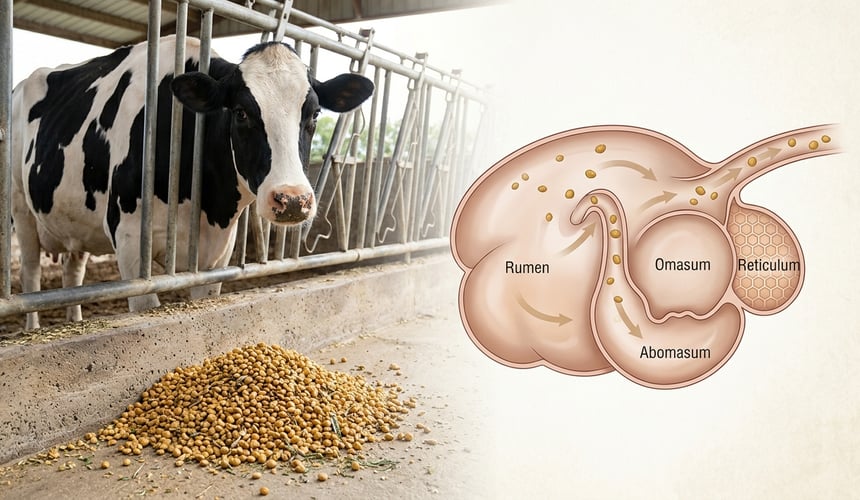
Ask a dairy nutritionist what a rumen-protected soy protein is worth in a ration and the answer usually starts with one number: the share of crude protein that escapes fermentation in the rumen. That figure, rumen-undegradable protein (RUP), is calculated rather than read off a sample. Its value depends on how fast feed is assumed to leave the rumen, and that assumption can move the result enough to change how much protein a formulation credits to the cow.
Cropenta Insight
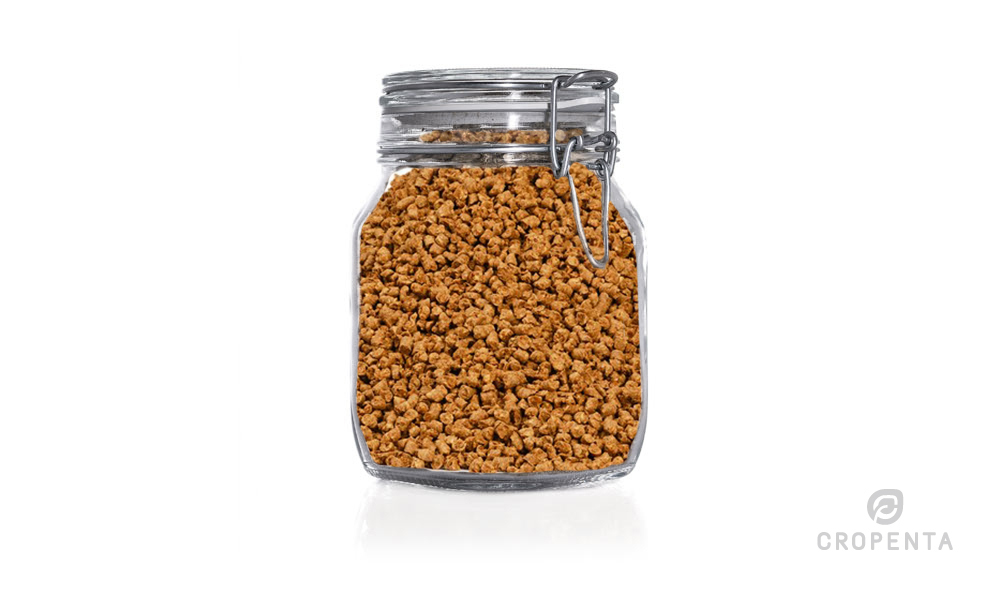
The practical point is that a RUP percentage only means something alongside its assumed passage rate and the intestinal digestibility of the protein that escapes. According to the company, Bypass Soy Protein MP from Cropenta is documented with a calculated RUP above 80% at an assumed passage rate of 6%/h and an intestinal digestibility of the rumen-undegraded protein close to 100%, measured in vivo by an independent research institute. According to the company, these figures are product-specific and only comparable at the same Kp.
What RUP measures and what it does not
Protein that is not broken down by rumen microbes passes on to the abomasum and small intestine, where it is digested. Microbes break degradable protein into ammonia and peptides for their own growth, so protection aims to shift protein into the undegraded fraction. Rumen-protected amino acids and fibrous by-products are discussed in a 2025 review as part of dairy ration strategy[1], and protected protein sits in the same ration decision as degradable protein and microbial supply.
RUP is not the protein left after a full incubation. It is calculated from in-situ degradation parameters measured with nylon bags in rumen-fistulated cows: the soluble fraction, the washable insoluble fraction, the potentially degradable fraction, the undegradable fraction, and the fractional degradation rate per hour. These parameters describe what happens inside the bag, not what happens in the animal.
Where passage rate enters the calculation
Kp is the assumed fractional passage rate, the share of rumen contents that leaves the rumen per hour. It is not measured in the bag. It is estimated from intake and production. The calculation combines the degradable fraction and its degradation rate with Kp, so a faster assumed outflow leaves less time for microbes to attack the protein and more protein is counted as undegradable. A slower outflow does the reverse. Incubation-based valuation weights degradability by rate of passage in the same way[2].
Protected soy protein degrades slowly, and the degradation rate is part of the same equation. The reported result therefore depends on the Kp assumed, and two evaluators working from the same incubation data can report different RUP values if they use different passage rates. The measurement has not changed; the assumption has.
Same protein, different valuation
Passage rate also feeds into nutritional valuation. Systems such as the Dutch DVE/OEB, the German nXP/RNB, INRA PDI and CNCPS translate degradation and digestibility into formulation values, and they do not all assume the same rate. A valuation is a calculation built on those inputs, not an animal response. When a product sheet and a formulation programme report different RUP or digestible protein values for the same protected soy, the first check is whether both used the same Kp and the same system.
A high RUP figure also says nothing about intestinal digestibility on its own. The protein that escapes the rumen still has to be digested in the small intestine, and that share is measured separately. A high RUP with low intestinal digestibility delivers little usable protein. In-vitro degradation tests are a further step removed and are not directly comparable with in-situ values.
What this means at the feed bunk and the mill
In practice the question starts with the specification sheet. A protein document should show the Kp behind the RUP, the valuation system and the intestinal digestibility together. A RUP figure without its passage rate cannot be placed next to another protein or a feed table value. Passage rate is also not fixed in the herd. Intake level and diet composition influence how quickly digesta leaves the rumen, so the Kp in a formula is an assumption the animals may not match exactly.
For the ration, this means the protein supply credited for a protected soy should be read as a planning value. Protein balance checks and milk urea trends on farm are the place where the formulation assumption meets the herd, but the evidence cited here does not quantify that link for soy protein.
What the evidence does and does not show
The 2025 review cited above covers rumen-protected amino acids and fibrous by-products in dairy systems[1]. It does not report a passage-rate-specific RUP value for soy protein, so the link between Kp and protected soy value rests on the principles of the calculation and on incubation-based valuation work[1, 2]. The in-situ and valuation figures for Bypass Soy Protein MP come from one product and one assessment and only show sensitivity to passage rate when compared at the same Kp.
In-situ characterisation describes how a protein behaves in the rumen and in the intestine. It is not a feeding trial, and it does not show a change in milk production.
Technical Summary
RUP for rumen-protected soy protein is a calculated value that depends on the assumed passage rate (Kp). Values only compare at the same Kp and should be read together with intestinal digestibility and the valuation system used. Because Kp is an assumption and not a bag measurement, the protein supply credited in a ration can differ from the herd's actual outflow.
This article was created with the help of AI and reviewed by the Cropenta editorial team. It is general information, not professional advice.
Technical Questions
Why should a formulator ask for the Kp behind a RUP value?
Because RUP is calculated from degradation parameters and an assumed passage rate, the same protein can show different RUP values depending on that Kp. Without the Kp, a RUP figure cannot be compared with another protein or a feed table value. Ask for the Kp, the valuation system used and the intestinal digestibility of the undegraded fraction at the same time, so the comparison stays like for like.
Does a high RUP percentage mean the cow uses the protein?
Not by itself. RUP only describes the share that escapes rumen degradation. That protein still has to be digested in the small intestine, and this is measured separately as intestinal digestibility. A high RUP combined with low intestinal digestibility delivers little usable protein. Over-processing can lower both degradation and digestibility, so both values belong on the specification.
Looking for something specific?
Our team is there to help you find the right raw materials and solutions for your formulations