How Seaweed Extracts Influence Plant Immune Responses Against Stress
A crop that has spent two weeks under salinity, heat or a dry spell often looks worse than its water status alone would predict. Part of that gap sits in the plant's own signaling system, where osmotic or oxidative pressure is discussed alongside the receptor and hormone pathways that coordinate responses to stress. The question growers and advisers keep returning to is whether a seaweed extract applied to the leaf or root zone can influence those pathways before stress becomes visible. Seaweed extracts plant immunity is the research area that tries to address that, and the discussion centres on specific polysaccharides and signaling components rather than on the extract as a whole.
Cropenta Insight
Seaweed extracts differ in composition according to species, harvest and processing, so a response measured with one extract cannot be assumed for another. The mechanisms discussed in this article are proposed explanations rather than established general properties. For professionals interpreting trial results, the practical first step is to identify which extract, at which concentration, was tested and in which species and conditions, before any comparison is made.
What makes a seaweed extract immunologically active
The elicitor activity of seaweed extracts is commonly attributed to specific polysaccharide fractions rather than to the whole product. Laminarin and its breakdown products, together with fucoidan-type sulfated polysaccharides, have been proposed as phyco-elicitors, meaning they may be perceived by plant cells as molecular signals rather than as nutrients [1].
Results obtained with one species or one commercial extract cannot automatically be extended to extracts of other algae or to other formulations of the same species [2].
From receptor perception to defense gene expression
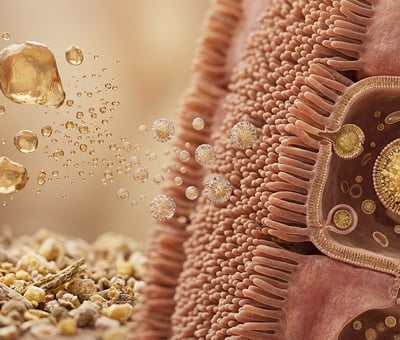
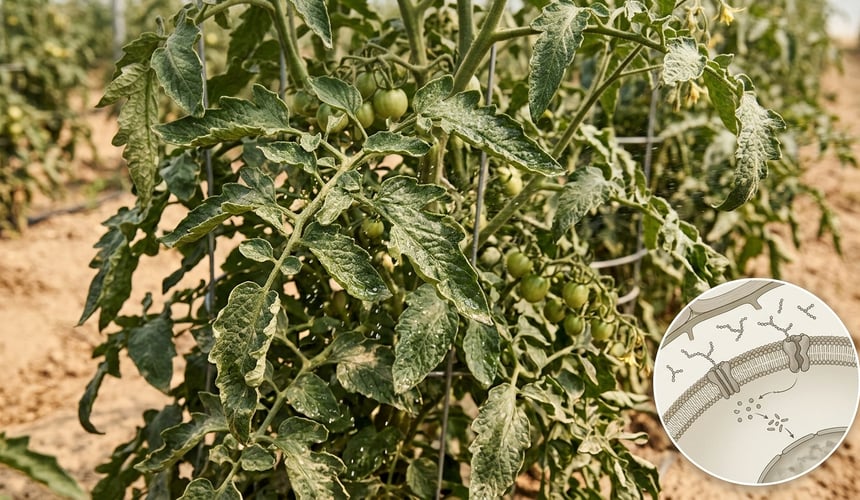
According to the reviewed literature, plant cells perceive elicitor molecules at the plasma membrane, with calcium flux, reactive oxygen species, mitogen-activated protein kinase cascades and the jasmonate and salicylate pathways discussed as components of the response. The outcome is described as transcriptional, with defense-related genes switched on. Seaweed extracts are discussed within parts of this network, which is why some authors refer to them as proposed bio-elicitors or phyco-elicitors rather than as direct antimicrobial agents [1].
Work with Arabidopsis thaliana exposed to a commercial seaweed extract reported activation of innate immune responses and measurable changes in defense-related gene expression under controlled conditions [3]. That is a mechanistic result in a model species, not a field outcome.
How this connects to abiotic stress
Abiotic stress and immune signaling are often studied together, and some reviews discuss the two as possibly overlapping, although direct evidence for that overlap in a given crop is not always available [2]. A seaweed extract that primes these components may therefore be relevant to how quickly a plant adjusts osmotically or how it manages oxidative pressure during stress, but such a link has been proposed rather than demonstrated at this stage.
In cotton grown under water scarcity, a seaweed extract-based biostimulant was associated with changes in nutrition, physiology and yield parameters [4]. That study used one product on one crop under particular water conditions; it does not establish that the mechanism was immune elicitation, nor that the response transfers to other crops or other extracts.
Where the evidence stops
Three distinctions are worth keeping. First, receptor activation and defense gene expression have mainly been studied under controlled conditions. Second, physiological measurements and yield outcomes are recorded separately in a trial. Third, most published mechanisms are tied to a specific species, extract or concentration.
For practical interpretation, that means asking what was measured, in which species, under which conditions, and with which extract. An immune-response result in Arabidopsis is informative about a proposed mechanism; a water-scarcity result in cotton is informative about agronomic context; neither substitutes for the other.
Technical Summary
Marine polysaccharides in seaweed extracts, notably laminarin, fucoidans and oligosaccharides, have been proposed as phyco-elicitors perceived by plant cell-surface receptors. Evidence comes largely from controlled studies with specific species and extracts, and should not be generalised to other crops or products.
This article was created with the help of AI and reviewed by the Cropenta editorial team. It is general information, not professional advice.
Technical Questions
Which marine polysaccharides are most often discussed in relation to elicitor activity in seaweed extracts?
Laminarin and its breakdown products, together with fucoidan-type sulfated polysaccharides, are the fractions most often proposed as phyco-elicitors. The reviewed literature describes them as structures that plant cell-surface receptors may perceive as signals rather than as nutrients. This is a proposed mechanism, and it is not established as a general property of all extracts.
Do defense gene responses measured in Arabidopsis predict field performance in crops?
No. Arabidopsis is a model species used to study mechanism under controlled conditions. A defense gene response there indicates that a pathway can be activated under those conditions, but it does not demonstrate the same response in a commercial crop, under field stress, or at the concentrations and formulations used in practice.
Why is a physiological change in a seaweed extract trial not the same as a yield result?
A trial can show a physiological response without a measurable yield difference. The two are recorded separately and should be reported and interpreted separately, because a change in a measured parameter does not by itself establish an agronomic effect under production conditions.
Can results from one commercial seaweed extract be applied to another?
Not automatically. Conclusions from a trial with one extract describe that extract under those conditions and should not be transferred to other products without equivalent evidence, because composition varies with species, harvest and processing.
- 1.Seaweed-Based Compounds and Products for Sustainable Protection against Plant Pathogens - PMC
- 2.Seaweed extracts: enhancing plant resilience to biotic and abiotic stresses
- 3.Seaweed Extract (Stella Maris®) Activates Innate Immune Responses in Arabidopsis thaliana and Protects Host against Bacterial Pathogens - PMC
- 4.A seaweed extract–based biostimulant improves cotton nutrition, physiology, and yield under water scarcity
Looking for something specific?
Our team is there to help you find the right raw materials and solutions for your formulations