Rumen-Protected Protein vs. Protected Amino Acids: What Does the Dairy Cow Really Need?
A dairy ration can provide plenty of crude protein and still fail to deliver the amino acids the cow needs. Even a high rumen-undegradable protein (RUP) value does not guarantee adequate metabolizable protein supply. What matters is how much protein reaches the small intestine, how much of it is digested, and whether the resulting amino acid profile meets the cow's requirements. This distinction explains why rumen-protected proteins and protected amino acids such as lysine and methionine serve different, potentially complementary functions in dairy nutrition.
Cropenta Insight
Rumen-protected protein and protected amino acids should not be viewed as competing nutritional solutions. They address different limitations. When total metabolizable protein supply is adequate but lysine or methionine is limiting, targeted protected amino acid supplementation may be appropriate. When the ration is deficient in total metabolizable protein or several essential amino acids, an intestinally digestible bypass protein may provide a more suitable correction. The first step is always to identify the nutritional limitation before selecting the ingredient.
From Crude Protein to Absorbable Amino Acids
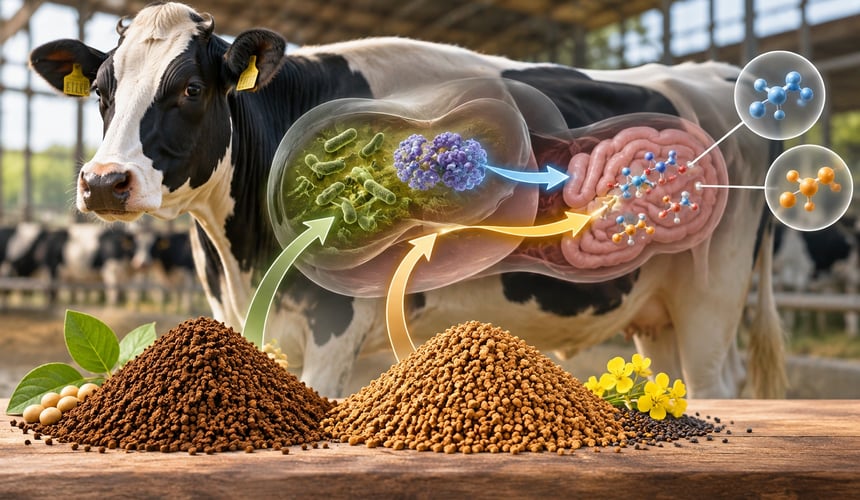
Dietary crude protein does not directly represent the amount of amino acids available to the dairy cow. The small intestine receives protein from two principal sources: microbial protein synthesized in the rumen and dietary protein that escapes ruminal degradation, commonly known as rumen-undegradable protein or bypass protein.
Rumen microorganisms use degradable nitrogen compounds together with fermentable energy to synthesize microbial protein. This microbial protein subsequently contributes amino acids when digested in the small intestine. Rumen-undegradable dietary protein follows a different pathway, escaping microbial degradation before reaching the intestinal digestive system.
Both pathways contribute to metabolizable protein supply. Their relative importance depends on the composition of the ration, rumen fermentation conditions and the nutritional characteristics of the protein ingredients.
The central principle is that RUP is not equivalent to intestinally digestible protein. Only the digestible fraction of rumen-undegraded protein contributes absorbable amino acids.
Why More Crude Protein Does Not Automatically Mean More Usable Protein
Increasing dietary crude protein can produce very different nutritional outcomes depending on the characteristics of the additional protein source.
If the extra protein is predominantly rumen-degradable, it may support microbial protein synthesis when fermentable energy is available and rumen nitrogen supply is limiting. However, when microbial nitrogen requirements are already satisfied, additional degradable protein may increase ammonia absorption, urea formation and nitrogen excretion without proportionally increasing absorbable amino acid supply.
A protein ingredient may alternatively provide substantial rumen-undegradable protein but have limited intestinal digestibility. In that situation, more protein escapes the rumen, but relatively little additional protein becomes available for absorption.
A third possibility is to supply protein that combines meaningful ruminal protection with high intestinal digestibility. Such an ingredient may increase absorbable amino acid supply when the existing ration is deficient in metabolizable protein.
The nutritional objective is therefore not to maximize crude protein or RUP percentages. It is to provide sufficient metabolizable protein with an appropriate amino acid profile while maintaining adequate nitrogen and fermentable energy for rumen microbial protein synthesis.
Rumen Protection and Intestinal Digestibility Must Be Evaluated Together
Rumen protection describes the extent to which dietary protein escapes degradation by rumen microorganisms. Intestinal digestibility describes the proportion of that escaped protein that can subsequently be digested in the intestine.
These characteristics are related but distinct. A protein ingredient can resist ruminal degradation while remaining poorly digestible after leaving the rumen.
Processing technologies, including controlled heat treatment, can modify protein degradation characteristics. However, excessive processing may reduce the availability of certain amino acids, particularly lysine, through heat-induced chemical reactions.
This creates an important distinction between protein protection and nutritional value. Increasing ruminal resistance is beneficial only when the resulting protein retains sufficient post-ruminal digestibility.
For professional dairy nutritionists, the evaluation of bypass protein ingredients should therefore include both ruminal degradation characteristics and intestinal digestibility rather than relying on a declared bypass percentage alone.
Understanding RUP Values in Dairy Ration Formulation
Rumen-undegradable protein values are commonly derived from measurements of protein degradation characteristics and calculations that account for the movement of feed through the rumen.
In-situ or in-sacco incubation techniques can be used to characterize protein degradation over time. The resulting degradation characteristics are incorporated into nutritional models to estimate the proportion of dietary protein escaping ruminal degradation.
The calculated RUP value depends partly on the assumed ruminal passage rate. Consequently, RUP values derived using different passage assumptions should not be compared directly without accounting for those differences.
A calculated RUP value is also not equivalent to the protein remaining after one fixed incubation period. It represents an estimate of the protein fraction escaping ruminal degradation under the assumptions of the selected evaluation system.
These distinctions are important when comparing protected soybean proteins, protected rapeseed proteins and other processed protein ingredients.
When Protected Lysine and Methionine Are the Right Nutritional Correction
Rumen-protected lysine and methionine are specialized ingredients designed to deliver selected essential amino acids beyond the rumen for absorption in the small intestine.
They are particularly relevant when the ration provides sufficient total metabolizable protein but the balance of individual essential amino acids does not meet the cow's requirements.
For example, a dairy ration may supply adequate metabolizable protein while providing insufficient absorbable lysine relative to the animal's needs. Supplementing a suitable rumen-protected lysine source can address that specific limitation without substantially increasing total dietary protein.
The same principle applies to methionine when its absorbable supply is limiting. Under certain dietary conditions, histidine or other essential amino acids may also require attention.
The effectiveness of protected amino acid supplementation depends on the actual nutritional limitation, the bioavailability of the product and the complete amino acid profile of the ration.
When only one essential amino acid is limiting, targeted supplementation may be more efficient than increasing the inclusion of a complete protein ingredient.
When Protected Amino Acids Alone Cannot Correct the Ration
A different nutritional situation arises when the ration does not supply sufficient total metabolizable protein.
In this case, the limitation is broader than a shortage of lysine or methionine alone. The cow may lack adequate quantities of several absorbable amino acids required for protein synthesis.
Adding protected lysine can increase the lysine supply, but it does not automatically correct deficiencies in other essential amino acids or provide the complete additional protein contribution required by the animal.
Similarly, protected methionine supplementation cannot independently resolve an overall shortage of metabolizable protein.
When total metabolizable protein supply is insufficient, an ingredient providing a broader range of intestinally digestible amino acids may be a more appropriate nutritional correction.
This is where rumen-protected soybean and rapeseed proteins can provide a complementary function alongside targeted protected amino acids.
Why Rumen-Protected Soybean and Rapeseed Proteins Can Be Complementary
Rumen-protected soybean and rapeseed proteins supply dietary protein containing multiple amino acids rather than delivering only one selected amino acid.
When these proteins combine substantial ruminal protection with high intestinal digestibility, they can contribute to the broader metabolizable protein supply of the dairy cow.
This function differs from that of protected lysine and methionine, which are used to adjust specific amino acid concentrations and proportions.
For example, a nutritionist may identify insufficient total metabolizable protein supply in an existing ration. A suitable rumen-protected protein ingredient can then be evaluated to increase the contribution of intestinally digestible dietary protein.
After correcting the overall protein supply, the ration may still require targeted adjustment of lysine, methionine or another essential amino acid.
In that situation, rumen-protected protein and protected amino acids can be used together as complementary formulation tools.
The nutritional benefit depends on the requirements of the animals, the existing ration and the actual digestible amino acid contribution of each ingredient.
Bypass CovaminoSoy 2.0 and CovaminoRap 2.0
Cropenta's Bypass CovaminoSoy 2.0 and CovaminoRap 2.0 are specialized rumen-protected protein ingredients developed to combine ruminal protein protection with high post-ruminal protein digestibility.
Bypass CovaminoSoy 2.0 is based on soybean protein and provides approximately 83% rumen-undegradable protein with approximately 99% intestinal digestibility of the protected protein fraction.
CovaminoRap 2.0 is based on rapeseed protein and provides approximately 80% rumen-undegradable protein with approximately 90% intestinal digestibility of the protected protein fraction.
These nutritional characteristics were evaluated through technical research conducted at ILVO, including extended in-situ/in-sacco rumen incubation using rumen-fistulated cows and subsequent post-ruminal digestibility assessment using the mobile nylon-bag technique.
The resulting technical measurements were further evaluated for nutritional formulation purposes by Schothorst Feed Research.
The key distinction is the combination of rumen protection and intestinal digestibility. Both characteristics are relevant when evaluating the contribution of protected dietary protein to metabolizable protein supply.
These products may be considered in dairy rations where additional intestinally digestible protein is required. They are not intended to replace protected lysine or methionine when the nutritional limitation can be corrected more precisely through targeted amino acid supplementation.
Why Higher Bypass Protein Values Do Not Guarantee Higher Milk Production
A higher calculated RUP value does not automatically result in greater milk yield or milk protein production.
The response to additional metabolizable protein depends on the existing protein supply, amino acid balance, energy availability, feed intake and physiological requirements of the dairy cow.
When the ration already provides adequate metabolizable protein and essential amino acids, additional protected protein may produce little or no measurable production response.
Likewise, increasing the supply of a particular amino acid may have limited value when another amino acid or energy supply becomes limiting.
Controlled feeding trials are therefore important for evaluating animal responses, but they answer a different question from laboratory characterization.
Ruminal degradation measurements establish protein degradation characteristics. Intestinal digestibility measurements provide information about post-ruminal protein utilization. Nutritional evaluation systems translate these characteristics into formulation values. Feeding trials assess the resulting animal response under specific dietary and production conditions.
These different levels of evidence should not be treated as interchangeable.
A Practical Decision Framework for Dairy Nutritionists
The choice between rumen-protected protein and protected amino acids should begin with a structured evaluation of the complete dairy ration.
Step 1: Evaluate Total Metabolizable Protein Supply
Determine whether the ration supplies sufficient metabolizable protein for the cow's requirements. Consider microbial protein synthesis, intestinally digestible rumen-undegradable protein and the balance between rumen-degradable nitrogen and fermentable energy.
Step 2: Evaluate the Absorbable Amino Acid Profile
Identify whether lysine, methionine, histidine or other essential amino acids are limiting. A ration can provide sufficient total metabolizable protein while remaining deficient in one or more individual amino acids.
Step 3: Select the Appropriate Nutritional Correction
When total metabolizable protein supply is adequate but a specific amino acid is limiting, targeted protected amino acid supplementation may be appropriate.
When total metabolizable protein supply is insufficient, or several essential amino acids are simultaneously inadequate, an intestinally digestible rumen-protected protein ingredient may provide a more suitable correction.
When both limitations are present, protected protein and targeted protected amino acids may be combined.
Step 4: Recalculate the Complete Ration
After introducing a new ingredient, reassess metabolizable protein supply, amino acid balance, rumen nitrogen adequacy and energy availability. The correction should address the identified limitation without creating unnecessary nutrient excess or a new nutritional imbalance.
Improving Nitrogen Efficiency Through More Precise Protein Nutrition
Efficient protein nutrition is not simply a matter of increasing dietary crude protein concentration.
When dietary nitrogen exceeds the requirements of rumen microorganisms and the animal, the excess may be converted into urea and excreted rather than contributing to productive protein synthesis.
Precision formulation aims to supply sufficient rumen-degradable nitrogen for microbial activity while providing an appropriate quantity and balance of absorbable amino acids.
Rumen-protected proteins and protected amino acids can contribute to this approach when they address identified nutritional limitations.
However, neither ingredient category automatically improves nitrogen efficiency. The outcome depends on the existing ration, ingredient characteristics and the extent to which supplementation corrects a genuine nutrient shortage.
The most effective strategy is to match nutrient supply to animal requirements while avoiding unnecessary protein supplementation.
Technical Summary
Rumen-protected proteins and protected amino acids serve different but potentially complementary functions in dairy cattle nutrition. Protected lysine and methionine are targeted tools for correcting specific essential amino acid limitations. Rumen-protected soybean and rapeseed proteins can provide a broader contribution of intestinally digestible dietary protein when total metabolizable protein supply is insufficient.
The nutritional value of bypass protein depends on both ruminal protection and intestinal digestibility. A high RUP percentage alone does not guarantee greater absorbable amino acid supply or improved milk production.
The appropriate formulation strategy begins with evaluating total metabolizable protein supply, identifying limiting amino acids and selecting the ingredient or combination of ingredients that addresses the actual nutritional shortage. The complete ration should then be recalculated to verify protein, amino acid and energy balance.
Cropenta: Complementary Solutions for Precision Dairy Protein Nutrition
Cropenta's Bypass CovaminoSoy 2.0 and CovaminoRap 2.0 provide specialized rumen-protected soybean and rapeseed protein options for professional dairy nutritionists and feed manufacturers.
Their nutritional positioning focuses on the combination of rumen protection and post-ruminal protein digestibility, making them relevant to ration formulations requiring additional intestinally digestible protein.
These ingredients can complement protected lysine and methionine strategies when the nutritional diagnosis indicates that targeted amino acid supplementation alone cannot adequately correct the metabolizable protein supply.
Cropenta welcomes technical discussions with dairy nutritionists, feed manufacturers and suppliers of rumen-protected amino acids interested in evaluating complementary protein and amino acid strategies.
Contact Cropenta for further technical information about Bypass CovaminoSoy 2.0, CovaminoRap 2.0 and their potential application in professional dairy ration formulation.
Scientific References
[1] Lapierre, H., Pacheco, D., Berthiaume, R., et al. (2006). What is the true supply of amino acids for a dairy cow? Journal of Dairy Science, 89, E1-E14.
[2] Schwab, C. G., and Broderick, G. A. (2017). A 100-Year Review: Protein and amino acid nutrition in dairy cows. Journal of Dairy Science, 100, 10094-10112.
[3] Huhtanen, P., and Hristov, A. N. (2009). A meta-analysis of the effects of dietary protein concentration and degradability on milk protein yield and milk N efficiency in dairy cows. Journal of Dairy Science, 92, 3222-3232.
Technical background: Conceptual dairy protein and amino acid nutrition diagrams prepared by Paul Fransen, FeedValid, November 2026. Product-specific technical characterization: ILVO and Schothorst Feed Research.
This article was created with the help of AI and reviewed by the Cropenta editorial team. It is general information, not professional advice.
Technical Questions
What is the difference between rumen-protected protein and protected amino acids?
Rumen-protected protein supplies a broad range of amino acids through dietary protein that escapes ruminal degradation and is subsequently digested in the small intestine. Protected amino acids, such as rumen-protected lysine and methionine, deliver specific essential amino acids. Both address different nutritional limitations and can complement each other in dairy ration formulation.
When should dairy cows receive rumen-protected protein instead of protected amino acids?
Rumen-protected protein may be appropriate when the ration provides insufficient metabolizable protein or has broader deficiencies in absorbable amino acids. Protected lysine or methionine may be more suitable when total metabolizable protein is adequate but a specific amino acid is limiting. The decision depends on the complete ration and the cow's nutritional requirements.
Can protected lysine and methionine replace bypass protein in dairy cow diets?
Not in every situation. Protected lysine and methionine can correct specific amino acid limitations, but they cannot necessarily resolve an overall shortage of metabolizable protein or deficiencies involving several other amino acids. Intestinally digestible bypass protein can provide a broader amino acid supply when the ration requires it.
Why is intestinal digestibility important for bypass protein?
A high rumen-undegradable protein (RUP) percentage only indicates how much dietary protein is estimated to escape ruminal degradation. That protein must also be digested in the small intestine to supply absorbable amino acids. Therefore, both rumen protection and intestinal digestibility are essential when evaluating the nutritional value of bypass protein.
Can rumen-protected protein and protected amino acids be used together?
Yes. Rumen-protected soybean or rapeseed protein may contribute additional intestinally digestible protein, while protected lysine or methionine can correct specific amino acid imbalances. Combining them may be appropriate when the ration requires both additional metabolizable protein and targeted amino acid supplementation.
Does a higher RUP percentage guarantee more milk protein production?
No. A higher RUP percentage does not automatically increase milk yield or milk protein production. The response depends on intestinal protein digestibility, amino acid balance, energy supply, feed intake and whether metabolizable protein is actually limiting in the existing ration. Laboratory protein characterization and animal performance are different levels of evidence.
How are RUP values calculated for rumen-protected protein ingredients?
RUP values can be calculated using experimentally determined ruminal protein degradation characteristics and an assumed passage rate. The calculated percentage depends on these assumptions and should not be confused with the protein remaining after a fixed incubation period. Meaningful comparisons require consistent evaluation methods and passage-rate assumptions.
How can Bypass CovaminoSoy 2.0 and CovaminoRap 2.0 complement protected lysine and methionine?
Bypass CovaminoSoy 2.0 and CovaminoRap 2.0 are rumen-protected soybean and rapeseed protein ingredients characterized for ruminal protection and intestinal digestibility. They can be evaluated where additional intestinally digestible protein is required, while protected lysine and methionine provide targeted amino acid supplementation. Their combined value depends on the metabolizable protein supply and amino acid balance of the complete dairy ration.
- 1.Nutrition and feeding of dairy cattle
- 2.A 100-Year Review: Protein and amino acid nutrition in dairy cows
- 3.Effect of source and frequency of rumen-protected protein supplementation on apparent total-tract digestibility and milk production
- 4.The use of rumen-protected amino acids and fibrous by-products in dairy cow feeding
Looking for something specific?
Our team is there to help you find the right raw materials and solutions for your formulations