What feeding trials show about rumen-protected rapeseed protein in dairy rations
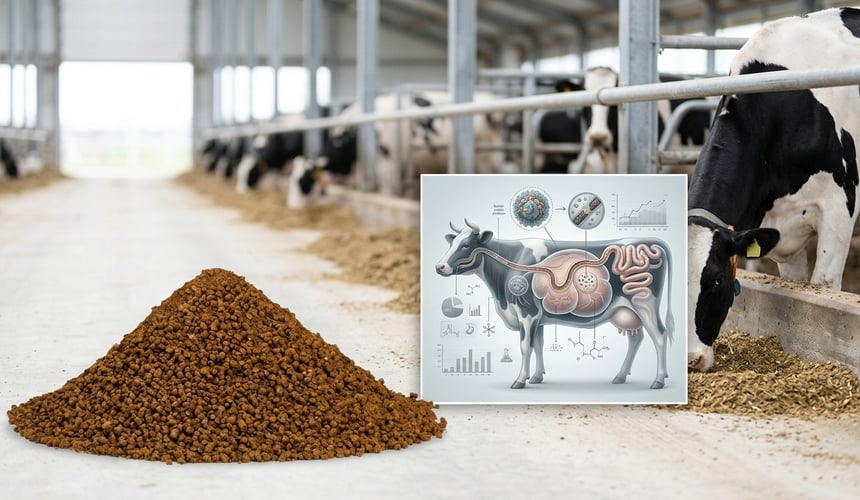
Rapeseed meal is a familiar protein source in dairy rations, but much of its protein is broken down by rumen micro-organisms before the cow can absorb it. Rumen-protected rapeseed products are designed to let more of that protein pass into the small intestine. The practical question for a nutritionist is whether feeding trials show that this leads to a measurable response in the cow.
The answer depends on which evidence is read and how the protein value was determined. A declared protein value, an in-situ degradation measurement and a milk response in a feeding trial are different kinds of evidence, and they do not automatically agree.
Cropenta Insight
Declared protein values are only comparable when they use the same assumed passage rate and the same measurement method. Bypass Rapeseed MP from Cropenta is reported with a calculated RUP of about 80% at an assumed passage rate of 6%/h and an intestinal digestibility of about 90%, with the measurements made in vivo by an independent research institute. These figures describe the ingredient, not the milk response of cows fed it, so trial outcomes still need separate reading.
What RUP does and does not tell a formulator
RUP, or rumen-undegradable protein, is the share of a feed protein that escapes rumen degradation. It is not measured directly over a full period in the rumen. It is calculated from nylon-bag degradation characteristics, such as the potentially degradable fraction and the degradation rate, combined with an assumed passage rate (Kp) that describes how quickly feed leaves the rumen. A RUP value at one passage rate cannot be compared with a value at another.
Protection of rapeseed protein is usually based on heat and Maillard reactions with reducing sugars. In a controlled Maillard reaction, sugar molecules bind free amino groups, including the epsilon-amino group of lysine, which makes the protein more resistant to rumen micro-organisms while acid and enzymes in the abomasum and small intestine can still release amino acids. Excessive treatment binds too much lysine and lowers digestibility, so a high RUP figure by itself does not show that the protein is usable. Intestinal digestibility of the escaped protein has to be considered alongside it.
In-vitro degradation tests can overstate rumen protection for heat- and Maillard-treated proteins. In-situ measurements in rumen-fistulated cows, with a typical rumen reference sample of concentrate and roughage for high-producing dairy cows, are therefore the more relevant basis for comparison. Even with a high RUP, the protein has to compete with microbial protein synthesis, which already supplies a large share of the amino acids a cow absorbs.
The independent rapeseed trial
The primary study in this review evaluated a rumen-protected rapeseed expeller in dairy cows. The authors state that their results support the hypothesis that cows fed this product and other rumen-protected rapeseed proteins will have similar or improved milk production [1]. The wording matters: "similar" leaves room for no difference from the control diet, and the finding is a hypothesis-supporting result rather than a proven production gain.
The summary available for this review does not allow the group sizes, diet composition, study period, control treatment, statistical treatment or funding to be verified. Those details should be checked in the full paper before the result is applied. The findings also apply to the tested expeller and should not be generalised to other protected rapeseed products or to other protein sources.
Heat processing and protein digestibility
Processing history affects how rapeseed protein behaves in the animal. In growing pigs, toasting of rapeseed meal was reported to have negative effects on protein digestibility, and pelleting and extrusion were reported to ameliorate those effects [2]. This is monogastric research and cannot be transferred to rumen degradation or to ruminant intestinal digestibility, but it illustrates that heat treatment can change digestibility in either direction depending on how it is applied.
Reading trial results critically
- Check whether RUP values were compared at the same assumed passage rate.
- Check whether intestinal digestibility is reported alongside RUP.
- Separate the ingredient characterisation from the animal response. In-situ measurements in cows do not measure milk production.
- Look for a control diet and a stated comparison basis, rather than a comparison with an unspecified product.
- Note funding and any conflicts of interest, and whether non-significant results are reported.
Technical Summary
Feeding trial evidence for rumen-protected rapeseed protein is limited in the sources reviewed. The primary study reports results that support a hypothesis of similar or improved milk production, without the design details being verifiable here. RUP must be read with its passage rate and intestinal digestibility, and in-situ measurements characterise an ingredient without measuring milk response.
This article was created with the help of AI and reviewed by the Cropenta editorial team. It is general information, not professional advice.
Technical Questions
Why can two protected rapeseed products with similar RUP values differ in formulation value?
RUP is only comparable at the same assumed passage rate and measurement method. Intestinal digestibility of the escaped protein and the protein valuation system, such as DVE/OEB or metabolisable protein, also determine how much usable protein a formulator can credit. A similar RUP figure does not guarantee a similar intestinal supply.
Related articles
Looking for something specific?
Our team is there to help you find the right raw materials and solutions for your formulations

