Why rumen bypass protein intestinal digestibility matters more than the bypass figure
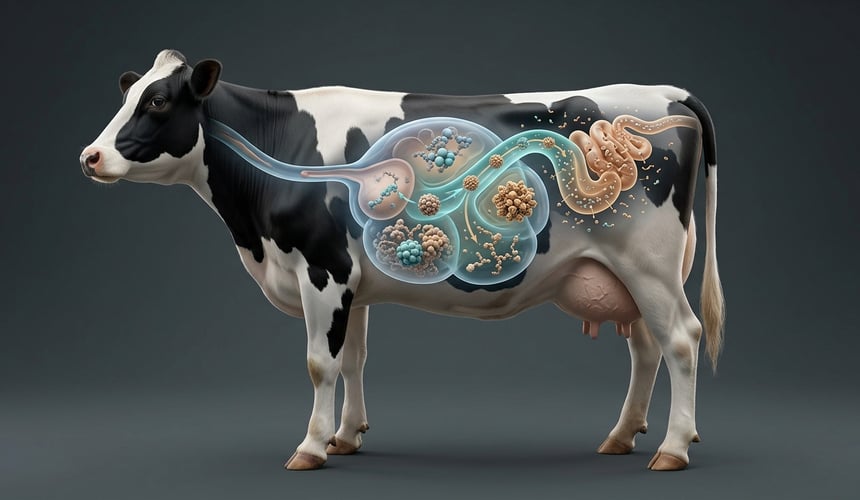
A bypass figure on a feed specification looks decisive. If the label says 80% of the protein escapes the rumen, the implied assumption is that most of it reaches the cow as intact amino acids. The problem is that this number answers only half of the question, and it is the half that is easiest to measure and compare. Rumen bypass protein intestinal digestibility is the other half: how much of the protein that escaped rumen degradation is broken down and absorbed in the small intestine.
Two protected soy protein products can carry similar rumen-undegradable protein (RUP) percentages while differing in the intestinal digestibility reported for their undegraded fraction. For formulators and buyers, understanding why requires separating three things that are often bundled together: how the protein behaves in the rumen, what happens to it in the intestine, and how a protein evaluation system converts those measurements into a ration value.
Cropenta Insight
Two numbers have to travel together for a protected protein to be judged properly: the rumen-undegradable share, always stated at an assumed passage rate, and the intestinal digestibility of that undegraded fraction. The first describes the share calculated to escape rumen degradation under stated assumptions; the second describes the share of that fraction digested in the small intestine. Product specifications that show only one of the two leave the nutritional question half answered.
What a rumen bypass percentage actually measures
Rumen-degradable protein (RDP) feeds microbial protein synthesis in the rumen. Rumen-undegradable protein escapes that degradation and reaches the small intestine, where it can be digested. The RUP value used in feed tables is not, however, a direct observation of a bag of protein sitting in the rumen for a set number of hours. It is calculated from measured degradation characteristics: the soluble fraction, the washable but insoluble fraction, the potentially degradable fraction and its fractional degradation rate per hour, combined with an assumed fractional passage rate (Kp) that is estimated from intake and production rather than measured in the animal.
Two practical consequences follow. First, RUP values are only comparable when they are based on the same assumed passage rate; a figure quoted at 6%/h cannot be set next to one quoted at 8%/h as if the two describe the same product behaviour. Second, a high RUP number is a calculated statement about rumen survival under those assumptions, not a measurement of amino acid availability downstream.
What intestinal digestibility adds to the picture
The second measurement is the share of the rumen-undegraded protein that is digested in the small intestine, determined for example with the mobile nylon bag technique in cows fitted with duodenal cannulas. It describes the step between passage from the rumen and amino acid availability in the intestine.
An in situ study in fistulated cows compared protein sources with different degradability and reported higher total small intestinal absorbable amino acids and absorbable essential amino acids for the undegraded protein fractions than for the more readily degradable sources [1]. A comparative study with lactating Chinese Holstein cows on local protein resources likewise separated rumen degradability from intestinal digestive characteristics rather than treating one as a proxy for the other [2]. Where an ingredient combines a high RUP share with a low intestinal digestibility value, the digestibility figure qualifies the potential protein contribution rather than confirming it.
Why the rumen side of the balance still sets the ceiling
Before adding protected protein, it is worth remembering where most of the protein reaching the small intestine comes from. Rumen-synthesised microbial protein accounts for the majority of crude protein flowing to the small intestine and is regarded as a high-quality protein source for dairy cows [3]. The role of additional bypass protein therefore depends on the balance between degradable and undegradable protein in the ration and on the supply already present. Reviews of rumen-degradable to rumen-undegradable ratios in dairy cows describe effects on nutrient digestibility, rumen fermentation and microbial protein synthesis that vary with the level used and the ration around it [4].
Protection and availability are not the same property
Protein protection works by making a protein resistant to rumen micro-organisms, and heat treatment with reducing sugars through the Maillard reaction is one established route. The same chemistry carries a risk that is easy to overlook: uncontrolled Maillard reactions bind the epsilon-amino group of lysine, so a product can show high rumen resistance while carrying less digestible lysine. Total lysine may change little while reactive lysine falls. Over-processing can therefore lower both degradation and digestibility, which is why the two measurements have to be read together.
There is a second measurement trap here. In vitro enzymatic degradation tests correlate poorly with in situ measurement in fistulated cows, particularly for heat- and Maillard-protected proteins, where they tend to overstate rumen protection. Declared values based on in vitro methods are therefore not interchangeable with in situ values, and part of the perceived difference between suppliers can sit in the method rather than in the raw material.
From measurement to formulation value
Protein evaluation systems translate degradation and digestibility measurements into formulation numbers: the Dutch DVE/OEB system for intestinal digestible protein and rumen protein balance, the German nXP/RNB system, INRA PDI and the CNCPS metabolisable protein concept. These are calculations built on stated assumptions, not animal results, and they differ between systems and between assumed passage rates. A valuation is only as meaningful as the passage rate and the digestibility figure behind it.
What to ask when comparing two protected soy protein sources
- Is the RUP figure stated together with the assumed passage rate, and can it be compared like for like?
- What is the measured intestinal digestibility of the rumen-undegraded fraction?
- Was degradation measured in situ in fistulated animals, and how long were the incubations run?
- Is the value quoted as measured or as calculated in a valuation system?
- How is the product distinguished from a formaldehyde-treated reference, given the difference in lysine handling?
As an illustration of how such a specification can read, according to the company a protected soy protein product might report calculated rumen-undegradable protein above 80% at an assumed passage rate of 6%/h, a slow degradation rate of about 1%/h, and intestinal digestibility of the rumen-undegraded protein close to 100%. According to the company, these are the stated values of one product rather than a category-wide value.
Technical Summary
RUP is calculated at an assumed passage rate and describes rumen survival only. Intestinal digestibility of that undegraded fraction describes how much is digested in the small intestine. Reading both, at the same Kp and from in situ methods, provides a more complete basis for comparing protected protein sources than the bypass figure alone.
It is general information, not professional advice.
This article was created with the help of AI and reviewed by the Cropenta editorial team. It is general information, not professional advice.
Technical Questions
How should a rumen-undegradable protein figure from different suppliers be compared?
Only at the same assumed passage rate. RUP is calculated from degradation kinetics and an estimated fractional passage rate, so a value at 6%/h and one at 8%/h describe different assumptions and cannot be set side by side. For a valid comparison, the Kp used, the method behind the measurement, and whether the value is directly measured or calculated in a valuation system all have to be known.
Why can an in vitro protein degradation test overstate the rumen protection of a protected soy protein?
In vitro enzymatic tests correlate poorly with in situ measurement in rumen-fistulated cows, especially for heat- and Maillard-protected proteins, where they tend to overstate protection. The laboratory assay cannot reproduce the combined action of microbial attack, passage and abomasal conditions. Treat in vitro figures as screening information rather than a substitute for in situ work.
What does the intestinal digestibility of a protected protein actually tell a nutritionist?
It gives the share of the rumen-undegradable protein that is digested in the small intestine, measured for example with the mobile nylon bag technique in cows with duodenal cannulas. Read together with the RUP share and the assumed passage rate, it describes the basis on which absorbable amino acids are calculated for formulation purposes.
How can over-processing affect a protected protein even when rumen protection looks good?
Maillard reactions bind the epsilon-amino group of lysine. When protection is excessive, reactive lysine falls and digestibility in the abomasum and small intestine declines, even though rumen degradation is very low. Total lysine can stay nearly unchanged, so amino acid analysis alone does not reveal the loss; digestibility measurement does.
- 1.Rumen Degradability and Small Intestinal Digestibility of the Protein Sources in Dairy Cows
- 2.A comparative study of the intestinal digestive characteristics of local protein feed resources for lactating dairy cows
- 3.A 100-Year Review: Protein and amino acid nutrition in dairy cows
- 4.Effects of rumen-degradable-to-undegradable protein ratio in dairy cows: a review
Related articles

Related Products
Looking for something specific?
Our team is there to help you find the right raw materials and solutions for your formulations

