Comparing rumen protection methods for feed proteins
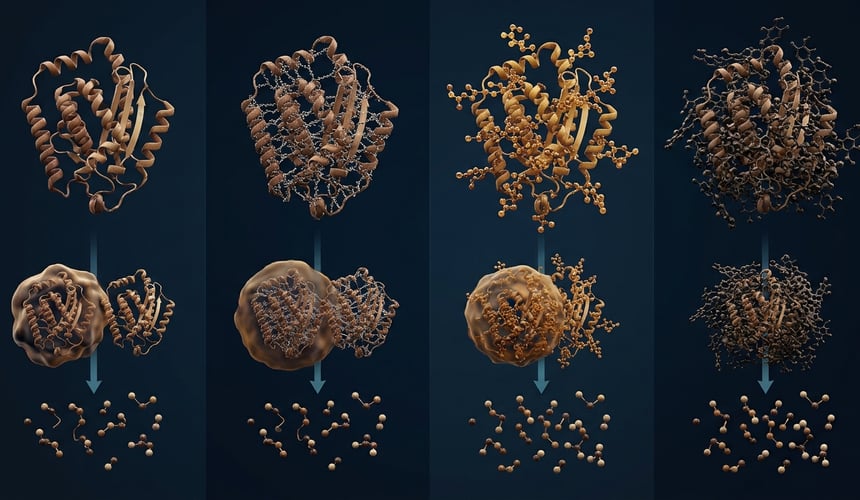
Two protected protein products can carry the same declared bypass percentage and still supply different amounts of usable amino acids to the small intestine. Two separate steps determine this outcome: how much protein resists rumen degradation, and how much of the surviving protein is subsequently digested and absorbed. Comparing rumen protection methods therefore requires looking at both.
Rumen protection methods include heat treatment, chemical treatment, sugar-aldehyde reactions and lignosulfonate treatment. Each alters protein in a different way and carries a different balance between rumen stability, intestinal availability and processing control.
Cropenta Insight
The most useful single question when comparing bypass protein technologies is not how much protein escapes the rumen, but how much digestible protein reaches the small intestine per unit of rumen-degradable protein replaced. A declared rumen-undegradable protein value calculated at a stated passage rate is only one part of the comparison. Intestinal digestibility, the assumed passage rate and the valuation system used for formulation all shape the final protein value, and declared percentages from different methods are rarely interchangeable.
Heat treatment: physical change with a clear processing window
Heat treatment denatures proteins and, at more intensive conditions, can form aggregates that are less accessible to rumen micro-organisms. This is a relatively simple mechanism, but the processing window is narrow. Mild treatment leaves much of the protein rumen-degradable; severe treatment lowers rumen degradation but can also make lysine less available, reduce amino acid digestibility and affect palatability.
Heat indicators and total lysine analysis describe the treatment rather than the outcome in the cow. For rumen-protected proteins, the relevant evidence is the measured degradation profile in living animals together with intestinal digestibility of the undegraded fraction. In-vitro enzymatic tests correlate poorly with in-situ measurement, particularly for heat- and Maillard-treated proteins, where they tend to overstate the degree of rumen protection.
Chemical treatment and formaldehyde: reactive and demanding
Chemical protection relies on cross-linking or chemical modification of protein groups, historically using formaldehyde. Treated protein resists rumen degradation and can deliver a high rumen-undegradable protein share, but the same chemistry can restrict the release and digestion of amino acids in the abomasum and small intestine. Formaldehyde handling also raises operational and regulatory questions that many feed mills and producers prefer to avoid.
This is where the two-step principle becomes visible: a treatment that limits rumen degradation but also lowers intestinal digestibility may offer less metabolisable protein than its rumen-undegradable protein figure suggests. Chemical methods can sit at either end of this trade-off, depending on dose, protein source and processing control.
Sugar-aldehyde treatment: the Maillard route
Reducing sugars such as glucose, fructose or xylose react with free amino groups on proteins, notably the epsilon-amino group of lysine, through a Maillard reaction. Controlled processing yields melanoidin-type products that resist microbial breakdown in the rumen, while acid and enzymes in the abomasum and small intestine can still release amino acids.
Excess heat, moisture or reaction time pushes the reaction further than intended. Total lysine can remain essentially unchanged while reactive lysine falls, and digestibility and palatability may decline. The technical challenge is therefore not simply reaching a rumen-stable product, but stopping at a point where rumen resistance and intestinal release remain in balance. Because in-vitro methods tend to overstate protection for Maillard-treated proteins, in-situ characterisation is particularly relevant here.
Lignosulfonate treatment: a different mode of action
Lignosulfonate treatment works through binding interactions between the phenolic lignosulfonate fraction and protein, forming a complex that rumen enzymes attack less readily. It is often described as a non-chemical route in the sense that it does not rely on formaldehyde cross-linking, but the outcome still depends on dose, mixing uniformity, moisture and the protein involved.
As with sugar-aldehyde treatments, the evaluation question remains the same: does the protected fraction stay available for enzymatic digestion after it leaves the rumen? A binding mechanism that limits degradation in the rumen can also hold amino acids back in the intestine, so declared bypass figures should always be read alongside measured intestinal digestibility.
Reading RUP values without being misled
Rumen-undegradable protein, also called UDP or bypass protein, is calculated from measured degradation characteristics at an assumed fractional passage rate (Kp). The in-situ nylon bag parameters behind that calculation include the soluble fraction, the potentially degradable fraction, the undegradable fraction and the fractional degradation rate per hour. Because Kp is assumed rather than measured in the bag, RUP values are only comparable at the same passage rate.
RUP is not a statement of rumen stability after a set number of hours, and it says nothing by itself about digestion in the small intestine. Nutritional protein valuation systems, such as the Dutch DVE/OEB, German nXP/RNB, INRA PDI and CNCPS metabolisable protein, translate degradation and digestibility measurements into formulation values. These values are calculations, and they differ between systems and assumptions.
What in-situ and intestinal measurements add
A measured degradation profile is not itself a feeding trial, and no milk or growth figure follows from it.
Choosing between protection methods in practice
For buyers and formulators, the comparison has four layers. First, the mechanism and its processing control: heat depends on temperature, moisture and time; Maillard routes on sugar type, distribution, moisture and homogeneity; lignosulfonate on binding conditions; chemical routes on reagent dose and reaction. Second, the rumen degradation profile at a stated Kp. Third, intestinal digestibility of the undegraded fraction. Fourth, the valuation within one consistent protein system.
For feed mill operations, particle size, mixing uniformity and moisture at the point of treatment all affect consistency, and an ingredient that behaves differently across batches can complicate pelleting and storage. Declared RUP percentages based on in-vitro methods should not be placed alongside in-situ values as if they were the same measurement.
Technical Summary
Heat, chemical, sugar-aldehyde and lignosulfonate methods all limit rumen degradation through different routes, but each can alter intestinal amino acid availability. Compare protected proteins on measured rumen degradation at the same assumed passage rate, intestinal digestibility of the surviving fraction, processing control and one consistent protein valuation system.
This article was created with the help of AI and reviewed by the Cropenta editorial team. It is general information, not professional advice.
Technical Questions
Why can two bypass proteins with the same RUP value still behave differently in a ration?
Rumen-undegradable protein is calculated from measured degradation parameters at an assumed fractional passage rate (Kp). Because Kp is not measured in the nylon bag, the resulting RUP value changes with the assumption used. Values are only comparable when the same Kp applies, and the figure remains separate from intestinal digestibility.
Why are in-vitro degradation tests unreliable for some protected protein products?
In-vitro enzymatic or fractionation tests often overstate rumen protection for heat-treated and Maillard-treated proteins. In-situ measurement in rumen-fistulated cows captures degradation under rumen conditions and provides the fractions and rate needed for RUP calculation. Declared values from different methods should therefore not be ranked together.
What happens to lysine when sugar-aldehyde treatment is too intensive?
An amino acid such as lysine can react with reducing sugars during a Maillard reaction. With controlled processing, the protein resists rumen breakdown and enzymes later release amino acids in the abomasum and small intestine. With excessive heat, moisture or reaction time, reactive lysine falls and intestinal digestibility may decline.
Can an in-situ degradation study demonstrate a milk yield response?
In-situ measurements characterise rumen degradation of an ingredient, while a feeding trial records animal response under a defined diet. A nylon bag study can show how much protein survives rumen incubation, but it does not measure milk production or growth. Those outcomes require a controlled feeding comparison.
Related articles
Related Products

Looking for something specific?
Our team is there to help you find the right raw materials and solutions for your formulations

