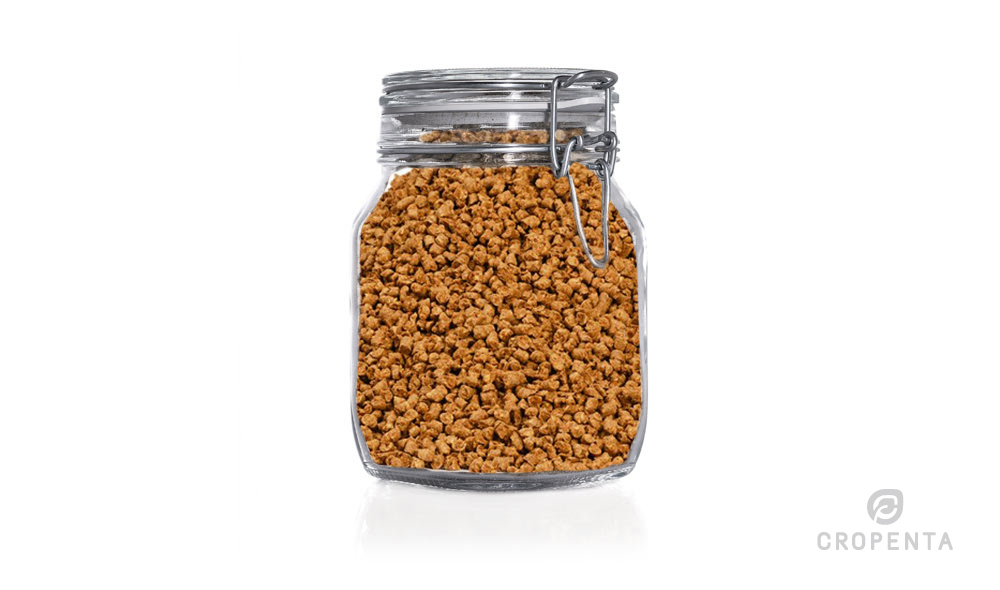
Organic fertilization
Organic fertilization plays a central role in modern agriculture and agribusiness. The concept includes solutions and applications that contribute to higher efficiency, sustainability, and economic value within agricultural production chains.
Within circular and bio-based systems, organic fertilization is becoming increasingly important. By smartly utilizing natural raw materials, residual streams, and innovative processes, dependence on primary inputs can be reduced, while soil quality, yield, and product quality improve.
What is organic fertilization?
Organic fertilization refers to the application of nutrients in organic form, derived from natural or bio-based sources. This can include animal manure, compost, digestate, plant residual streams, or specially developed organic fertilizers. Unlike purely mineral fertilizers, these products not only provide nitrogen, phosphate, and potassium but also organic matter and often a broad spectrum of micronutrients.
Due to these organic components, the soil is not only fed but structurally improved. The nutrients are released gradually, aligned with the crop's needs, which limits losses through leaching.
The role of organic fertilizers
Organic fertilizers form the core of organic fertilization. They combine nutrient provision with soil improvement and contribute to building organic matter. Organic fertilizers can consist of a single raw material or blends of various bio-based materials and residual streams.
Organic fertilizers are increasingly being developed with a predictable composition and function, allowing them to better fit within modern cropping systems and fertilization plans. This makes it possible to use organic fertilizers strategically and purposefully.
Organic matter and soil health
An important effect of organic fertilization is the increase and maintenance of organic matter in the soil. Organic matter forms the basis for a healthy soil structure and active soil life.
- Improves crumb structure and rootability.
- Increases the water retention capacity of the soil.
- Buffers nutrients and reduces leaching.
- Stimulates microorganisms and soil fauna.
- Contributes to natural disease resistance.
A soil with sufficient organic matter is better resistant to weather extremes and offers crops a more stable growth foundation.
Combination with biostimulants
Besides organic fertilizers, biostimulants are playing an increasingly important role in organic fertilization. Biostimulants are products that support the natural soil and plant processes without primarily functioning as a nutrient source.
In combination with organic fertilization, biostimulants can:
- Accelerate the breakdown of organic matter.
- Improve nutrient availability.
- Stimulate root growth and activity.
- Activate soil life.
- Increase plant resilience against stress.
Examples include humus and fulvic acids, microbial biostimulants, and extracts based on plants or algae. When combined with organic fertilizers, these products enhance each other's effects.
Organic fertilization within circular agriculture
In circular farming systems, organic fertilization is a key component in closing loops. Residual streams from the food industry, animal feed sector, and bio-industry are processed into organic fertilizers and soil enhancers.
This ensures carbon and nutrient values are retained within the agricultural chain, reducing dependence on fossil and primary resources. Organic fertilization thus acts as a connecting link between production, processing, and cultivation.
Practical application and strategy
An effective strategy for organic fertilization takes into account soil type, crop plan, crop needs, and regional regulation. In practice, a combination of:
- A basic application of organic fertilizers for organic matter and slow nutrient supply.
- Targeted additions to correct specific deficiencies.
- Biostimulants to support soil processes and root development.
Through soil analysis, monitoring, and evaluation, the use of organic fertilization can be further optimized.
Economic and sustainable added value
Organic fertilization offers not only agronomic benefits but also economic and strategic value. It contributes to lower input costs, better utilization of residual streams, and achieving sustainability goals.
For companies in the agri-chain, organic fertilization offers opportunities to add value to bio-based raw materials, reduce emissions, and develop future-proof production chains.
Organic fertilization as a foundation
Organic fertilization forms the foundation for healthy soil, resilient crops, and circular agriculture. By cleverly combining organic fertilizers and biostimulants, a resilient system is created in which soil, plants, and the chain work together optimally.