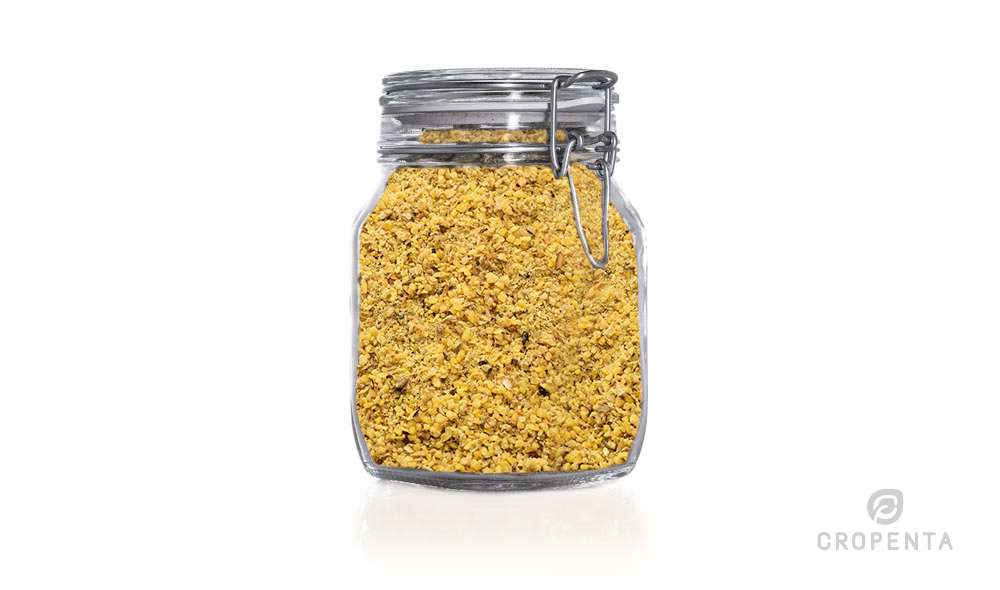
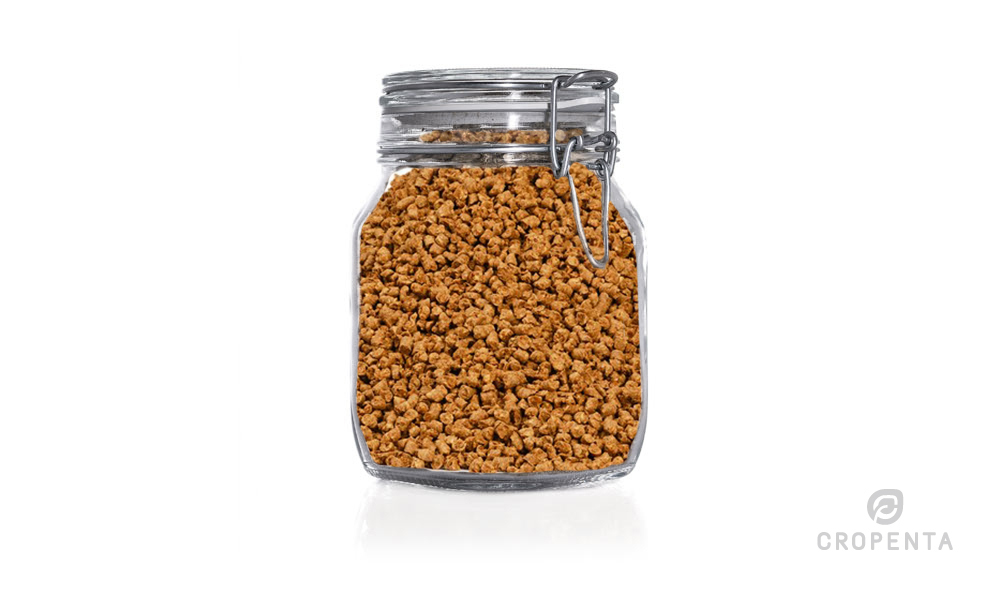
How do extrusion conditions shape anti-nutritional factors in full-fat soybeans?
A feed mill receiving whole soybeans has one practical question: how much heat is enough to inactivate the anti-nutritional factors, and at what point does the same heat start to damage the protein the beans are supposed to supply? For extruded full-fat soybeans, the answer depends on several process settings that act together inside the extruder, not on one temperature figure.
Cropenta Insight
Interpreting an energy value or digestibility figure for extruded full-fat soybeans requires knowing the process behind it, because the same bean can be heated under very different conditions. Trypsin inhibitor activity, reactive lysine and fat content should be read together with the extrusion settings, and results from one species or batch should not be transferred to others without separate data.
What extrusion does to a full-fat soybean
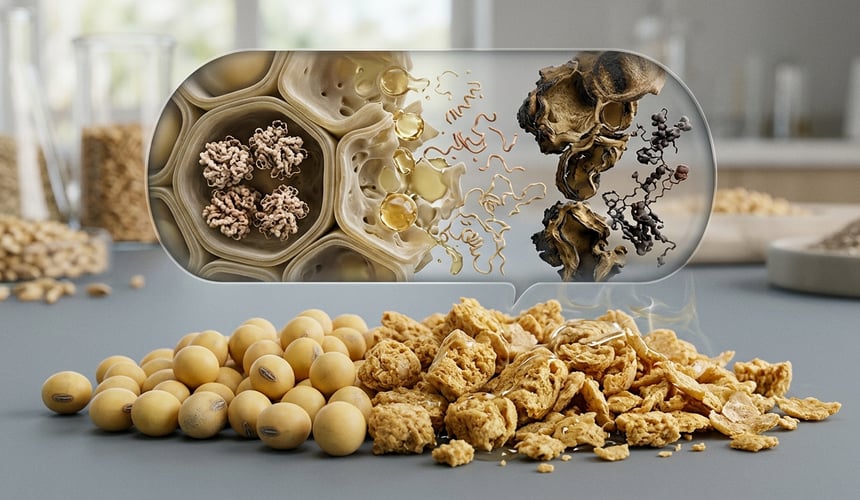
Extrusion is a thermomechanical process. The beans are conditioned with moisture, then forced through a die by a screw. Temperature, moisture, pressure, residence time and the shear created by the screw configuration all act at the same time, which is why extrusion is not simply a hotter form of toasting. The bean is not only heated; its structure is opened up and oil cells can be ruptured. A changed structure is a real effect, but it does not by itself show that the animal digests more of the bean.
Full-fat soybeans typically contain roughly 38 to 42 percent protein and 18 to 22 percent oil, so the processing decision affects both protein supply and energy supply at the same time.[1] Keeping the oil in the bean is what makes full-fat processing different from expelling, which removes part of the oil, and from solvent extraction, which removes nearly all of it.
Anti-nutritional factors and the limits of heat
The main heat-labile anti-nutritional factors in raw soybeans are trypsin inhibitors. Their residual activity, measured as trypsin inhibitor activity, is the most direct indicator of adequate heat treatment for monogastric animals. Under-processing leaves these factors active and reduces the availability of protein to pigs and poultry. Oligosaccharides and antigenic proteins respond less to heat, and their relevance depends on species and age.
Urease activity is often used as a quick check, but it is an indirect indicator. A low urease result shows that heat was applied; it does not prove that the treatment was optimal or that the protein was left undamaged. Protein solubility in potassium hydroxide (KOH) and the Protein Dispersibility Index respond to heat as well, but each has its own optimum range and they cannot replace each other or a trypsin inhibitor measurement.
Protein quality: where over-processing shows
When heating goes too far, Maillard reactions can bind lysine. Reducing sugars react with the free epsilon-amino group of lysine, so total lysine can stay the same while reactive lysine falls. Controlled Maillard reactions can make protein more resistant to rumen micro-organisms, but in monogastric animals the same reaction lowers the lysine that is available for digestion. Excessive heat also reduces palatability. This is why more heat is not automatically better, and why a low trypsin inhibitor value alone does not show that the protein is intact.
Only measurements in animals show what the animal can use. Apparent or standardised ileal amino acid digestibility in pigs and poultry, and intestinal digestibility in ruminants, are the reference points. Composition and heat indicators are useful for process control but do not replace them.
Energy value and what the primary study measured
One 2023 study on extruded full-fat soybeans in sow diets reported chemical composition, energy content and apparent total tract digestibility.[2] The figures apply to that species and to the extrusion conditions used in that work. Studies on extruded soybean meal similarly evaluate digestible energy, metabolizable energy and amino acid digestibility in animals, which is the level at which extrusion effects on energy value can be judged.[3]
Energy value depends on digestible fat as well as digestible protein and fibre fractions. A bean in which the oil is still bound in its matrix behaves differently in the gut from a meal with little fat left. For that reason, a composition table for raw soybeans or for a different extrusion setting should not be used as a stand-in for the value of a specific extruded batch.
Operational observations and limits of the evidence
In feed manufacturing, the same extruder setting can give a different result when the moisture of the incoming beans or the die configuration changes. Extruded beans that are not uniformly conditioned can show uneven heat treatment within one batch, so sampling and a trypsin inhibitor check are more informative than a single process setpoint. Tracking residence time and die temperature alongside the output analysis helps link a change in digestibility to its cause.
The evidence has clear limits. The primary study covers sows, and its figures should not be transferred to piglets, poultry or ruminants without separate data. Work on extruded soybean meal in other species does not prove what happens to whole extruded beans. Where a study reports no significant difference between treatments, that result should be taken as stated rather than read as a hidden benefit.
What the reader can take from this
The useful question for a formulator is not how hot the beans were, but whether the processed batch has been checked for residual trypsin inhibitors, for reactive lysine loss and for digestible energy in animals suited to the diet. Heat history, process settings and the measured values should be read together, and each value should be applied only to the species and process it was measured on.
Technical Summary
Extrusion combines temperature, moisture, pressure, residence time and shear to inactivate heat-labile anti-nutritional factors in full-fat soybeans while keeping the oil in the bean. Trypsin inhibitor activity indicates adequate heat treatment, whereas excessive heat can bind lysine and lower reactive lysine and digestibility. Energy and digestibility values must be read in the species and process in which they were measured.
This article was created with the help of AI and reviewed by the Cropenta editorial team. It is general information, not professional advice.
Technical Questions
Why does a low urease result not confirm that extruded soybeans were processed optimally?
Urease activity is an indirect indicator that shows heat was applied, usually through a pH rise test. It does not measure trypsin inhibitors, protein damage or reactive lysine. Over-processed beans can still show low urease, so trypsin inhibitor activity, KOH protein solubility and animal digestibility data should be read alongside it.
Which process information should be requested with an extruded full-fat soybean batch?
Useful information includes the extrusion temperature range, moisture at conditioning, die configuration, residence time and the analytical results for trypsin inhibitor activity, KOH protein solubility and reactive lysine. Without these, a digestibility or energy value is hard to place in context, because the same bean can be heated under very different conditions.
Looking for something specific?
Our team is there to help you find the right raw materials and solutions for your formulations