How Rumen-Protected Proteins Affect Nitrogen Excretion in Dairy Cows
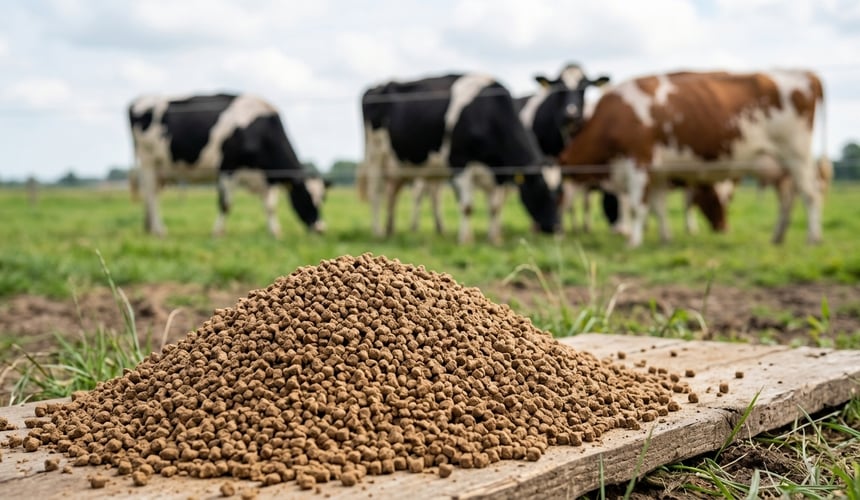
Optimizing the type of protein in dairy cow feed is a critical consideration for managing nitrogen excretion. By adjusting the balance between rumen-degradable protein (RDP) and rumen-undegradable protein (RUP), nutritionists can influence how much nitrogen cows excrete. This approach leverages the cow's digestive physiology to enhance protein utilization.
Cropenta Insight
For feed ingredient formulators, focusing on the precision of protein delivery is key to managing nitrogen excretion effectively. Understanding the nuanced impact of various protection methods on both rumen bypass and subsequent intestinal digestibility provides a scientific basis for ration development that supports animal needs while supporting nitrogen utilization and contributing to a balanced protein profile.
Rumen Protein Dynamics and Nitrogen Utilization
Dairy cows require dietary protein for microbial protein synthesis in the rumen and for amino acid absorption in the small intestine. Rumen-degradable protein (RDP) serves as the primary nitrogen source for rumen microbes, which then produce microbial protein—a significant source of amino acids for the cow [1]. Conversely, rumen-undegradable protein (RUP), also known as bypass protein, escapes rumen degradation and is digested directly in the small intestine.
When dietary crude protein levels exceed the requirements for microbial protein synthesis or metabolizable protein, excess nitrogen can be converted to ammonia in the rumen. This ammonia is then absorbed, transported to the liver, converted to urea, and subsequently excreted, primarily in urine [1]. Excessive urinary nitrogen excretion not only represents a loss of dietary protein but also indicates suboptimal nitrogen use efficiency in the dairy animal. Therefore, strategies that enhance protein utilization are associated with reduced nitrogen output.
The Role of Rumen-Protected Proteins
Rumen protection involves treating protein sources to reduce their degradation by rumen micro-organisms, allowing more protein to reach the small intestine for digestion and absorption [1]. Common methods for protein protection include heat treatment and controlled Maillard reactions with reducing sugars, alongside other approaches like lignosulfonate treatment [2, 3]. The goal is to balance effective rumen bypass with good intestinal digestibility; over-processing can diminish both.
A study investigated the effects of supplementing rumen-protected methionine on nitrogen excretion in lactating dairy cows [1]. While the primary focus was on methionine, the broader principle of rumen-protected amino acids, which are constituents of rumen-protected proteins, is relevant. The study found that strategic supplementation could influence nutrient utilization, underscoring the potential for targeted protein delivery to affect overall nitrogen balance. The effective degradation and RUP values are derived from parameters such as the soluble fraction (S), potentially degradable fraction (D), fractional degradation rate (Kd), and an assumed fractional passage rate (Kp). RUP values are only comparable when evaluated at the same assumed passage rate [2, 3].
Controlled Maillard reactions are known to create melanoidins that resist microbial breakdown in the rumen, yet allow acid and enzymes in the abomasum and small intestine to release amino acids. For instance, according to product documentation [2], a specific treated protein source showed a calculated RUP above 80% at an assumed passage rate of 6%/h, with intestinal digestibility of the rumen-undegraded protein close to 100%. This in-vivo work was performed by an independent research institute under the Dutch in-situ protocol.
These measurements were also conducted in vivo by an independent research institute [3]. The product documentation for Bypass Soy Protein MP [2] and Bypass Rapeseed MP [3] cites these independent in-vivo measurements and notes that in-vitro protein degradation tests may overstate rumen protection compared to in-vivo measurements.
Impact on Nitrogen Excretion
By increasing the supply of metabolizable protein to the small intestine through rumen-protected proteins, dairy cows can potentially utilize dietary nitrogen more efficiently. This occurs when the RUP supply is balanced with adequate RDP for microbial protein synthesis [1]. When the balance is achieved, less nitrogen is available in the rumen for conversion to ammonia, thereby reducing the amount of urea synthesized in the liver and subsequently excreted in urine. This mechanism contributes to protein use efficiency [4].
The quantitative relationship between rumen-protected protein levels and urinary nitrogen excretion is complex, influenced by factors such as total feed intake, milk production levels, and the efficiency of microbial protein synthesis [1]. Studies suggest that a better match between nitrogen and energy supplies in the rumen can further contribute to protein utilization efficiency [5]. However, an independent study comparing physically-thermally treated and lignosulfonate-treated rapeseed meals against untreated rapeseed meal observed no significant differences in milk protein output or feed nitrogen efficiency, and noted that the measured rumen-undegraded protein (UDP) for treated meals was lower than declared values [6]. This underscores the importance of robust in-vivo measurements for accurate protein valuation.
The goal is to supply essential amino acids efficiently to the cow while minimizing the excretion of excess nitrogen [1]. This approach aligns with nutritional protein valuation systems, such as the Dutch DVE/OEB system, which consider both intestinal digestible protein and rumen protein balance. A higher digestible protein value from RUP, when rumen protein balance is maintained close to zero, suggests effective protein utilization [2, 3].
Technical Summary
Rumen-protected proteins can contribute to reduced nitrogen excretion in dairy cows by increasing the supply of amino acids available for intestinal digestion. This improved utilization, when rumen-undegradable protein (RUP) is balanced with rumen-degradable protein (RDP) for microbial protein synthesis, can quantitatively lower nitrogen output in urine. Accurate in-vivo measurements of RUP at consistent passage rates and intestinal digestibility are critical for evaluating ingredient effectiveness.
Disclaimer
This article has been prepared with AI assistance using publicly available sources and is intended solely for general technical and educational purposes. It does not constitute professional advice or recommendations for specific applications. Cropenta makes no warranties regarding the accuracy, completeness or applicability of the information. No rights may be derived from its contents, and Cropenta accepts no liability for its use to the extent permitted by law.
Technical Questions
How do controlled Maillard reactions contribute to the rumen protection of specific protein ingredients?
Controlled Maillard reactions, involving reducing sugars and free amino groups, create melanoidins that resist microbial degradation in the rumen. This allows more protein to bypass the rumen and become available for digestion in the small intestine, provided the processing is carefully controlled to preserve amino acid digestibility.
Why is intestinal digestibility a critical factor in evaluating the true nutritional value of rumen-protected protein ingredients?
A high rumen-undegradable protein (RUP) value alone does not guarantee nutritional benefit. If the RUP fraction has low intestinal digestibility, the amino acids are not absorbed by the animal. Therefore, both rumen bypass and subsequent intestinal digestibility are essential for evaluating the actual protein value of an ingredient.
How does the assumed passage rate (Kp) influence the accurate calculation of RUP for feed ingredients?
The fractional passage rate (Kp) is an estimated parameter used in calculating rumen-undegradable protein (RUP) from in-situ degradation characteristics. A higher assumed Kp generally leads to a higher calculated RUP, as less time is allowed for degradation in the rumen. Consequently, RUP values are only comparable when assessed at the same assumed Kp.
What are the key differences between in-vitro and in-situ methods for assessing protein degradation in the context of rumen-protected ingredients?
In-situ methods involve incubating protein sources in nylon bags within the rumen of fistulated cows, providing a physiological measure of degradation. In-vitro tests use enzymatic or chemical methods. For heat- or Maillard-protected proteins, in-vitro methods often overstate rumen protection compared to the more accurate in-situ measurements.
- 1.The use of rumen-protected amino acids and fibrous by ... - PMC
- 2.Cropenta product documentation: Bypass Soy Protein MP
- 3.Cropenta product documentation: Bypass Rapeseed MP
- 4.Associations between digestibility, feed efficiency, nitrogen ...
- 5.Milk production and efficiency of utilization of nitrogen ...
- 6.Geschützte Rapsextraktionsschrote im Fütterungsversuch (proteinmarkt.de)
Related articles
Related Products

Looking for something specific?
Our team is there to help you find the right raw materials and solutions for your formulations

