How Does Glycine Betaine Relate to Antioxidant Defenses in Plants Under Heat Stress?
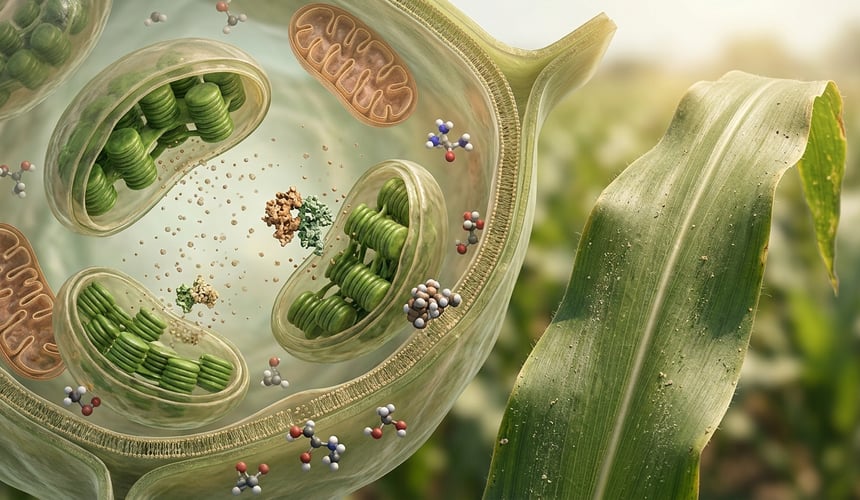
When temperatures climb above what a crop can comfortably handle, the cells of its leaves face a build-up of reactive oxygen species. These unstable molecules can damage membranes, proteins and enzymes. Glycine betaine, a small nitrogen-containing compound that many plants make themselves, is often discussed in this context. The practical question is whether it does more than help cells manage water pressure, and whether it takes part in the antioxidant system that clears these molecules.
Reactive oxygen species are a normal by-product of metabolism. Under heat, however, they can accumulate faster than the cell can clear them. Plants respond with a network of antioxidant enzymes, including catalase, ascorbate peroxidase, peroxidase and glutathione S-transferase, which neutralize or break down these molecules before they cause lasting damage.
Glycine betaine is best known as an osmolyte, a compound that accumulates inside the cell and helps balance water pressure during drought, salinity and heat. Its natural production varies considerably between species, so results from one crop cannot simply be assumed for another.
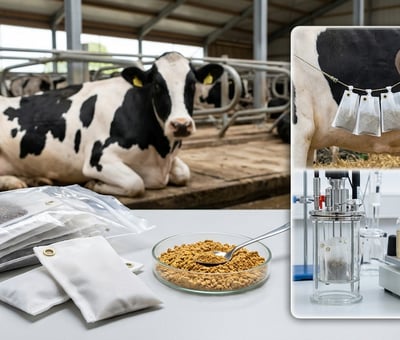
A 2025 study by Makonya examined biostimulants containing glycine betaine or kelp extract under heat stress. The crop species, conditions and measurements should be checked in the full paper.[1]
A 2026 study on glycinebetaine and photosynthetic performance reports that the compound was associated with higher activity of catalase, ascorbate peroxidase, peroxidase and glutathione S-transferase, which helped detoxify reactive oxygen species.[2] This is an association observed under the conditions of that study. It does not show by itself how the same response would look on another crop or in a commercial field.
A 2025 review notes that glycine betaine has been linked to the activation of genes involved in stress defense, and that effects have been reported even at minimal concentrations.[3] Review-level evidence like this is useful for direction, but the gene-level mechanisms are not fully resolved across crops, and concentration, timing and species all appear to matter.
The role of glycine betaine that a plant produces internally does not prove that an applied product produces the same antioxidant response. Uptake, concentration, timing, growth stage and growing conditions all affect what happens after application. Controlled-environment and greenhouse results also do not automatically transfer to field production, and physiological markers such as enzyme activity do not on their own confirm yield or quality outcomes.
Cropenta Insight
The most useful distinction for practice is between glycine betaine a plant makes itself and glycine betaine applied from outside. Research linking the endogenous compound to antioxidant enzyme activity does not establish what an applied biostimulant does on a crop in the field. Studies that report crop species, timing, growing conditions and whether measurements were made in controlled or field settings are the most informative for advisers comparing results.
What the evidence allows a reader to conclude
Glycine betaine has a documented association with antioxidant enzyme activity and gene-level stress responses in some studies, and it is part of the osmotic toolkit of many plants. Whether an applied treatment reliably supports this system under heat in a specific crop remains a question for the crop, the conditions and the measurements at hand.
Technical Summary
Heat stress can raise reactive oxygen species beyond the clearing capacity of plant cells. Glycine betaine is associated with higher activity of several antioxidant enzymes in the research cited here, and with gene activity linked to stress defense. These findings are species-dependent and condition-dependent, and they do not establish equivalent effects for applied glycine betaine in field crops.
This article was created with the help of AI and reviewed by the Cropenta editorial team. It is general information, not professional advice.
Technical Questions
Does glycine betaine applied to a crop show the same antioxidant response as glycine betaine the plant produces itself?
Not necessarily. The role of glycine betaine produced inside a plant does not automatically show that an applied compound produces the same response. Applied effects depend on uptake, concentration, timing, crop species and growing conditions, and they need direct measurement in the setting of interest. Controlled-environment and greenhouse results also do not automatically transfer to field production.
Why do results on glycine betaine under heat differ between crops?
Natural glycine betaine production varies considerably between species, so some crops may accumulate more of the compound than others. Responses also depend on heat intensity and duration, growth stage and the concentration used. Comparing studies therefore requires checking the crop, the conditions and the measurements, rather than assuming one response applies across species.
Looking for something specific?
Our team is there to help you find the right raw materials and solutions for your formulations